
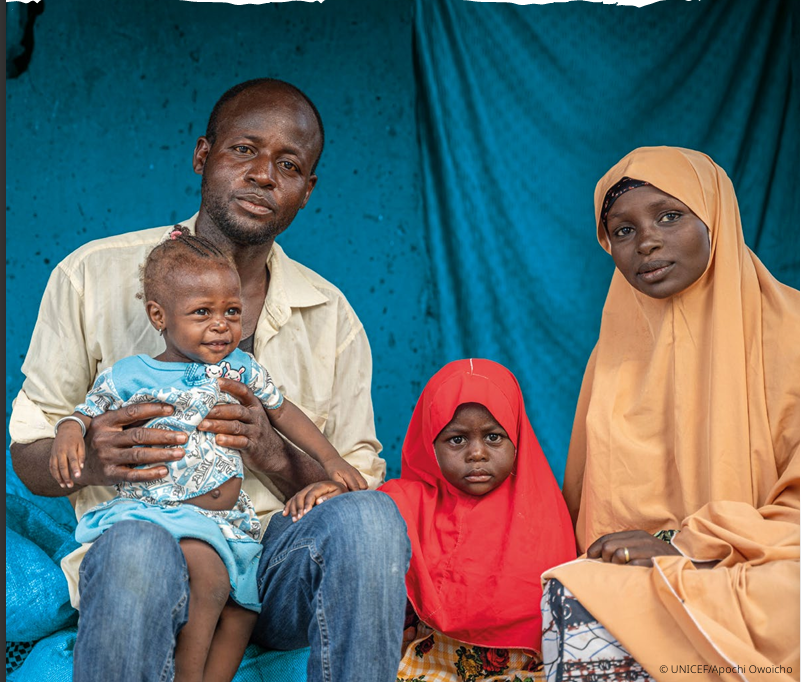
A new UNICEF-backed assessment of child well-being in Nigeria has revealed a disturbing picture of deprivation, violence, and systemic inequality affecting millions of children, even as the country records significant gains in health, education access, and public awareness.
The Nigerian Child 2025 Report shows that two out of every three children in Nigeria are multidimensionally poor, lacking access to at least three essential needs such as clean water, education, healthcare, nutrition, or protection.
The report describes the current situation as “sobering,” noting that child poverty, early marriage, malnutrition, and climate-related risks continue to define the lives of many Nigerian children.
However, it also highlights encouraging progress driven by government reforms and development partner support, signalling that meaningful change remains possible.
Children Growing Up Without Essentials
The data shows that 47% of Nigerian children live below the national monetary poverty line, but far more alarming is the scale of multidimensional poverty affecting children’s daily survival. UNICEF warns that the burden is heaviest in rural communities, where children are more than twice as likely to be poor compared to those in cities.
Birthplace, gender, and a mother’s education level significantly shape a child’s future. Children whose mothers never went to school face far worse nutrition and health outcomes.
Girls who marry before 18, a group representing two in every five girls nationwide, almost always fall into deep multidimensional poverty.
“Poverty is beginning earlier and lasting longer,” the report states, noting that intergenerational deprivation remains a defining feature of Nigerian childhood.
Alarming Levels of Violence and Early Marriage
The report paints a grim picture of violence facing Nigerian children. More than half of all Nigerian children experience violence before age 18, while child marriage remains pervasive, especially in rural communities where one in two girls is married off before adulthood.
The report warns that Nigeria continues to record one of the highest global numbers of grave child rights violations, documenting 2,436 cases in 2024. These include abductions, attacks on schools, recruitment by armed groups, and sexual violence, threats that are amplified in conflict zones.
Female genital mutilation also remains stubbornly widespread, with up to half of girls aged 5–14 estimated to have undergone cutting despite legal bans.
Healthcare Gains Still Undermined by Malnutrition
Nigeria has made major strides in reducing child mortality, boosting immunisation coverage, and expanding birth registration. Over the past five years, routine immunisation campaigns have tripled in reach, while millions have gained access to clean water.
However, the country still has the highest number of malnourished children in Africa, according to the report. Two in five Nigerian children are stunted, and one in 12 is wasted due to chronic malnutrition. The report also identifies Nigeria as the country with the highest number of “zero-dose” children, those who have never received a single vaccine.
Access to health services remains uneven. Rural children are significantly less likely to receive basic vaccinations or timely medical care when sick. Only half of children suffering from diarrhoea receive oral rehydration therapy.
UNICEF warns that while progress is real, it is threatened by poverty, misinformation, conflict, and the long distances many families must travel to reach health facilities.
Education: Millions Still Left Behind
While more children are enrolled in school today than a decade ago, Nigeria continues to struggle with both access and quality. The report estimates that 10.2 million children remain out of school, with boys increasingly leaving classrooms to work and girls pushed out by early marriage and domestic labour.
Even where access improves, learning outcomes remain alarmingly low. Only 27% of children aged 7–14 can read a simple paragraph, and just 25% can solve basic numeracy tasks despite years of schooling.
Conflict-affected regions such as the North-East and North-West carry the heaviest burden, with displaced children facing overcrowded temporary learning centres and frequent disruptions caused by insecurity.
Climate Change Deepening Child Vulnerabilities
From flooding to drought and extreme heat, climate shocks are reshaping childhood in Nigeria. The report warns that Nigeria is among the world’s most climate-vulnerable nations but also one of the least prepared.
More than 1.3 million people were affected by floods in 2023, while 8 million Nigerians are currently internally displaced, over half of them children. Poor infrastructure means that schools and health centres collapse under weather-related pressure, leaving children with disrupted services.
Compounding the crisis is the lack of safe water and sanitation. 48 million Nigerians practise open defecation, and only 37% of schools have basic water services. Girls are particularly affected, often missing school due to the lack of menstrual hygiene facilities.
“Behind Every Percentage Lies a Child” – UNICEF
Speaking on the findings, UNICEF Nigeria Representative, Ms. Wafaa Saeed, urged stakeholders not to lose sight of the human stories hidden in the statistics.
“Behind every percentage lies a child whose potential is being stolen by poverty or neglect. But we are also seeing change: millions of children are getting vaccinated, millions are back in school, and more families are accessing clean water and social protection. These are victories worth celebrating,” she said.
She emphasised that protecting children must be a national priority, adding, “It is time for all of us, government, development partners, donors, the private sector, and communities, to put the Nigerian child at the top of every agenda. They are not just our responsibility; they are our future.”
With nearly half of Nigeria’s population under the age of 18, UNICEF warns that choices made today will determine the country’s long-term stability, prosperity, and human capital.
What Needs to Happen Next
The report outlines urgent actions required to protect Nigeria’s 98 million children, including reaching all “zero-dose” children with life-saving vaccines; expanding access to clean water and ending open defecation; reducing the number of out-of-school children, particularly in conflict-affected regions; strengthening child protection systems to address abuse, early marriage, and FGM; investing in schools that can withstand climate shocks; expanding social protection to the poorest families; and improving equity-focused budgeting so services reach the most vulnerable children.
These recommendations highlight that while the road ahead is long, progress is achievable, but only with collective commitment.
The Nigerian Child 2025 Report is both a warning and a call to action. It shows a generation facing unprecedented risks but also demonstrates that concerted effort can reverse decades of deprivation.