
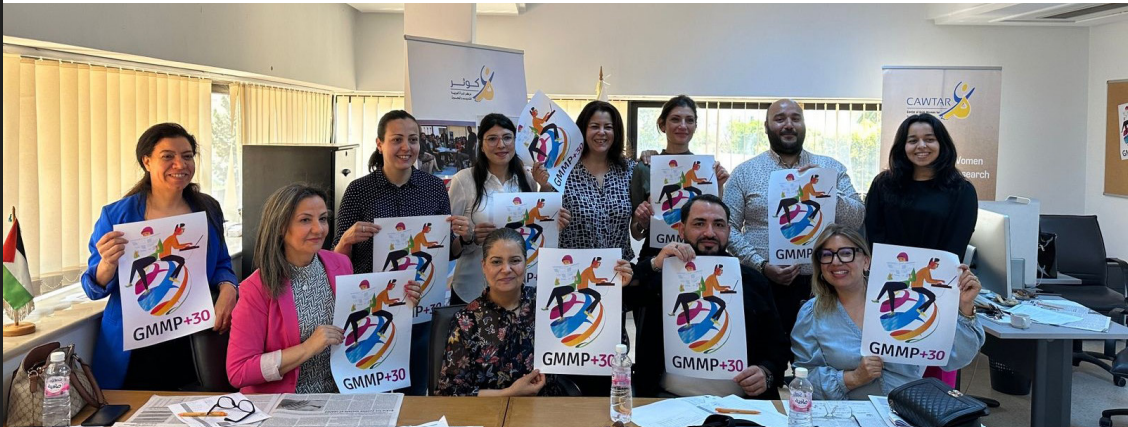
The launch of the Global Media Monitoring Project (GMMP) Global Report 2025 has triggered renewed calls for a strategic rethink to advance gender equality in the news media, as findings show that progress towards parity has largely stalled three decades after the Beijing Platform for Action.
Speaking at the launch of the 7th edition of the world’s longest-running and most comprehensive study on gender in the media, GMMP Expert Group Convenor, Sarah Macharia, said gender representation in global news has reached a plateau after years of slow gains.
Despite women making up half of the world’s population, the report reveals that they account for only 26 per cent of people seen, heard, or read about in print and broadcast news. Representation is only slightly higher on dedicated news websites, at 29 per cent.
Reflecting on the 30th anniversary of the Beijing Platform for Action, Kalliopi Mingeirou, Chief of UN Women’s Ending Violence against Women and Girls Section, noted that governments committed under Section J to transform women’s participation in and through the media and eliminate harmful stereotypes.
“Since 1995, the GMMP has given us the most consistent evidence we have on gender in the news,” she said, describing the 2025 report as both “a wake-up call and a roadmap,” Mingeirou said.
The GMMP has recorded participation from over 80 per cent of countries globally, covering 97 per cent of the world’s population, across its seven editions. Yet, Macharia reported that women’s visibility in the news has increased by only nine percentage points in 30 years, most of it achieved within the first 15 years after Beijing.
The situation is even worse for minority women, who account for less than one in 10 women featured in news content.
“All media platforms have converged and flatlined at levels far below parity,” Macharia said, adding that the initial momentum for structural change appears to have waned once a basic level of visibility was achieved.
The report further highlights that men continue to dominate expert and spokesperson roles in the media, signalling what Macharia described as “a system that has learnt to incorporate women’s voices without redistributing authority.”
While the gender gap among reporters has narrowed over time, particularly in traditional media, progress has stagnated since 2005. Online news fares no better, with women making up just 42–43 per cent of reporters since digital monitoring began in 2015.
Coverage of gender-based violence (GBV) remains especially poor. Less than two per cent of news stories address GBV, despite the fact that one in three women and girls worldwide experience such violence.
Equally troubling is the lack of progress in challenging gender stereotypes. Over 20 years of GMMP data show that stories defying stereotypes peaked at just six per cent in 2010 and have since stagnated at around three per cent.
Macharia argued that the stagnation demands a radical shift in approach.
“To arrive at a plateau implies there was progress in the past. The near standstill of the last 15 years shows the need for a reset, a fundamental change in strategy,” she said.
From an African perspective, Amie Joof-Cole, GMMP West and Central Africa Coordinator, stressed the need to confront structural and institutional barriers within newsrooms, including power dynamics, editorial control, leadership gaps, and safety risks for women journalists.
She called for the genuine implementation of gender-responsive newsroom policies, backed by accountability measures such as internal audits and public reporting.
In Latin America, GMMP Regional Coordinator Cirenia Celestino Ortega warned that the year of the 7th GMMP may be remembered as one of the most dangerous for women journalists, due to escalating online and offline violence.
She called for a renewed commitment to Section J of the Beijing Platform, with the addition of a third strategic objective focused on eradicating violence against women journalists.
Profit Over Rights
Chair of the Global Alliance on Gender and Media (GAMAG), Aimee Vega Montiel, linked stalled progress to the “depoliticization” of women’s rights and an increasing focus on development over fundamental human rights, an issue worsened by the COVID-19 pandemic.
Echoing this, Hilary Nicholson, GMMP Expert Group member for the Caribbean, said entrenched power hierarchies within profit-driven media conglomerates remain a major obstacle to equality.
“Media corporations are committed to profit, not equality,” she said, calling for a renewed emphasis on professional journalism values such as fairness, accuracy, and non-biased reporting—both in traditional and digital spaces.
Vega Montiel added that technology must be governed with a human-rights lens, urging stronger state regulation, as self-regulation by media corporations has proven insufficient.
Closing the session, GAMAG moderator Albana Shala urged sustained collective action, calling for “media that truly represents the world we live in.”
The GMMP Global Report 2025 ultimately underscores a sobering reality: without bold structural reforms and renewed political will, the promise of gender equality in the news media will remain unfinished business.
Read full report here