

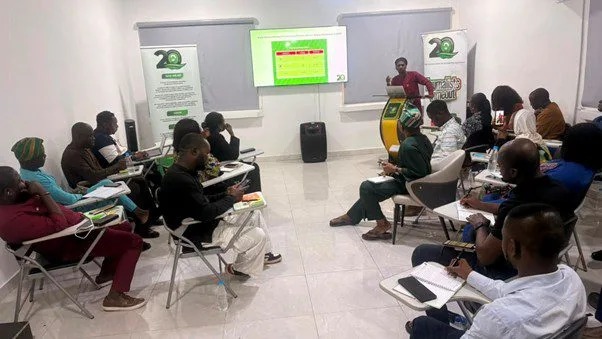
The Wole Soyinka Centre for Investigative Journalism (WSCIJ) has called for stronger actions to address the rising cases of civic space violations in Nigeria.
The call was made during the presentation of findings and recommendations of its 2025 Journalism and Civic Space Status Report titled Silenced Voices, Shrinking Space: Civic Freedoms Under Pressure.
Presenting the data from the 2025 Civic Space Status Report, Mr Nurudeen Salako, Programmes Officer, WSCIJ, shared that 245 distinct civic space violations were drawn from an analysis of 570 media reports across 54 monitored media platforms.
He also noted that the data recorded an increase from 124 incidents in 2023 and 103 incidents in 2024.
According to him, “the right to freedom of expression emerged as the most frequently violated constitutional right in 2025, translating to persistent threats to citizens’ ability to speak freely and participate in democratic life.”
Quoting the recommendations from the report, Salako urged journalists, media houses, and civil society organisations to institutionalise civic space reporting, enhance safety protocols, and expand community education.
He also pointed out that the legislature and the executive should review restrictive laws like the Cybercrimes Act, protect digital rights, and publicly condemn attacks on civic actors.
The report recommendation reads in part that, “security and law enforcement agencies are advised to adopt rights-compliant operational protocols, reduce excessive force during assemblies, and strengthen internal accountability.”
Earlier, in her opening remarks, Motunrayo Alaka, Executive Director of WSCIJ, noted that Nigeria’s civic space needs protection and that “as guardians of civic space, journalists must be able to carry out their work safely.”
Alaka, who was represented by Mariam Alo, Programmes Officer, WSCIJ, described media professionals as frontline defenders, stressing that “without their relentless reporting, countless civic space infractions would remain undocumented and unnoticed.”
While speaking during a reflection session on the report’s findings and recommendations, Mr Lekan Otufodunrin, the Executive Director of Media Career Development Network, urged stakeholders to view the data not as a source of fear, but as a catalyst for urgent action.
Otufodunrin stressed that freedom of expression remains the foundation upon which every other right stands, warning that any attack on the civic space is ultimately a direct assault on democracy itself.
Also, the Deputy Executive Director of Media Rights Agenda, Mr Ayode Longe, stated that a campaign should be launched against the criminalisation of freedom of expression, adding that freedom of expression offences should be treated as a civil matter.
He then urged the media to give greater attention to reporting civic space violations, emphasising that protecting journalists and defending press freedom require stronger solidarity and responsiveness across the profession.
On his part, Mr Kehinde Adegboyega, Executive Director of Human Rights Journalists Network Nigeria, called on journalists to move beyond writing and documenting attacks on press freedom to petitioning regulatory bodies to ensure that perpetrators are held accountable.
He also called for more reportage of civic space infractions, irrespective of the media platform the victim is affiliated with.
Meanwhile, Participants called for continued, strong collaboration between media houses, journalists, and civil society organisations.