
Ogijo, once a thriving industrial hub in Ogun State, Nigeria, has become a public health disaster zone, suffocated by toxic air and poisoned soil from unregulated recycling and smelting plants.
The community’s air is laden with soot, and its soil is contaminated with hazardous waste, threatening the health and future of its residents, especially children already bearing the scars, with many testing positive for dangerously high levels of lead in their blood.
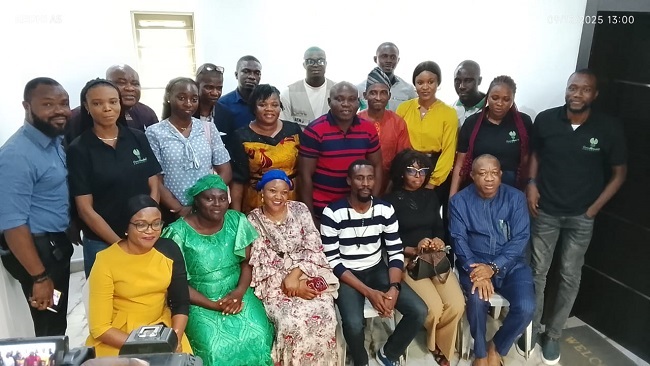
These revelations came to light at a high-level stakeholders’ forum convened in Lagos on September 12, 2025, by the Green Knowledge Foundation in partnership with Sustainable Research and Action for Environmental Development (SRADeV Nigeria).
The gathering, which brought together community leaders, health experts, and regulators, confirmed a grim reality: Ogijo is drowning in poisoned air.
Air quality monitoring in the town recorded particulate matter concentrations between 500 and 600 micrograms per cubic meter—ten times above the World Health Organisation’s safe limits.
Experts at the forum warned that prolonged exposure to such levels is nothing short of a death sentence, capable of causing respiratory infections, heart disease, strokes, and even cancer.
“This is a public health crisis unfolding in real time,” declared Weyinmi Okotie, Executive Director of the Green Knowledge Foundation.
He explained that Ogijo is choking under toxic emissions from recycling plants and steel refiners, with families breathing poisoned air every day, often without realizing the silent dangers they face.
Okotie also raised concern about the widespread use of slag, the hazardous by-product of smelting plants, which has become a cheap replacement for gravel in road repairs and land reclamation.
What many see as a quick fix for potholes, he warned, is in fact spreading poison, as the heavy metals in slag seep into the soil, contaminate water sources, and eventually find their way into the food chain.
For Dr. Leslie Adogame, Executive Director of SRADeV Nigeria, the crisis is not confined to Ogijo. “Air pollution knows no boundaries,” he cautioned, explaining that particulate matter and heavy metals released into the atmosphere travel far beyond the community, settling on farmlands, entering rivers and streams, and contaminating crops and fish that eventually reach markets in Lagos, Abuja, and other parts of the country. “What begins as a local tragedy,” he stressed, “quickly becomes a national emergency.”
A recent biomonitoring exercise underscored the gravity of the situation. Nearly 90 residents, most of them children, were tested, and their blood samples revealed lead levels far above safe thresholds.
Experts say the damage in many cases is irreversible, with children now facing stunted learning abilities, neurological impairment, and shortened lifespans.
Investigations also showed that most of Ogijo’s recycling and smelting plants operate with little regard for environmental standards. Workers are often seen toiling without protective gear, while toxic waste is dumped openly on lands where children play and farmers cultivate crops, leaving entire households vulnerable.
Civil society representatives at the forum described the crisis as a “regulatory failure” and pressed for urgent government action. They stressed that Ogijo’s plight demands more than sympathy; it requires decisive intervention through stricter enforcement of emission standards, nationwide air quality monitoring, public health responses for exposed children, and awareness campaigns to warn communities about the dangers of slag and unchecked industrial waste.
Okotie described Ogijo as a warning sign for the nation, insisting that clean air is not a luxury but a fundamental human right.
Dr. Adogame offered an even sharper caution, noting that if Nigeria fails to act now, the costs will not only be measured in hospital bills but also in lost futures. “We are breeding a generation poisoned before they even have the chance to live,” he said.
Experts agreed that Ogijo is only the beginning and unless Nigeria confronts its industrial recklessness with urgency and resolve, the toxic air crisis will continue to spread silently, leaving behind communities crippled by illness and children robbed of their future.