
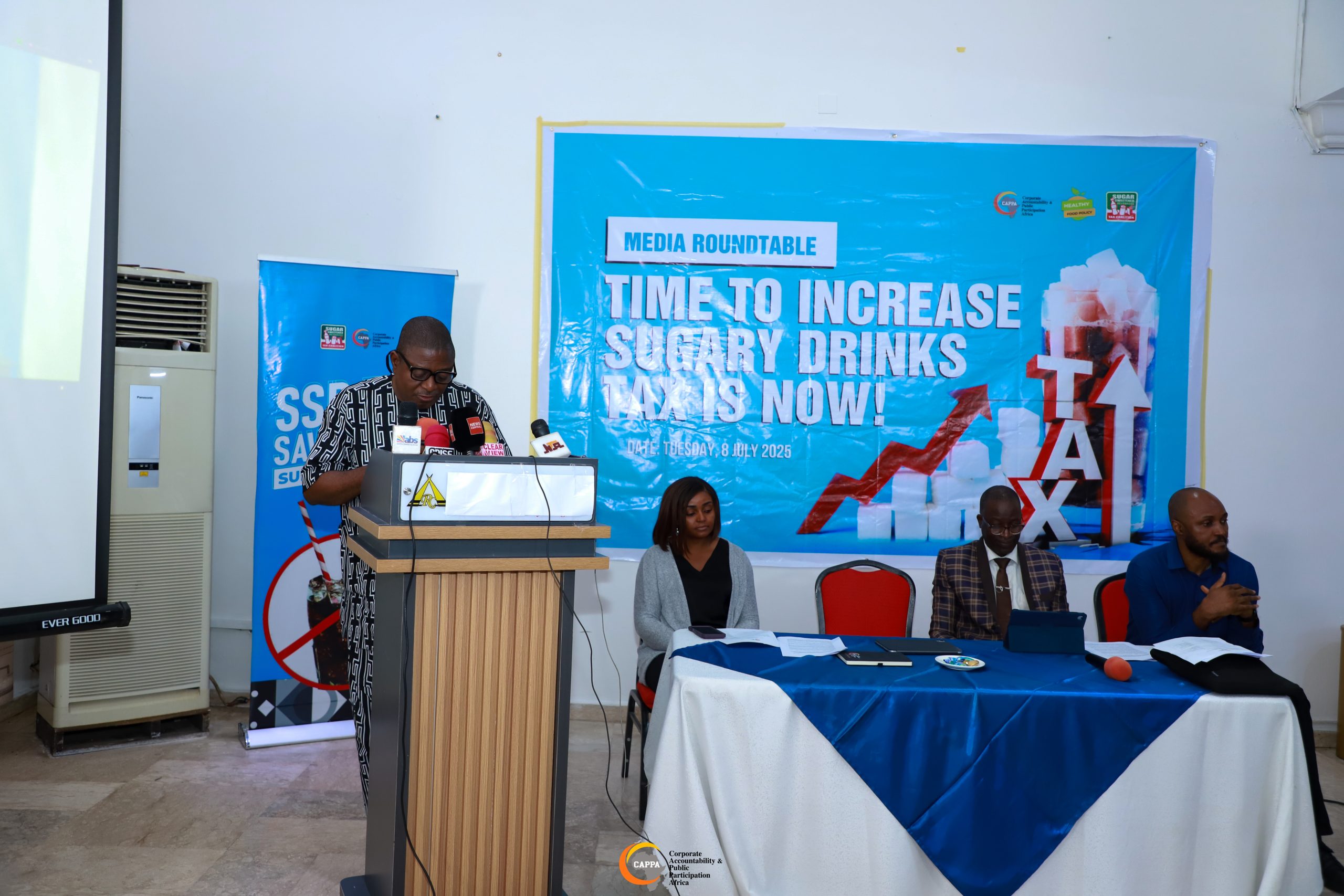
The Corporate Accountability and Public Participation Africa (CAPPA) has reiterated the call for an increase in Sugar Sweetened Beverage (SSB) tax, to raise the final retail price of sugary drinks in line with WHO recommendations.
The World Health Organisation (WHO) has advised Nigeria and other member countries to raise the prices of sugary drinks, alcohol and tobacco by 50 per cent through taxation over the next 10 years, to help curb rising non-communicable diseases.
CAPPA posited that increasing the SSB Tax by 20 or 30 percent, or ideally 50 percent, as recommended by WHO, will reduce consumption among Nigerians and push manufacturers to reformulate their products.
In his remark at the Media Roundtable in Abuja, the Executive Director of CAPPA, Mr Akinbode Oluwafemi, explained that it is important for the Nigerian government to increase the SSB tax from ₦10 per litre to at least ₦130 per litre.
Oluwafemi lamented that Nigeria is missing out on valuable revenue, as “a stronger and better-structured SSB tax has the potential to generate over ₦200 billion each year.” He asserted that “such funds could directly support Nigeria’s goal of increased healthcare financing, including the Basic Healthcare Provision Fund, the National Health Insurance Authority, and school feeding programmes, helping to build a healthier and more equitable society.”
He said “at a time when Nigeria is grappling with a double burden of health emergencies and tightening public finances, a well-designed and efficiently implemented SSB tax offers a low-cost, high-impact solution with broad benefits. It can reduce diet-related diseases, ease pressure on overstretched health systems, and generate much-needed domestic revenue.
“A stronger SSB tax will save lives, ease the pressure on our fragile health system, and generate much-needed revenue to build a healthier, more prosperous nation. Let us choose health over profit. Let us choose the future over the past.”
The CAPPA ED further noted that “a more robust SSB tax will reduce the consumption of sugar-laden drinks, lower the incidence of preventable illnesses, and improve national health outcomes. It also offers a practical way to expand Nigeria’s fiscal space without increasing broad-based taxes.
“At a time when oil revenues are volatile and public financing needs are growing, modifying consumption habits while raising domestic resources is both efficient and equitable.”
Corroborating Oluwafemi, Dr Joseph Ekiyor, a Global Health Practitioner and Researcher, in his presentation at the Media Roundtable, also shared that raising SSB tax to ₦130/litre could slash consumption by 29%, reduce obesity, and boost revenue.
He charged the media to continue raising awareness on the dangers of SSB consumption, stressing that “behavioural change communication should be an ongoing process as repetition is necessary to inform change.”
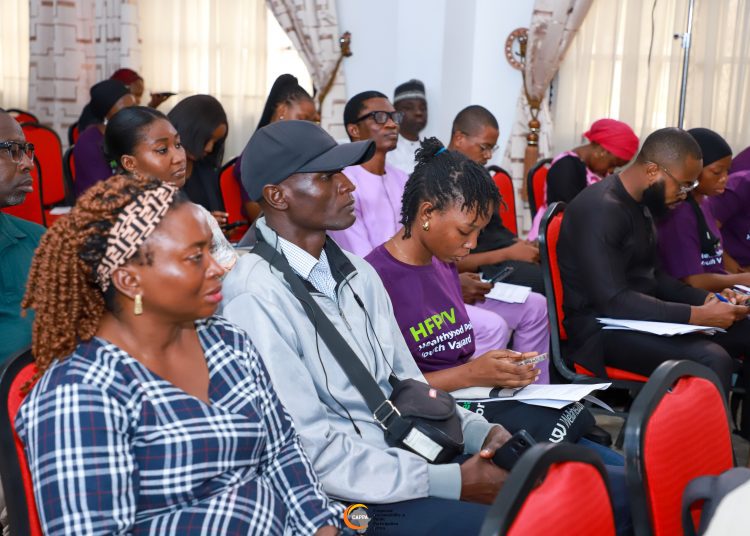
Professor Olukunmi Olaitan, Professor, Public Health Promotion and Nutrition Education, University of Ilorin, who shared that “eating unhealthy food is like paying death on installment”, also reiterated the need for an increase in SSB by at least 20%.
He called for “transparency and efficiency in labelling these products, so that consumers are better informed about what they are consuming,” and called for the “prohibition of child-focused advertising, to safeguard the health of young Nigerians.”
Also speaking on advertising and aggressive marketing by SSB companies, Joy Amafah, the In-Country Director, Food Policy Programme, GHAI, said, “SSB companies are engaging in a high-stakes battle to protect their profits at the cost of public health.”
She noted that reports show that the SSB industry is “proposing weaker taxes tailored to favour industry interests at the risk of public health by weakening the SSB tax design, the industry influence dilutes regulations, policies and processes at the country level to delay policy implementation and protect their products.”
Amafah called on governments to prevent industry influence from undermining high standards and best practices of tax design and opposing self-regulation solutions. Prepare to protect the SB tax from deceptive industry claims and defend it against legal challenges.
Austin Iraoya, an Economist and Researcher, mentioned that there is no better time than now, for the Nigerian Government to take the right decision and increase the SSB tax. He reiterated that “SSB tax will ease the burden on the strained public health fund.”