

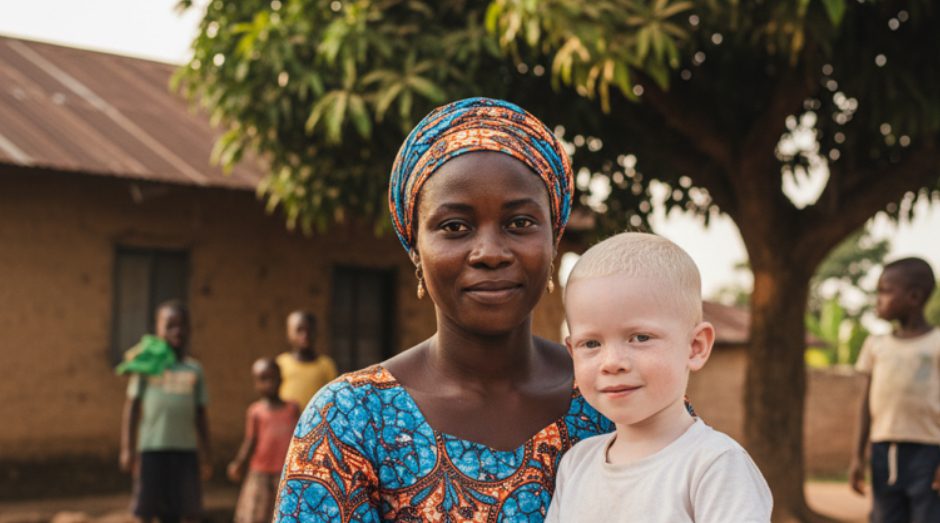
When Mrs. Febishola Babatunde first held her newborn with albinism, she was stunned.
“I was marvelled. What is this? Where did I get this from? How am I going to cope?” she recalled.
Fear and uncertainty clouded those early days, but today, Mrs Babatunde says her story is one of strength, gratitude, and advocacy.
Mrs. Babatunde had her son after having two melanin-colored children, hence her surprise, as, according to her, there are no persons with albinism in her family. However, that did not deter her, as she began learning how to adequately care for her son, including his skin, diet, and eyes.
‘Then, people said I should put salt in his bathing water, they said I should reduce salt in his food, but anything I cook without salt, the boy will say, Mummy, your food is not sweet. When he entered school, I felt he needed help in school and so I approached his teacher for extra lessons, but she refused, saying that he wouldn’t be given extra time during the examination,’ she revealed.
Albinism is a genetic condition that causes low levels of melanin in the body, which is often accompanied by visual impairment and skin complications. While all forms of albinism involve a reduced production of melanin, it affects people very differently.
While albinism affects approximately 1 in 20,000 individuals worldwide, Nigeria has one of the highest prevalence rates globally. The country’s tropical climate, with its intense sunlight, places People With Albinism, PWAs at heightened risk of skin cancer.
A UN study reveals that most people with albinism in Nigeria die from skin cancer before age 40.
With limited widespread knowledge on how to protect themselves, the health risks that Nigerians with albinism are susceptible to are also more pronounced. As a result, skin cancer, amongst other issues, has become one of the leading causes of death in the albinism community. All these factors compound their problems, causing them to be socially disadvantaged.
For Mrs Precious Olumide, adjusting to motherhood as a melanin coloured parent of a child with albinism was far from easy. Running a stall at the market meant she often had to juggle business with childcare.
“I cried and didn’t want to take him home with me. The nurses at the hospital had to pet me before I carried him. At first, I would just drop him in a corner to play by himself while I sold my goods. Some people cautioned me and advised me to put him in a daycare, which I later did,” she said.
According to her, she was ill-equipped for the extra care the condition requires. She, however, said she learnt not to expose him to the sun and watch his diet. But new challenges emerged as he grew older.
She revealed that her son’s failing eyesight worries her the most. “The teachers complain that he cannot see the board. He can read things close, but not from far. Other children help him copy notes. They said I should get him glasses, but I don’t have the money,” she said.
Mrs Febisola Babatunde, however, revealed that a turning point for her family was when her son joined the association for people living with albinism in the state.
“Since then, I have been enjoying and benefiting from the association. They educate us on how to behave, how to dress, and the type of food to eat. They even provide clippers so they won’t contract diseases from barbers,” she disclosed.
Do persons with albinism receive adequate support?
But for some children born with albinism in Ondo state, the story is not all roses for them, as life begins with rejection.
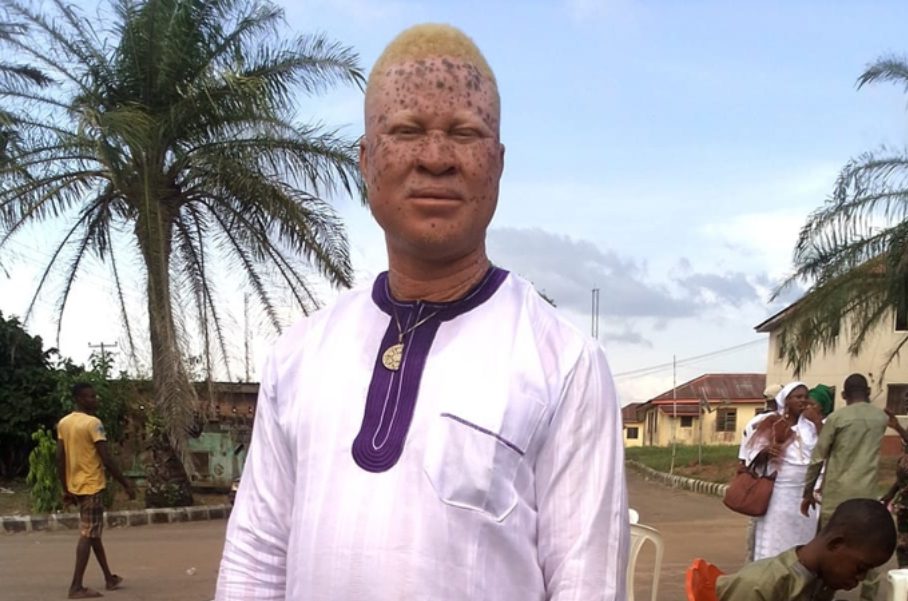
The chairman of the albinism association of Nigeria, Ondo State chapter, Prince Ayodele Fagorola said that while the state government sometimes helps with the procurement of skin care products, many children with albinism face deep social stigma that often leads to family separation.
“We go out to source everything we need, with the help of our governor, Dr. Lucky Aiyedatiwa. The state government supports us with sunscreen, sunblock, and sometimes educational opportunities. We are grateful for that. But some fathers run away when their wives give birth to a child with albinism. Sometimes, the mother also leaves, and the child is left with the grandmother. It breaks my heart,” he said quietly.
Fagorola, who has lived through similar rejection, shared his own story.
“My father was a lawyer when my mother gave birth to me, he said, in our family, we don’t have any child with albinism. I told him, if you don’t accept me, you won’t get a promotion. And truly, not long after he accepted me, he became a judge. From then till he died, I was the child he loved most,” he recounted.
Credit: Facebook
He revealed that the association also intervenes in cases of child abandonment, adding that when such cases are reported, the association works with human rights agencies to compel the parents to take responsibility.
“We report them to human rights offices,” he explained. “Sometimes, the parents agree to pay for the child’s upkeep, but after two or three months, they stop sending money. Some disappear completely. So, we try to find other ways to support the children. We work with some local NGOs, which provide scholarships and educational materials to students with albinism in primary and secondary schools. They pay their school fees, buy uniforms, textbooks, and notebooks. It makes life easier for their parents,” he added.
Despite limited funding, the association continues to operate as a support network, which offers hope, solidarity, and visibility to people with albinism who face lifelong challenges of discrimination and health risks.
A sentiment buttressed by Mrs Babatunde and Mrs Olumide as they called for better empowerment and employment opportunities, noting that the scarcity of good jobs often pushes persons with albinism into blue-collar jobs which are most times not conducive for their eyesight and skin condition.
Disability Advocate Urges End to Stigmatization of Persons with Albinism
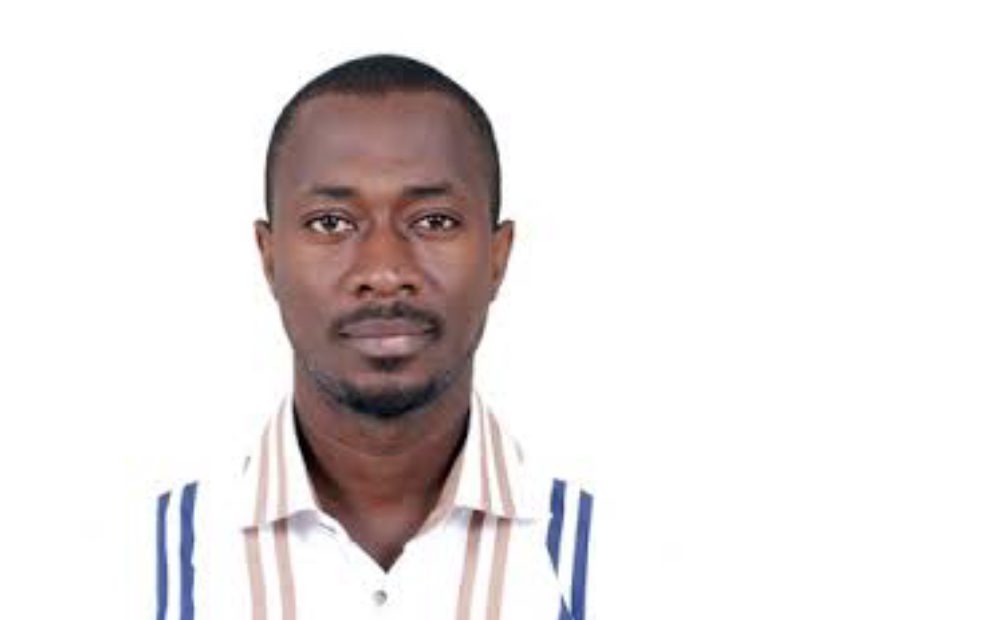
A disability rights advocate, Mr. Martin Mary-Falana, called for stronger recognition of the rights of persons with albinism in Nigeria, stressing that discrimination against them is both harmful and unacceptable.
According to him, albinism does not make anyone less human and that people with the condition deserve equal respect and opportunities.
“As persons with albinism, they need to know their rights are also human rights; nobody should discriminate or stigmatize them because of the color of their skin. It is a sad and bad attitude from the public,” he said.
He emphasized that stigma often begins within families and is reinforced by society, urging parents, communities, and institutions to change their attitudes. “They are human beings. God made them to be like this. Family members should not stigmatize, they themselves should not self-stigmatize, and the public must not stigmatize or discriminate against them,” he revealed.
While condemning stigma and negative stereotypes, the advocate also pushed for structural changes. He called on the government to involve persons with disabilities in the budget process, particularly in ministries such as Health, Social Welfare, and Women’s Affairs.
“If persons with disability or persons with albinism are part of the Annual Operation Plan, they will be able to insist that the word ‘albinism’ or ‘disability’ appears in the budget with appropriate funding. Each state has its peculiarities, and the budget must reflect the needs of vulnerable groups.” he added.
He called for policies that protect people with albinism from social exclusion while ensuring they have access to healthcare, education, and equal opportunities in all areas of life.
For Mrs Babatunde, raising a child with albinism is no longer a burden but a blessing. “Some people discriminate against them. But I love them. If I want to be born again, I would like to have them more — not because of their skin, but because of their intelligence. They know how to answer you; they are not nonsense in the street,” she said.