
A new report by the Corporate Accountability and Public Participation Africa (CAPPA) has accused food and beverage companies of exploiting Nigeria’s 2025 Christmas and 2026 New Year celebrations to aggressively promote sugary drinks and ultra-processed foods, worsening the country’s growing public health crisis.
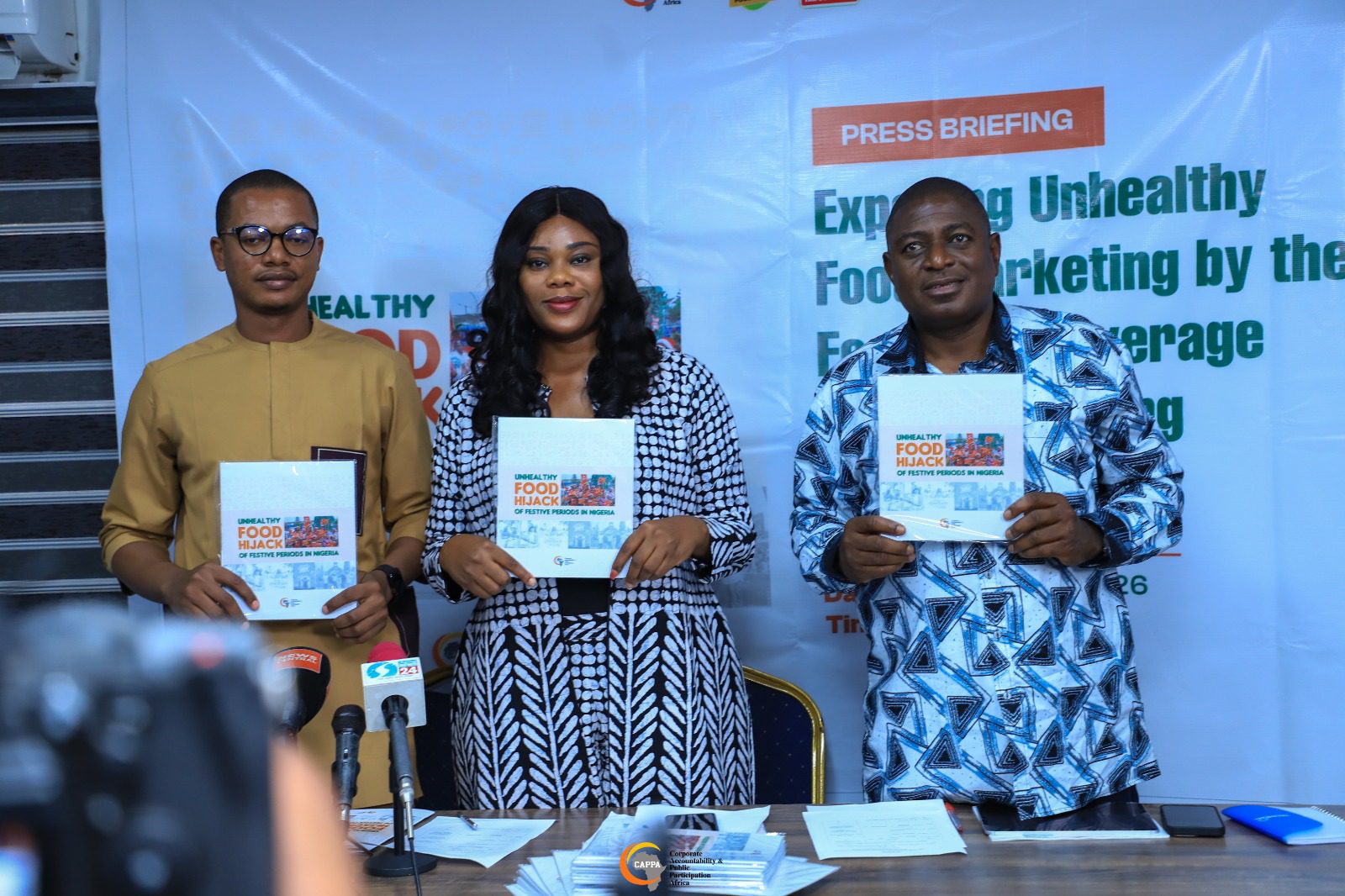
The report, ‘Unhealthy Food Hijack of Festive Periods in Nigeria’, was presented at a press briefing in Lagos. It documents widespread marketing activities carried out between late November 2025 and early January 2026 across malls, parks, markets, transport hubs, churches, and digital platforms, specifically targeting children and using pester power.
While delivering his welcome remarks at the press briefing, CAPPA’s Executive Director, Mr. Akinbode Oluwafemi, shared that campaigns by food and beverage companies were highly coordinated as they invested heavily in outdoor branding, sponsored events, market activations, school and community donations, and targeted digital advertising.
He said “the common thread was not festive imagery itself, but the strategic use of cultural and religious moments to normalise frequent consumption of products high in sugar, salt, and unhealthy fats. Messages consistently linked these products to togetherness, generosity, celebration, and even moral virtue, particularly within low-income communities.”
Corroborating him, Humphrey Ukeaja, CAPPA’s Industry Monitoring Officer noted that companies coordinated online and physical promotions to associate unhealthy products with joy, generosity, and national pride.
Ukeaja specifically noted that children and young people were heavily targeted through the use of Santa characters, cartoon imagery, free product samples, school donations, and music concerts.
The report further criticised the use of corporate social responsibility (CSR) initiatives as disguised advertising. Product donations to schools, churches, and community groups were framed as charity but were heavily branded, turning public and religious spaces into marketing platforms.
It also warned that festive-period marketing worsens Nigeria’s already unhealthy food environment, especially for low-income communities and children who are most exposed to branded spaces without health warnings. These practices, according to the report, are linked to rising cases of hypertension, diabetes, stroke, and heart disease across the country.
“The impact is uneven. Children, young people, and low-income households are the most exposed and the least protected, yet they bear the highest health and financial costs when diet-related illnesses emerge,” Oluwafemi said.
As part of its recommendations, CAPPA called for stiffer sanctions of unhealthy food advertising, including a ban on marketing to children and restrictions on branding in schools, churches, parks, and public events.
The organisation also urged the government to increase Nigeria’s sugar-sweetened beverage tax to at least 50 percent of retail price, in line with World Health Organization guidelines.
Other proposals include mandatory front-of-pack warning labels for foods high in sugar, salt, and saturated fat, as well as tighter controls on influencer marketing, artificial intelligence-generated content, and digital promotional lotteries.
CAPPA also appealed to journalists to critically examine festive marketing campaigns rather than reporting them at face value and urged regulators to impose tougher penalties on companies that violate advertising rules.
“Festive seasons should not come with hidden health costs. They should support nourishment, wellbeing, and genuine social connection, not contribute to preventable illness and long-term suffering.
“The message of this report is clear. Nigeria must reclaim its public spaces, regulate its food environment, and place public health above corporate profit,” Oluwafemi said.