

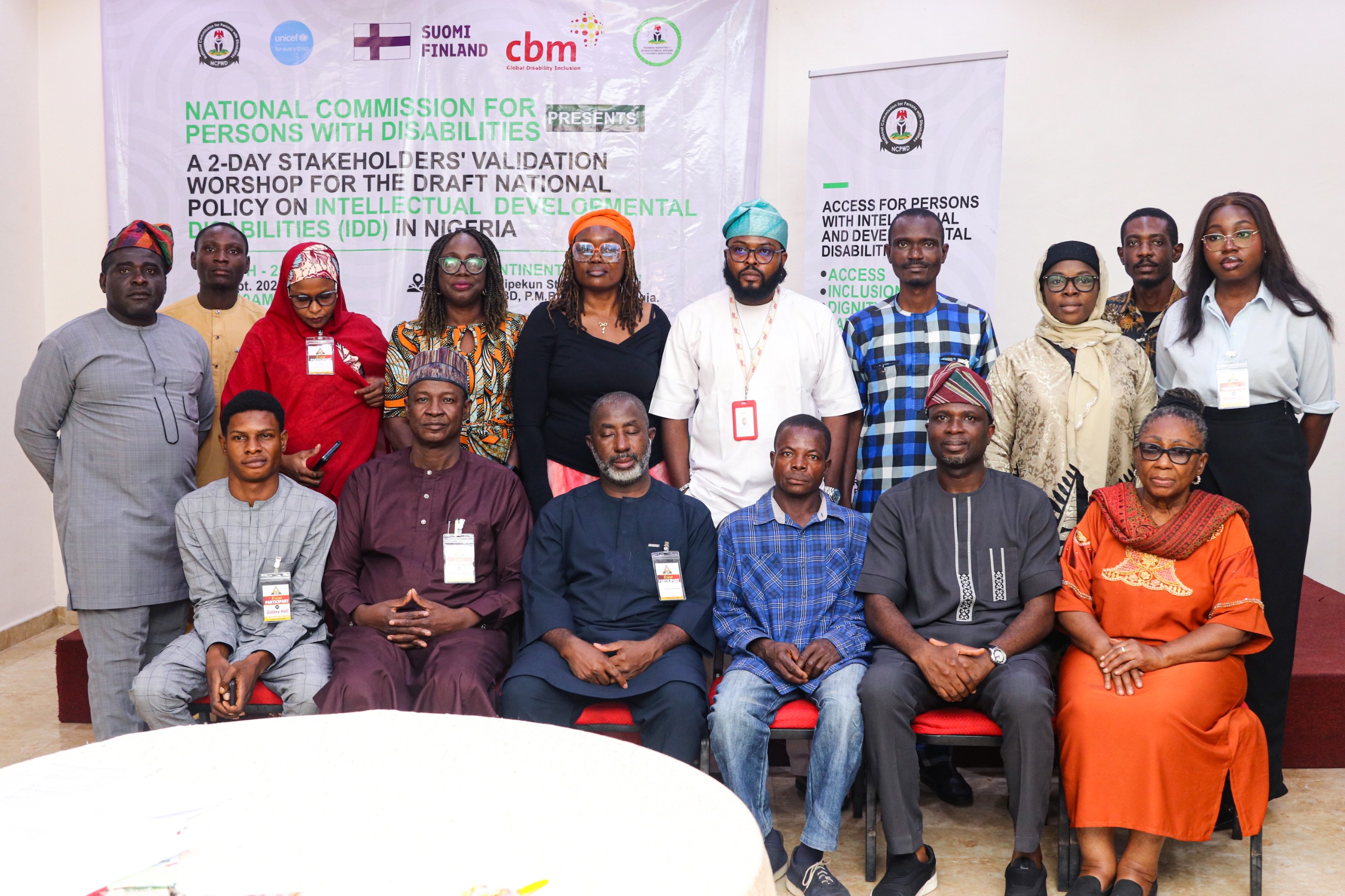
The National Commission for Persons with Disabilities (NCPWD) and key stakeholders have intensified efforts to secure equal rights and a landmark inclusion policy for persons with intellectual and developmental disabilities (IDD) in Nigeria.
This push took centre stage as the Commission opened a two-day stakeholders’ validation workshop on the Draft National Policy on Intellectual and Developmental Disabilities in Abuja.
Themed “Strengthening Rights, Inclusion and Support Systems for Persons with Intellectual and Developmental Disabilities in Nigeria,” the workshop was described by the Executive Secretary of the Commission, Hon. Ayuba Burki Gufwan, as a critical milestone in strengthening Nigeria’s disability-inclusive development agenda and in building a society where persons with IDD are recognised, respected and supported as equal citizens with rights, abilities and valuable contributions.
Delivering the Executive Secretary’s opening remarks, the Director of Planning, Research and Statistics at NCPWD, Mr Aliyu Agwai, commended the commitment of representatives of ministries, departments and agencies, development partners, civil society, Organisations of Persons with Disabilities, academia, parents, caregivers and families.
He noted that IDD has for long been viewed only through medical diagnosis and dependency, a perspective he said does not reflect the aspirations and potential of persons with IDD, who are children, young people and adults with talents and the right to make choices.
Agwai said the task of the Commission is to remove barriers in schools, healthcare, workplaces, social protection, justice, transport and information systems, as well as attitudinal barriers.
Citing progress recorded through the Discrimination Against Persons with Disabilities (Prohibition) Act, 2018 and the UN Convention on the Rights of Persons with Disabilities, he stressed that rights must be felt in everyday life through programmes, budgets and responsive institutions.
According to him, the draft policy provides a coordinated framework covering the whole life course, from early identification and intervention to education, healthcare, employment, independent living and community participation. He said it must be shaped with the meaningful participation of persons with IDD and their families.
He urged stakeholders to ensure that the final document is practical, inclusive, informed by evidence and implementable at state and local government levels. He assured them of the Commission’s commitment to coordination, technical support and monitoring for effective implementation.
The Technical Adviser to the Commission, Dr Adebayo Adebukola, said that while general disability laws such as the 2018 Act provide a foundation, they lack specific provisions for the complex, lifelong support needs of persons with IDD.
To close the gap, he explained, the draft policy establishes a coherent national framework that aligns Nigeria’s practice with international standards, particularly the UN Convention. Its vision is anchored on five dimensions, namely Rights, Inclusion, Protection, Support and Participation.
Adebukola added that the policy cuts across sectors and applies to government agencies, employers, service providers, caregivers and the public, in order to safeguard the dignity and equal opportunities of persons with IDD throughout their lives.
The Head of the Education Unit at NCPWD, Dr Kehinde Ogunbiyitan, said the main objective of the gathering was to rigorously evaluate the draft policy to ensure it offers actionable strategies for bridging the systemic gaps facing persons with IDD. He stressed that education policy cannot be treated in isolation and that any sustainable policy response must adopt an all inclusive framework.
The National President of the Association for Intellectual and Developmental Disabilities of Nigeria (AIDDN), Evangelist Babatunde Willoughby, PhD, commended NCPWD for convening the workshop.
He acknowledged the foundation laid by the previous administration of AIDDN under Mrs Joko Omotola, during whose tenure the policy document was prepared and submitted for consideration.
The organisers said the policy is built on six core objectives. These are to ensure full inclusion and active participation of persons with IDD, strengthen legal protection and equal rights, and improve equitable access to healthcare, education, employment, transport, housing and social services. The others are to provide structured support for parents, caregivers and families, reduce stigma through sustained awareness and advocacy, and establish standardised guidelines for service provision.
According to Adebukola, the policy is organised into six strategic implementation pillars. They cover health and wellbeing, education and skills development, employment and economic inclusion, social protection and community support, support for parents, families and organisations of persons with IDD, and research, data collection and awareness.
The Commission thanked UNICEF, Rights in Action, non governmental organisations, Organisations of Persons with Disabilities, ministries, departments and agencies, and all relevant stakeholders for their contributions towards the successful validation exercise.