

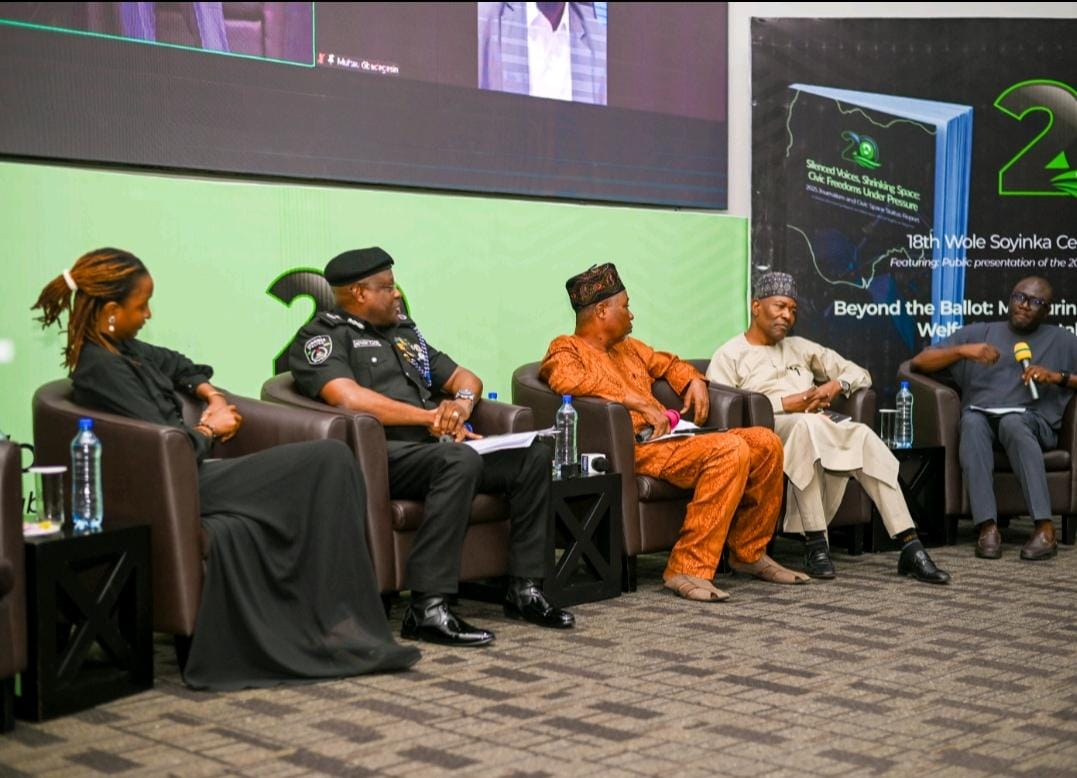
Professor of Communication at Bayero University, Kano, Umaru Pate, has urged media stakeholders to take collective responsibility for the safety and welfare of journalists, lamenting that while journalists excel at telling other people’s stories, they often fail to speak up about their own challenges.
Pate made the call at the 18th Wole Soyinka Centre Media Lecture Series and the public presentation of the 2025 Journalism and Civic Space Status Report, organised by the Wole Soyinka Centre for Investigative Journalism (WSCIJ) in Lagos.
The event, which, coincided with the birthday of Nobel laureate and literary icon, Wole Soyinka, after whom the lecture series is named, as well as that of Arogundade, who shares the July 13 birth date with the renowned playwright, attracted journalists, academics and policymakers.
Speaking during a panel session on how policymakers should move “from talking to action” Pate said sustained advocacy was needed to help government officials, media owners and employers understand the multiple dimensions of journalists’ safety.
”Many people do not realise that journalists go through serious psychological and economic challenges because we are good at telling people’s stories but not our own. We make other people’s business our business, but we keep our own struggles quiet for whatever reasons,” he said.
He criticised media owners who prioritise cheap labour over journalists’ welfare, saying many employers pay salaries below acceptable standards without any legal consequences.
The professor of communication described how journalists endure harassment, poor working conditions and prolonged salary delays but remain silent out of fear of unemployment.
”Journalists are harassed and victimised, yet many keep quiet instead of speaking up. Most journalists do not go to court against employers who owe salaries for months, pay below minimum standards or mistreat their staff because unemployment is widespread and people are desperate to survive,” he said.
He identified the need for collective responsibility, stressing that “we need serious advocacy and enlightenment for policymakers and media owners to understand safety— psychological, physical, economic, gender and digital safety,” he said.
Calling for stronger professional solidarity, Pate said journalism associations must become more effective in defending members’ rights.
”There must be a collective voice. As long as we remain fragmented, we will continue to struggle. Some of the bodies expected to protect journalists are themselves struggling for survival, and that weakens their legitimacy and ability to defend the profession.”
Also at the event, media career specialist and Founder of the Media Career Development Network, Mr Lekan Otufodunrin, reviewed the WSCIJ report titled “Silenced Voices, Shrinking Spaces: Civic Freedoms Under Pressure.”
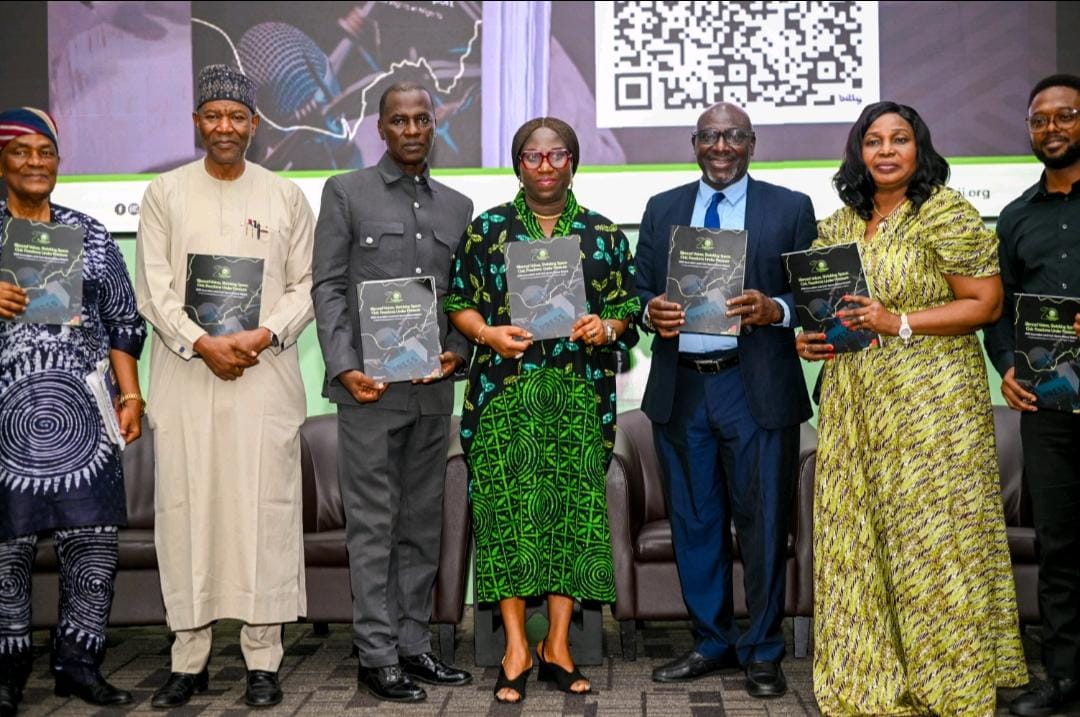
The report analyses documented violations of civic freedoms across Nigeria between January and December 2025, revealing increasing restrictions on freedom of expression, access to information, peaceful assembly, association and broader civic participation despite constitutional guarantees.
According to the report, journalists, media organisations, activists and citizens expressing political, social and governance-related views remained among the most affected groups.
However, unlike 2024 when journalists recorded the highest number of violations, the 2025 report found a significant increase in incidents involving ordinary citizens, suggesting that restrictions are increasingly extending beyond the media to wider democratic participation.
The report also showed that Abuja and Lagos recorded the highest number of documented incidents because of their concentration of political activities, media organisations and civic engagement.
It cautioned, however, that lower figures in other states should not be interpreted as evidence of greater freedom, noting that underreporting, limited documentation and normalisation of violations may have concealed the true scale of abuses.
Explaining the methodology, Otufodunrin said the report relied solely on verified and documented incidents.
”You cannot invent what was not reported. Some incidents simply were not captured during the monitoring period,” he said.
He added that many journalists who experienced violations failed to report them, limiting the available evidence.
”The report does not assess motives beyond what is contained in documented records and publicly available information. Its findings are limited to verified incidents identified through media reports and available documentation.”
Otufodunrin commended WSCIJ for consistently documenting civic space violations, describing such reports as essential evidence for policymakers and democratic institutions.
”There are times people ask whether we are truly practising democracy or enjoying greater freedom, but there is little evidence available. Reports like this provide that evidence and help stakeholders understand whether civic space is shrinking.”
Comparing Nigeria’s democratic era with military rule, he argued that democratic governance has not produced the level of civic freedom many had expected.
He also observed that fear of job loss discourages many journalists from reporting sensitive issues, while freelancers who depend on payment for published stories often avoid investigations that could expose them to reprisals.
According to the report, WSCIJ documented 245 verified incidents from 570 media reports published by 54 media organisations during the review period.
The findings showed that 219 incidents (89 per cent) involved state actors, while 26 incidents (11 per cent) were attributed to non-state actors.
Among state institutions, the Nigeria Police Force accounted for 118 incidents, representing 54 per cent of all violations linked to state actors.
The report further revealed that 145 incidents involved non-violent measures such as arrests, detention, summonses, legal actions, regulatory sanctions and administrative procedures, while 100 incidents involved violence, including threats, intimidation, harassment, assault and destruction of property.
It concluded that restrictions on civic freedoms are increasingly being enforced through institutional and administrative mechanisms that often attract less public attention but can have equally serious consequences for democracy and fundamental rights.
Also speaking during the panel discussion, Executive Director of the International Press Centre, Mr Lanre Arogundade, said attacks on journalists remain widespread, particularly during election coverage.
He noted that many assaults recorded during elections were carried out by political party supporters rather than security agencies.