

Environmental, agricultural and public health experts have warned that Nigeria’s growing embrace of industrial animal farming could undermine the country’s public health systems and threaten its food sovereignty if urgent safeguards are not put in place.
Speaking at a media training on Industrial Animal Farming and its Implications for Nigeria, the advocates cautioned that the country’s new partnership with JBS, a multinational meat corporation, could deepen environmental degradation, displace smallholder farmers, and increase vulnerability to public health crises.
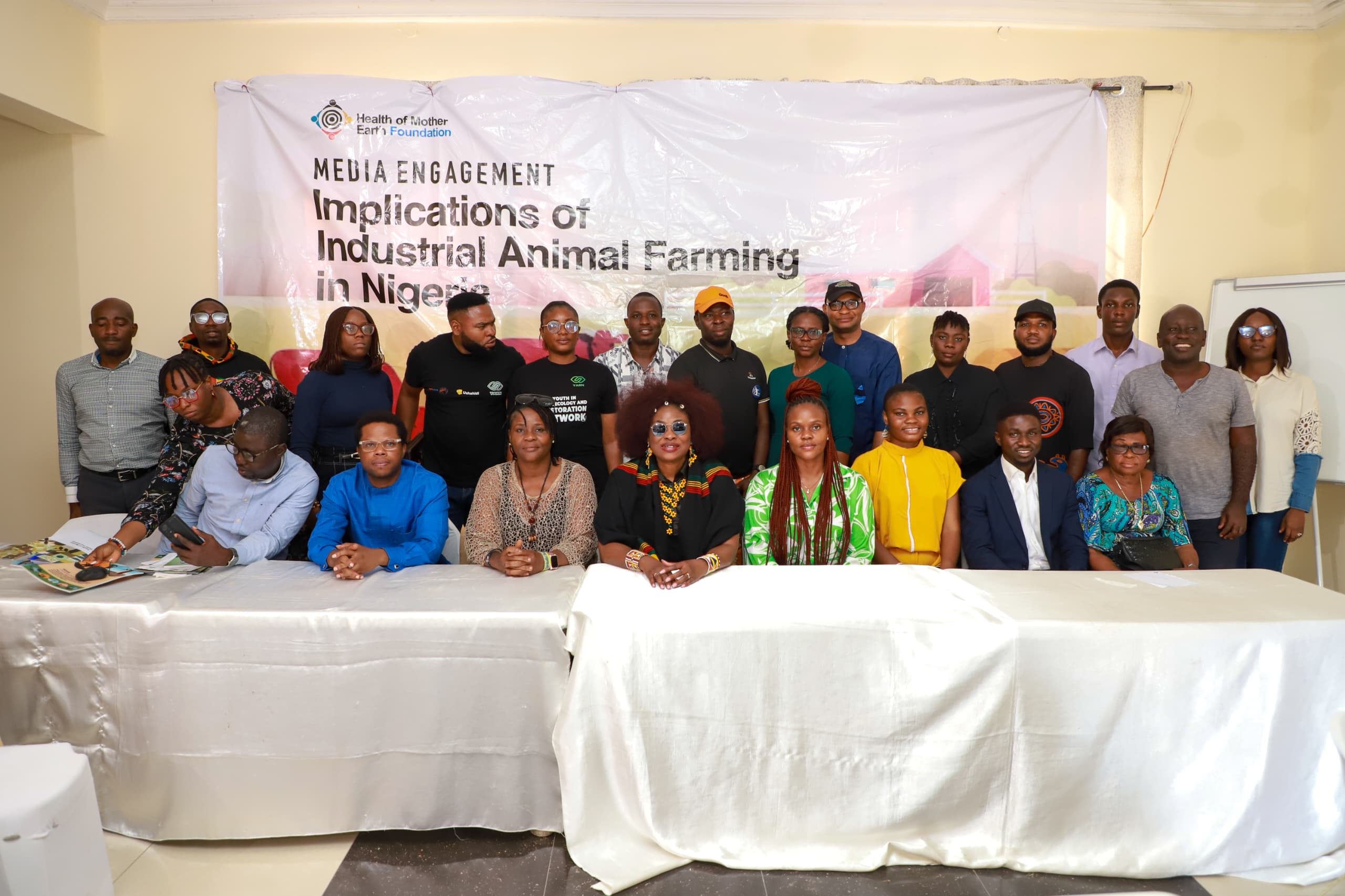
The training was organised by the Health of Mother Earth Foundation (HOMEF) and Environmental Rights Action (ERA), in collaboration with the Youth in Agroecology and Restoration Network (YARN) and the HEDA Resource Centre, to strengthen journalists’ capacity to report critically on industrial livestock production and its consequences.
Providing a background to industrial animal farming in Nigeria, Joyce Brown, Programme Manager at HOMEF, explained that the recent entry of Brazilian meat processing corporation, JBS, in November 2024 has led to a five-year investment deal of $2.5 billion with the Nigerian government.
Brown explained that the agreement includes plans to build three poultry plants, two beef processing plants, and one port facility, with Ogun State identified as a major hub, while Niger State has also offered 1.2 million hectares of land to host part of the project.
While the government has described the partnership as a boost to Nigeria’s agribusiness potential, Marrian Bassey-Olsson, Coordinator, Food Sovereignty Program, Friends of the Earth Nigeria and Africa, warned that the model could replicate the damaging consequences of industrial livestock systems seen in other parts of the world.
Bassey-Olsson noted that large-scale, intensive animal farming often relies on confined animal feeding operations and heavy antibiotic use, which can foster the spread of zoonotic diseases and antimicrobial resistance.
The environmental advocate described factory farming as “a profit-driven system that prioritises output over sustainability,” adding that “whatever threatens the environment threatens our existence.”
She explained that industrial meat production typically leads to heavy land and water use, soil degradation, and pollution from animal waste.
“The implications for the environment include water and land pollution, high greenhouse gas emissions, deforestation, resource depletion, animal welfare concerns and community disruptions,” she added.
She demanded that the Nigerian government explore relevant and healthier alternatives to industrial animal farming, such as “promote agroecology, local food systems and farmer-led systems; strengthening smallholder farmers through policy support and investments; and promoting food sovereignty such that communities can decide what they eat and how they produce it.”
Bassey-Olsson, who noted that the future of food in Nigeria is at stake, called for a collective effort to safeguard food sovereignty and public health.
She said, “policy makers should protect farmers and regulate corporations; citizens should support local farmers and demand healthy food; and movements should build alliances to resist industrial agriculture.”
Also speaking, Abimbola Solagbade, the Executive Director, Health Beyond Barriers Initiative, added that Nigeria’s already strained health system could face new burdens from diseases linked to industrial livestock farming.
He warned that zoonotic diseases such as Ebola, Mpox, COVID-19, rabies, and Lassa fever can be worsened by industrial animal farming.
In his presentation titled ‘Spotlighting the Impact of Industrial Agriculture on Frontline Communities in Nigeria’, Mayowa Shobo, Program Manager at HEDA Resource Centre, said industrial agriculture weakens local economies and undermines smallholder farmers who form the backbone of Nigeria’s food production.
Sharing a research report conducted in Nasarawa state, Shobo shared that smallholder farmers have reported that chemical spraying and flooding from large farm activities damaged their crops and reduced their income.
He demanded that the government should also invest in health centres, flood control and early warning systems, while supporting local food production through seeds, inputs and protection of smallholder plants.
He also added that “more attention should go to women and youth, who are often sidelined but carry much of the burden.”