

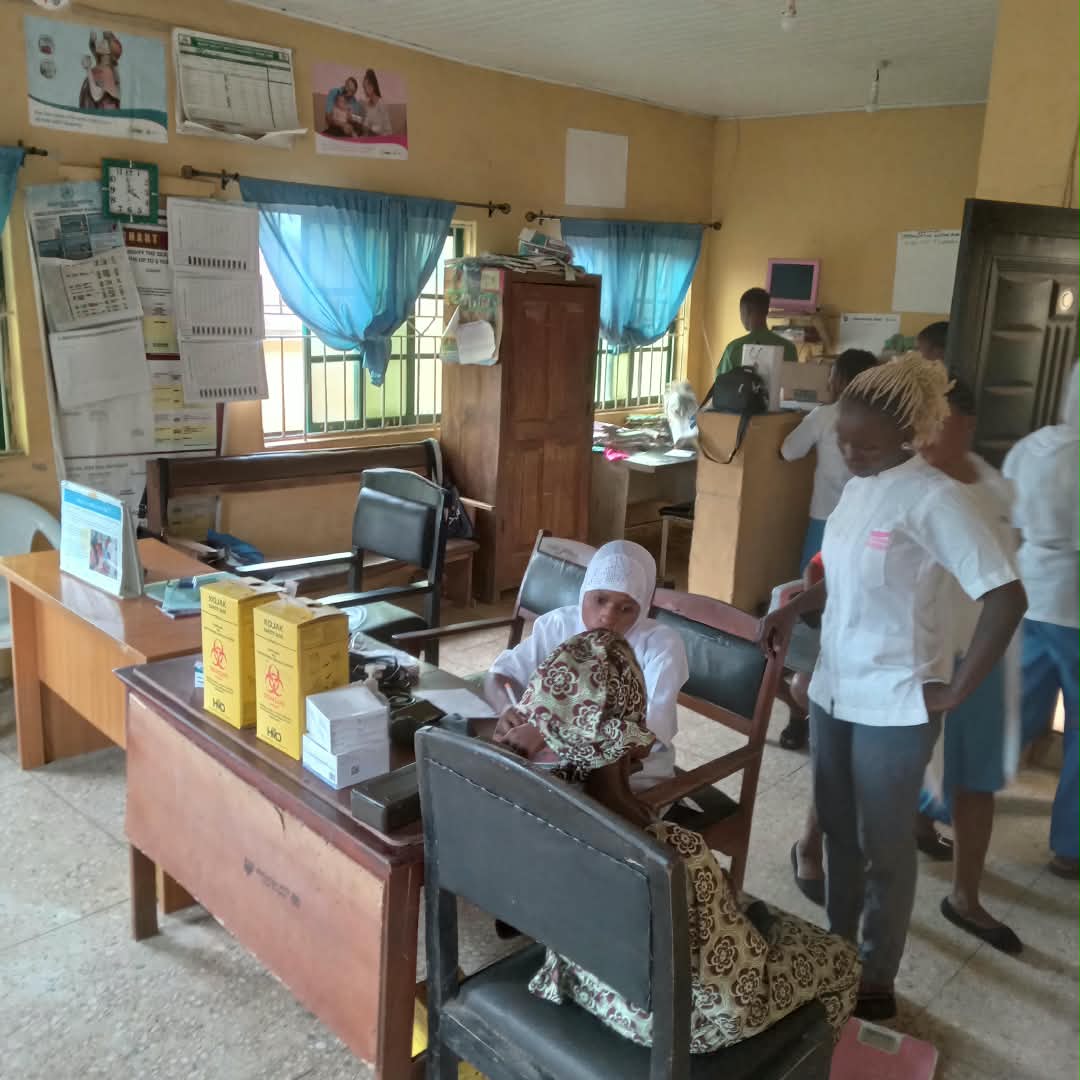
The Federal Government of Nigeria, through the National Primary Health Care Development Agency (NPHCDA), has, since 2023, commenced the revitalisation of Primary Health Centres (PHCs) across the country.
The goal of the revitalisation is to improve the functionality level of all PHCs across the country up to Level 2. To attain Level 2 functionality, according to the NPHCDA, a PHC is expected to have “everything in place for a pregnant woman to deliver a baby safely 24/7; Level 1 tracer plan (ANC and RI), Facility-based deliveries; 4-6 SBAs (Skilled Birth Attendants) with accommodation, Or 6+ SBAs (without accommodation).”
Also essential to be graded at Level 2 functionality are “24/7 access to reliable power, Backup solar power, and Water, Sanitation and Hygiene (WASH) facility.
One of the objectives of the revitalisation is to “provide a conducive environment for health care delivery.”
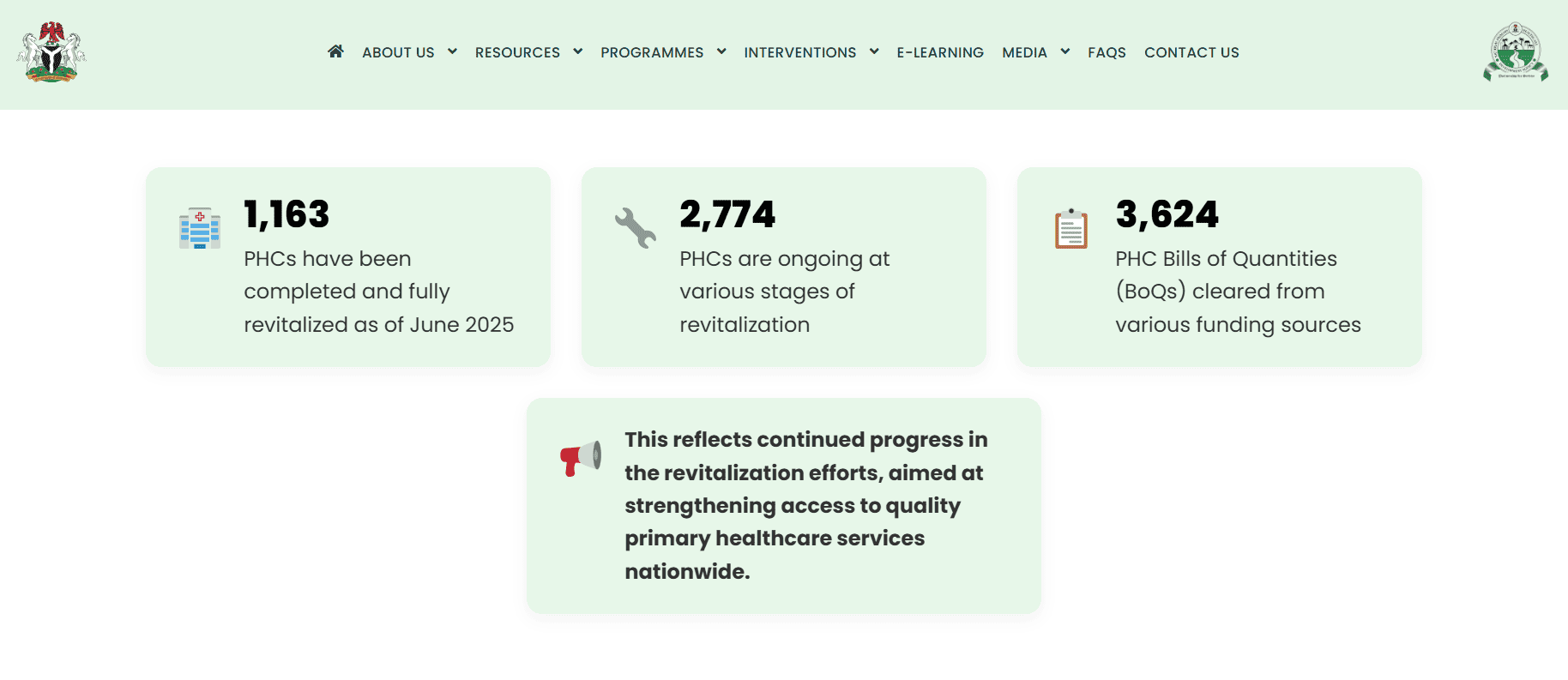
Since commencement in 2023, the NPHCDA confirmed that 1,163 PHCs have been completed and fully revitalised as of June 2025, and 2,774 PHCs are ongoing at various stages of revitalisation.
However, some of the completely revitalised PHCs are not achieving the specific objectives for which they were improved.

When a revitalised PHC still cannot function
Between February and April 2026, the Akrabata Primary Health Centre (PHC) in Ife East Local Government Area (LGA) of Osun State underwent a transformation intended to improve healthcare delivery for residents.
The facility had been dilapidated and in bad shape, but it was renovated and repainted within two months. Apart from the physical revamp, the facility received 15 beds, 10 long chairs, 5 office chairs, 2 microscopes, 2 stethoscopes, 2 thermometers, blood vacuum collection, 2 table sterilisers, 10 iron chairs, 10 small cupboards, a solar panel, among others.
No doubt, the facility is in a better shape to deliver improved healthcare services to community residents.
However, six months after the completion of the revitalisation and distribution of items to the facility, staff still attend to patients outside the facility.

So, Akrabata PHC has been revitalised, but it cannot function as intended.
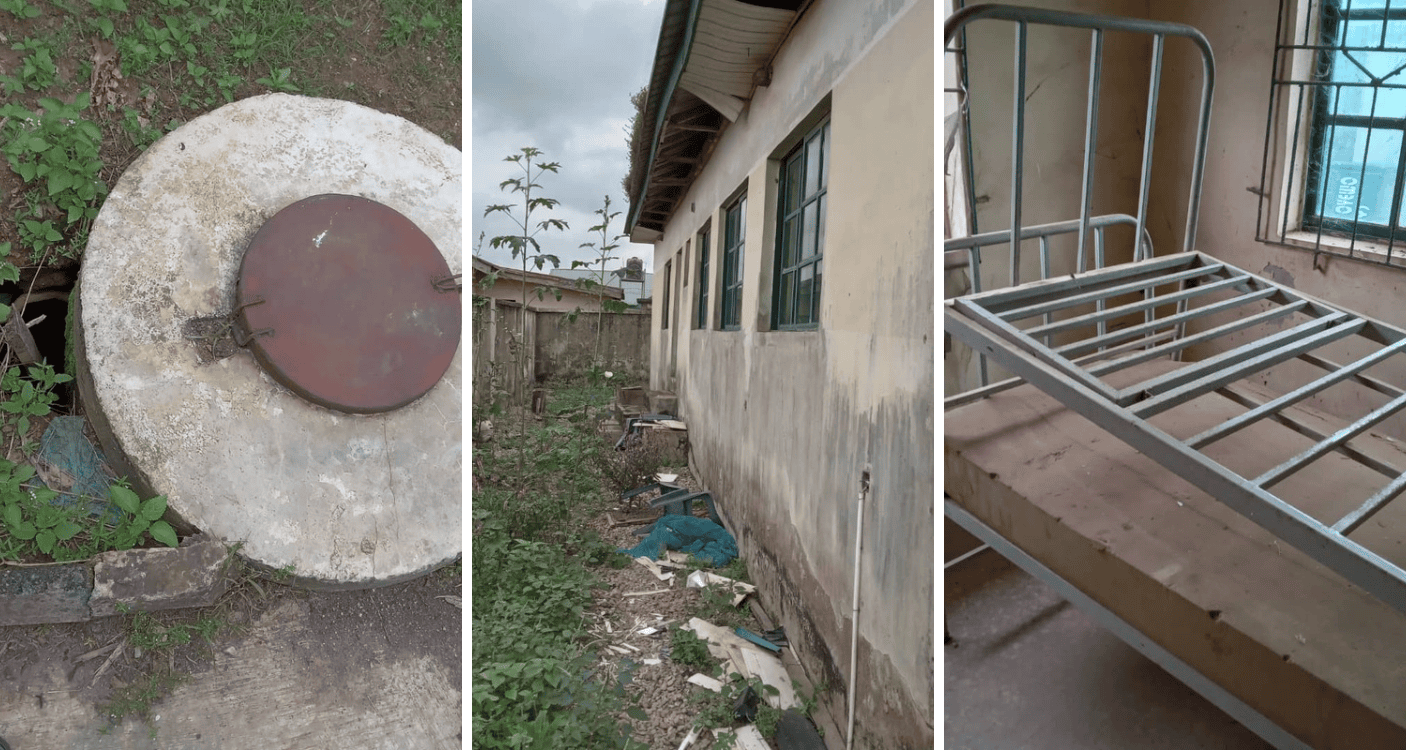
The facility currently has three full-time staff and two volunteer workers. It is also not fenced and lacks appropriate waste disposal.
However, the staff are hoping for a blessed day when the facility will be opened so they can start utilising the items, rather than leaving them in storage.
A community member, Abayomi Adetade, shared that “the prolonged storage of medical items raises concerns about the condition of the items. Furniture and metal equipment can deteriorate when there is no ventilation, and in some cases, prolonged storage might make the items unfit for use.”
Apart from the opening of the facility to use, the staff hopes that more staff can be assigned to the PHC by the time they commence full operation.
Itasin PHC, also in Ife East LGA, currently has 10 staff, both full-time and ad hoc staff, which include Community Health Extension Workers, medical records staff, a health educator, etc.
However, the community is requesting additional staff because it currently serves 20 neighbouring communities, which leave the staff overwhelmed.


“We have a small building, no nursing station, no family planning room, and no counselling room,” says Mrs Oriyomi Onifade*, Community Health Extension Worker at the facility.
The facility also relies on a single ambulance shared among about 20 PHCs, despite the demands of its large catchment population.
She also added that “we do not have an ambulance because the only ambulance available is being shared among almost 20 PHCs. So, if there is any emergency, there is no way we can access it.”
Staffed, but without the basics
At Dagbolu PHC, in Olorunda LGA, the challenge is different. The facility has five permanent staff (with three recently added) and four support workers, but lacks basic infrastructure.
The facility has been cut off from the grid, and there is no source of electricity. There is no reliable water supply, and health workers rely on a well whose water they consider unsafe.
The facility also lacks adequate equipment for day-to-day operation.
When drugs are available but cannot be properly stored
Agboogbo PHC in Iwo LGA has a good physical structure and stable electricity supply with solar. The facility also receives drug supply frequently, with nine staff. However, none of the health workers is a doctor or nurse.
Despite the regular supply of drugs, the facility does not have adequate cabinets to store the medicines. As a result, drugs are kept on the floor.
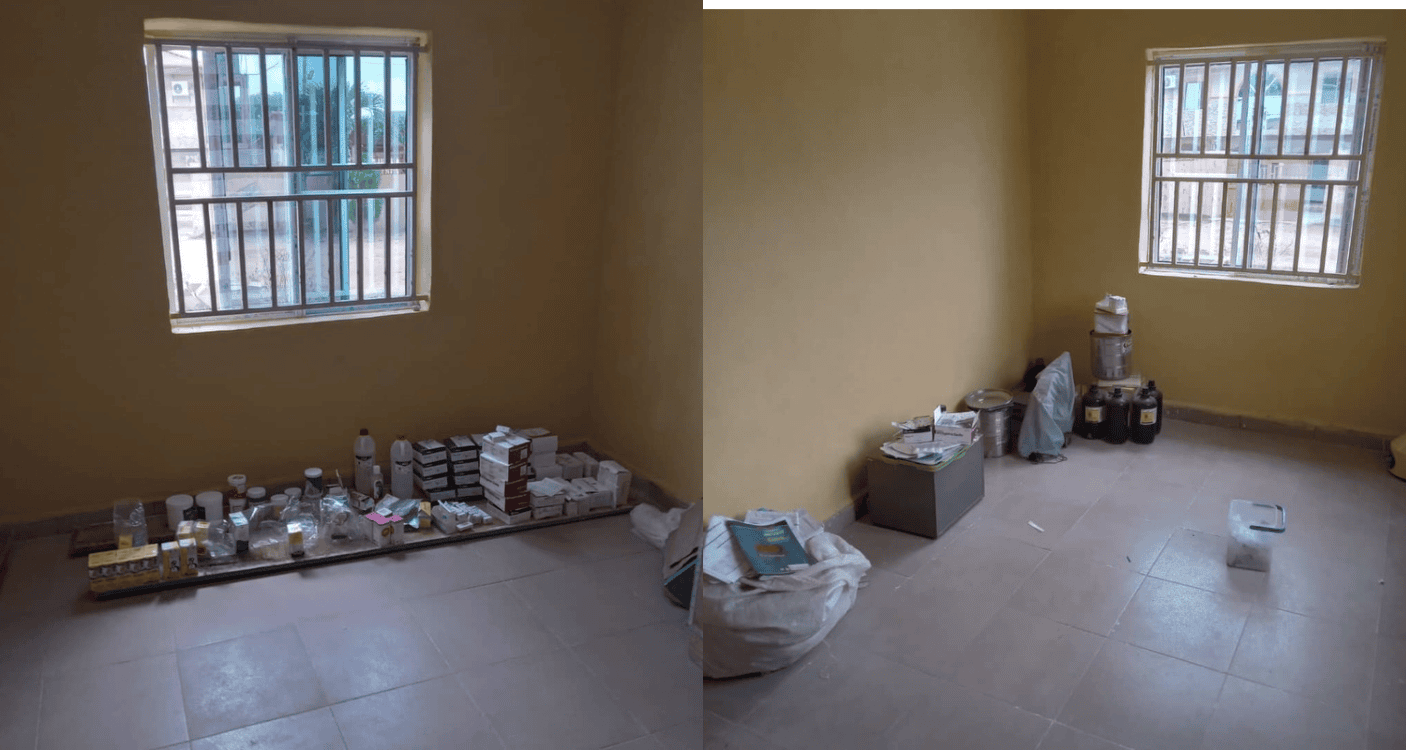
The laboratory equipment are not properly stored as well.
“In this facility, we need an ambulance, delivery beds, shelves for the drugs and laboratory equipment and stretchers,” said Mayowa Akintunde”, a Community Health Extension Worker.
Some PHCs are not accessible because of flood
During the fieldwork, accessing some PHCs became difficult because of bad roads and flooded areas. To reach Ayinrin Adedeji PHC in Atakumosa LGA, this data collector spent nearly two hours, by passing flooded areas and bad road.
At Olopon community near Oke Ago community within Atakumosa East LGA, going further requires lifting motorcycles or walking through the flood to access the PHCs.
Community members lament that the situation is their reality, especially during the raining season.
Some other locations were hilly and anyone who wants to proceed would rather walk, than to be on a motorcyle.
Accessing Aborisade PHC in Ife North LGA requires a trip through Akinlalu along Ife-Ibadan Expressway. This route requires riding for nearly three hours in a swampy area. An alternative route was through Gbongan town, which would take about two hours into the community.
However, the Isaasaha river, which is closer to Aborisade community was flooded and had covered the bridge, which made it difficult for the data collector to reach the PHC.
Commuters and neigbouring villagers warned that accessing the community was risky, and that residents of the community cannot leave or receive visitors until the flood goes down.
Matching investment to need
The experiences of Akrabata, Itaasin and Dagbolu show that the needs of PHCs can differ significantly, even within the same state.
One facility may need its completed infrastructure to become operational. Another may need more space, staff and emergency transport because of the number of communities it serves. A third may have enough personnel but require basic infrastructure and utilities.
This is why Mr Semiu Abidemi Adabanija, the Team Lead, SEAD Africa, a Non-Governmental Organisation in Osun, recommends that government should strengthen PHCs with adequate facilities required and specific to their needs.

Mr Adabanija, while speaking to BONews, said, “if these primary health centres are well strengthened by adequate equipment, purchase of drugs, materials, essentials for laboratory services and with the right staffing, then many people would want to stay in their domain and receive health care, rather than going to tertiary health centres.”
He also noted that the government needs to set up sustainable funding mechanisms for PHCs to ensure that the facilities are maintained and receive a constant supply of drugs and other essentials.
What should a functional PHC look like?
According to Mr Adabanija, a functional PHC requires more than a renovated building. For PHC investments to produce lasting improvements, the interventions must therefore be followed by regular monitoring and assessment of how facilities are functioning and whether their needs have changed.
“Government should also make sure that the communities where these PHCs are located take ownership in terms of monitoring and safeguarding the facilities”, he added.
Aside from the community level, the SEAD Team Lead said, “government should also have some independent way of monitoring what is happening at those PHCs.
I believe that some of these interventions would make the renovated centres more sustainable, and it will make it an investment that translates to quality health care for the people.
Editor’s note: names in asterisks are not real names. Pseudonyms were used to protect respondents’ identities.
This story was produced for the Follow the money Investigative Program and supported by the Africa Data Hub and Orodata Science.