
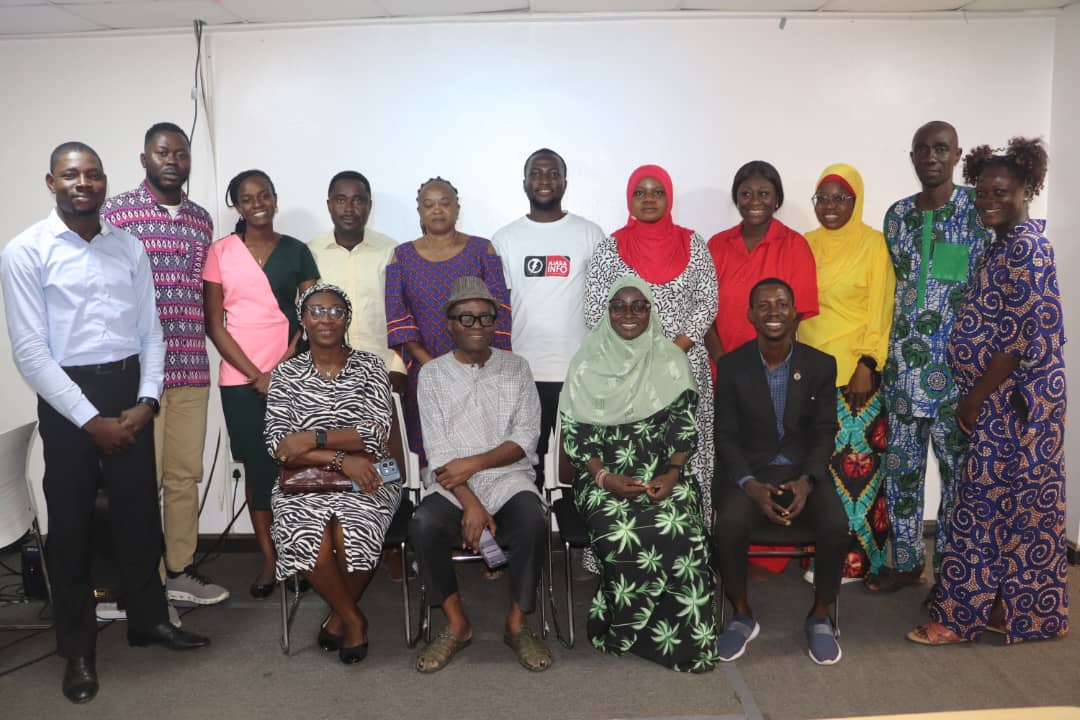
The Centre for Communication and Social Impact CCSI, an organisation passionate about developing and growing the health care facilities, has organised a capacity-building workshop for social media influencers focused on Gender, Gender-Based Violence (GBV), Family Planning (FP), and Reproductive, Maternal, Newborn, Child, Adolescent Health + Nutrition (RMNCAH+N).
The workshop was designed to build the capacity of selected social media influencers to share accurate, responsible, and culturally sensitive health information with their audiences. It was also aimed at reducing misinformation, addressing stigma, and promoting positive health-seeking behaviour.
Abiodun Ajayi, State Advocacy Coordinator of CCSI, prioritizing health, encouraged influencers to craft targeted health messages as content creators and leverage their platforms to advocate for sustainable healthcare funding in Lagos State.
“Social media influencers have the power to bring about change; we have seen evidence everywhere in this country, and we can also bring that kind of change into our health care system.
“Influencers should use their power to challenge and dialogue with the government to see that the government increases funding for family planning from 15M to 150/200M, as this is not a bad idea,” he said.
Ajayi encouraged influencers to build their platforms not just for popularity but to save lives and highlight critical healthcare needs. “Our priority is to ensure Lagos State leads in addressing GBV, family planning, and RMNCAH+N,” he stated.
John Ojetunde, Monitoring and Evaluation Officer of Public Health Sustainable Advocate Initiative (PHSAI), highlighted the importance of tailoring messages to specific audiences.
He added that influencers should drive conversation around GBV, FP, and RMNCAH+N, focusing on the target audience and the message that suits them.
Eletu Suliat, Communication Program Officer/ Monitoring and Evaluation Officer, Development Communication Network, describes the training as an eye-opener.
She stressed the need for actionable advocacy, highlighting issues and government engagement.
Blessing Alims, a street advocate for Family Planning, emphasized the potential of collective social media advocacy to transform the health sector. “By coming together, influencers can correct myths, share facts, and drive significant impact,” she said.
The workshop underscores CCSI’s commitment to leveraging social media for health advocacy, positioning influencers as key players in shaping public health outcomes in Lagos State.