
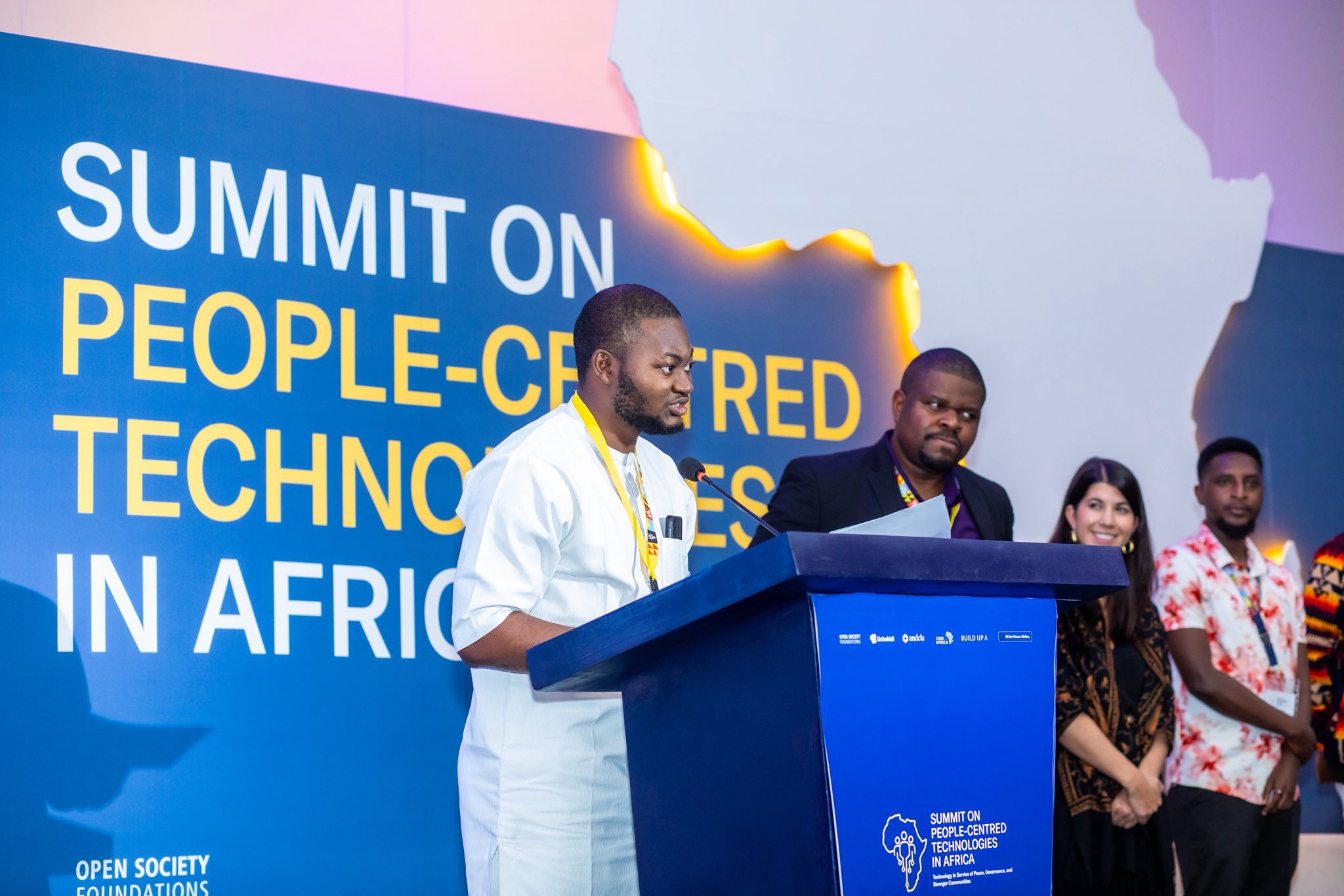
FactCheckAfrica has emerged winner of the Inclusive Futures Award at the Summit on People-Centred Technologies in Africa in Nairobi, Kenya, for its work in inclusive civic technology.
The organisation received the award for its Digital Democracy Suite, comprising Kedere AI, GovQuest and PowerDeck, which it showcased during the three-day summit held from October 5 to 7, 2026, at the Sarit Expo Centre.
The summit brought together African innovators, policymakers, civil society organisations, digital rights advocates, funders and other stakeholders to explore how technology can support peace, accountable governance and stronger communities.
FactCheckAfrica was represented at the summit by its Programme Lead, Mustapha Lawal, who demonstrated the digital tools and engaged participants and technology stakeholders during the exhibition and innovation activities.
The Digital Democracy Suite (comprising KedereAI, GovQuest and PowerDeck) is designed to make information about governance and public affairs more accessible and actionable for citizens.
Kedere AI, the suite’s AI-powered accountability tool, lets citizens interact with public finance and governance information in simple language. The platform provides access to information including government allocations, contracts and public infrastructure projects, allowing citizens to query information that can help them monitor how public resources are used.
GovQuest is the suite’s civic education component. It uses interactive and gamified approaches to help citizens understand governance, democratic processes, public institutions and their rights, translating complex civic information into formats that are easier for citizens to engage with.
PowerDeck extends the suite’s reach beyond digital platforms. It is a physical civic engagement tool designed to support grassroots civic education and participation, particularly among people who may have limited access to smartphones, the internet or digital platforms. Together, the three tools are intended to connect access to information with civic knowledge and participation.
The products were showcased against the backdrop of the summit’s focus on people-centred technology, with organisers emphasising locally grounded innovation, inclusion, community ownership and technology that responds to real governance and social challenges.

The Inclusive Futures Award was one of five awards presented at the summit. It recognised work centred on women, youth, rural communities, persons with disabilities and people living in low-connectivity communities.
According to the summit organisers, entries were evaluated against the core values of community ownership, demonstrated or potential social impact, inclusion, ethical practice, innovation, and potential for collaboration and scale.
The award selection combined participant feedback, including the PeopleTech Passport and digital voting, with assessment by a diverse review panel.
While receiving the award on behalf of FactCheckAfrica, Lawal acknowledged the Nigeria Youth Future Funds (NYFF) for supporting its Digital Democracy Lab project, which contributed to the development of the solutions showcased at the summit. The organisation also dedicated the award to more than 1,000 community members across six South-Western states of Nigeria, whose contributions helped shape the development of the digital tools.
The recognition in Nairobi adds to FactCheckAfrica’s expanding work at the intersection of civic technology, electoral integrity, information integrity, transparency and citizen participation, as the organisation develops technology-driven approaches to make democratic and governance information more accessible to citizens.