
By Alexander Ogheneruemu
Dear readers,
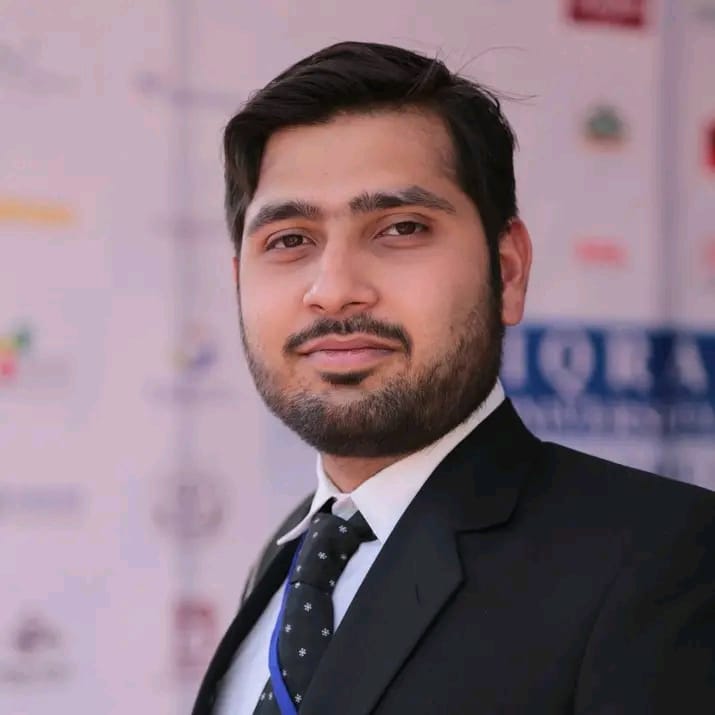
We are in Pakistan, ‘Land of the Pure ’, to continue our disability storytelling. Our guest, 35-year-old Mohammed Talha, is a senior HR executive. Hard of hearing from birth, Talha holds an MBA and is certified in Systems, Applications and Products (SAP) by the National Aerospace Science and Technology Park (NASTP). He shares his story with unnerving frankness about the hardness of disabled life. But he also holds up hope – that hardness can be met with something more. His is a tale of navigating the tough path of deafness by leveraging alternative ways and the steady inner resolve.
“Disabled life is not easy… You can face it… You can overcome it with alternative ways,” – Talha
Born Deaf
I was born Deaf, in Pakistan. The year was 1991. I grew up in a loving and supportive family. Home life was peaceful and my family understood me. But outside home, it was hard and challenging. Life in Pakistan is a daily test of patience for a person with disability. From childhood I had to use a hearing aid while also undergoing long speech therapy sessions. I practiced words again and again for years. I tried to speak like hearing people. I later left the therapy center and started practicing by myself, in front of the mirror every day.
The only Deaf student in school
Talha attended schools for the hearing. As the only deaf student among hearing peers, he recalls the teachers being kind, and always willing to help. But there was that gap in communication which their readiness to help couldn’t bridge. “Help is not the same as understanding”, Talha quips. The young boy liked to run and play like the other kids, but this meant getting sweaty and damaging his hearing aids.
“My hearing aids got damaged several times and repairing it cost my family a lot of money. Hearing aids are very expensive. They are not easy to buy and maintain. I learned early that there’s a price to pay for hearing – and I would pay that price in a very expensive way.”
Defining moments of the journey
In his teen years, a doctor recommended a cochlear implant (CI). It turned out to be an unforgettable experience that left more questions than answers.
“I closed my eyes on the operating table, scared. When I woke up, my whole head was wrapped in a thick, white bandage…then they switched it on, and I heard screams, not sound. I had severe migraines. One night, the migraine was so severe I thought it was my last night. That was when I realised that electrical sound isn’t natural sound.”
That surgery for a Cochlear Implant left Talha traumatised. What he thought would give him a second chance at hearing created chaos instead. For two days, the pains continued, unabated. He prayed to God to heal him from this difficult time. Then the questions began – why don’t people understand a Deaf person? Why isn’t sign language a language for everyone? Why is everyone forcing us to wear machines to hear, when our brains cannot accept this electrical sound? He learned the hard way, ‘sometimes the device itself gives you the migraine’.
Prior to this time, Talha didn’t know or use sign language. The CI experience probably put his senses on high alert for a more natural way of resolving the communication barrier.
“Technology brought changes”, he says. “First, small mobile phones with short messaging system – then WhatsApp and its faster chatting and messaging. WhatsApp was more than just an app for me, it was freedom. I could finally chat fast, understand clearly, and work professionally without asking someone to help me make a phone call.”
But technology still left gaps. Fortunately, Talha would discover a more natural language – sign language. Expounding on the magic moment, he said:
“I researched and learned that for many Deaf people, sign language is a better, more natural, and more peaceful way of communication. It gives them a normal life, surrounded by their own community. I began to accept myself. If someone doesn’t understand me, I let it go, and if I don’t understand something, I simply say: “Please write it down for me.”
Discrimination and struggle
The biggest discrimination is in jobs. Employers think ‘Deaf’ means ‘less intelligent’. Sometimes they say, ‘we will call you,’ but they never do.”
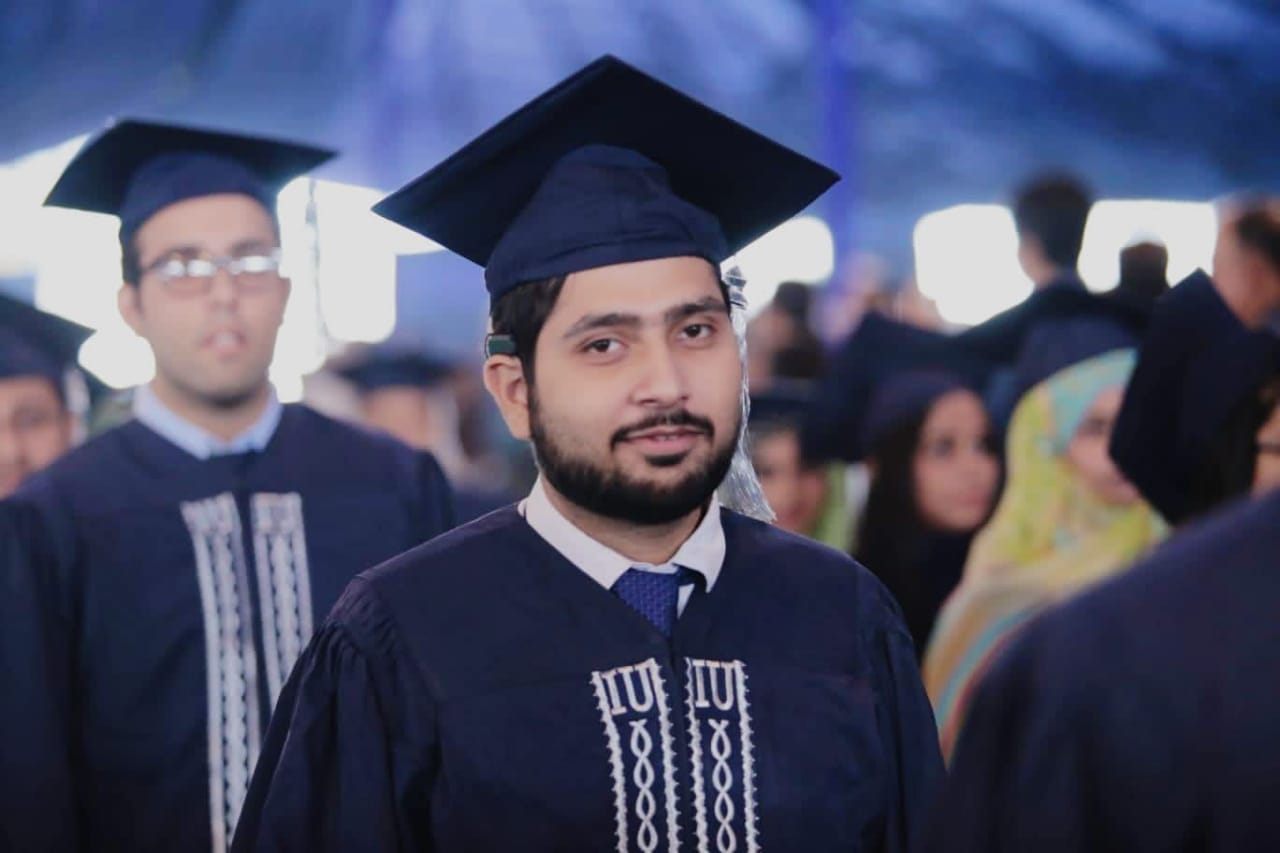
Talha got his MBA from the University of Karachi. Hard work won him a full scholarship for a short course in social protection and inclusion of persons with disabilities at a German university. Yet those achievements didn’t readily translate into the job opportunities he had hoped for. It was a real struggle before Talha got employment. Several job applications were not replied. Most organisations do first interviews on the phone, but for a Deaf and hard-of-hearing person, a phone call is almost impossible. They need written communication or face-to-face interviews where they can lip-read or be signed to.
Looking back on that experience, Talha says: “This isn’t just my story; it is the story of thousands of educated and talented Deaf persons in Pakistan who continue waiting for a chance – a message instead of a phone call, an interview in person, etc., to prove themselves. This is also the reality of other people with disabilities in this country – they struggle for years just to earn a living with dignity.”
Made stronger
Disability has ways of making us stronger and better in some ways. This is a very important focus in these narratives. I am always asking the question: “How has disability refined or built character in you?” The responses are interesting. For Talha, it is how: “Disability made me patient and a strong observer…”
Of course, the hard days still come, but he says he’s developed the toughness to confront them and, in typical Islam parlance, concludes: “Alhamdulillah for everything. Thank you, Allah for this hard life, because this hard life made me strong.”
Hurting and hilarious
But being philosophical doesn’t rule out the hurting side of the journey. And there are certain experiences that cut deeper. For someone who has had to undergo countless hours of speech therapy, with years of practicing in front of a mirror, Talha says, “It hurts when someone mimics me; it hurts. Also, when organisations reject one without giving a chance to show ability.” He uses a simple coping strategy for these low moments: “I switch to writing and messaging if spoken words are not understood, or I simply let it go. I don’t argue anymore”.
However, there’s a funny angle to the narrative, too. Like the instance when the batteries in his hearing aid went flat.
“I was nodding to everything my teacher said, even though I heard nothing. At the end, I realised she was asking me a question. The whole class was laughing while I remained silent. Another time, my hearing aid made a loud whistling sound in a silent meeting and everyone thought it was the speaker system.”
Keep pushing
In a society where the odds are very much up against Deaf people, Talha shares some thoughts from his own journey. He suggests that young Deaf folks learn speech and sign language. He highly rates the importance of acquiring an education, tech and other skills. And for never giving up, his encouragement is, “apply everywhere, even if they say ‘no’ a hundred times.”
Is Disability a bad thing?
Talha has some interesting quips to that question.
“No. Disability is not a bad thing. Disability is a hard thing. Bad is how society treats us. The disability itself taught me to fight, to be patient, to be thankful. The bad thing is the footpath without access, the office without sign language, the job interview that only happens on a phone call. If society removes these barriers, disability is just a different way of living, not a bad life.”
He closes with these words about the kind of society he desires for Deaf people:
“Please don’t see us with pity; we don’t need your sympathy. We need equal opportunity. Make sign language a language for everyone. Give us interviews by message or face-to-face, not by phone calls. Treat us with respect.”
The DCS is a collaborative project with Madam Joy Bolarin, Executive Director, Jibore Impeccable Foundation, and anchored by Alexander Ogheneruemu (Disability writer)
Special acknowledgement to TOLA Foundation for backup support.