

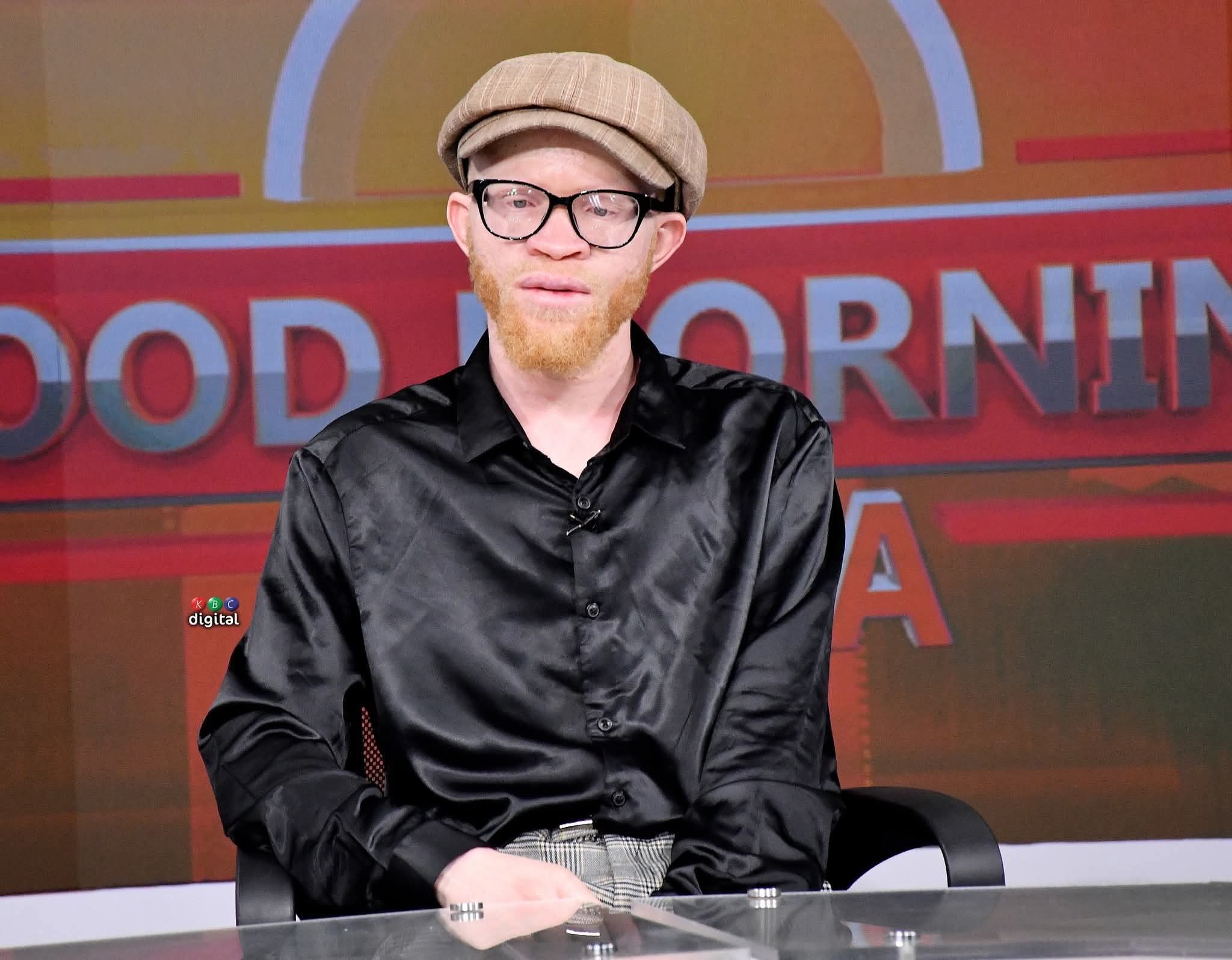
Welcome to series thirty-one. We are in Kitale town, situated across Trans-Nzoia county, Kenya, in East Africa. Our guest, Meshack Sisenda, (also known as Mesh Holy Kid) is an undergraduate studying Leadership and Management at Tangaza University, Nairobi. He is also an Assistant Communications Officer at Action Network for the Disabled (ANDY), an NGO by, and for children and youth with disabilities and their caregivers. Sisenda is a person with albinism, but what stands him out is his creative responses to the myths, superstitions and discrimination that still surrounds Albinism in the society he finds himself. The young man has turned the stigma around Albinism into a unique brand of disability advocacy – music.
His song ‘Albinism’, released in 2019, tackles myths and misconceptions surrounding the skin condition. For Sisenda, the challenges of living with albinism were the spur he’d use to reach for, and become more. As he shares during our conversation: “What truly matters is not your disability, but what you choose to do with it.”
Proud of myself, I’m not ashamed
Uwe black or white, we are the same
Hakuna cha kusema, we ni boy ama dem
Ju Christ alituumba, sote the same
Stanza two lyrics of ‘Albinism’ (a blend of Kiswahili, Sheng and English) addressing the equal dignity of all people – black, white, male, female.
Fearfully and wonderfully made
I was born and raised in Kitale – the second of three children, and the only one with Albinism. At the time, knowledge about Albinism was still very limited, and a lot of people held different beliefs about it. Some believed my parents had done something wrong and my condition was therefore a punishment. Others thought it was a curse. Some even believed albinism was contagious and prevented their children from playing with me. These myths and ignorance about albinism resulted in discrimination and hurtful name-calling. However, my mother and siblings were always supportive. They constantly reminded me that “I am fearfully and wonderfully made.” Those words kept me going. Life was good in an extended family where I had siblings and cousins to play with. Looking back, I can say that I have never experienced anything negative from my family. My parents had very little information about albinism, but they were always concerned about protecting me from the sun. They made sure I wore long-sleeved clothing and shades to protect my skin. My father would, however, take another wife, and my siblings and I came under my mother’s custody.
School and bullies
Growing up, I didn’t see any other person with albinism until I was enrolled in school. I was the only kid with albinism at Milimani primary school, and a teacher, noticing my vision difficulties, referred me for eye tests at the county clinic. It was during one such visit to the clinic that I met other children with albinism. Seeing them gave me hope, and I realised that I was not alone.
Going to school brought a lot of growth, but not without initial challenges. My skin colour and involuntary eye reflexes marked me as different from the other kids. I thus became a target for bullies. Some would snatch my glasses, others called me hurtful names, and still others mimicked my uncontrollable eye movements. The really rude ones went as far as stealing my binoculars. I would sometimes fight back against those bullies of my age, but the more I fought them, the more they made fun of me. Eventually, I chose to ignore them.
The shift – a ball, scouting and music
High school was a huge turning point for Sisenda. His curiosity about albinism grew during that time. In his recall: “Although I knew I had albinism, I could not clearly explain what albinism was to someone else”
However, by the time he reached fourth year of high school, he’d amassed an impressive knowledge about the skin condition.
“When I was in fourth year, my mother bought us a ball that I carried to school. Sharing the ball won me friends, who often stood up for me when I was bullied. From then on, there was a positive shift. I became actively involved in sports, and I also performed well in my studies. As a result, fellow pupils who had looked down on me began to change their perception. In high school, the deputy principal advised that I join the scouting movement.
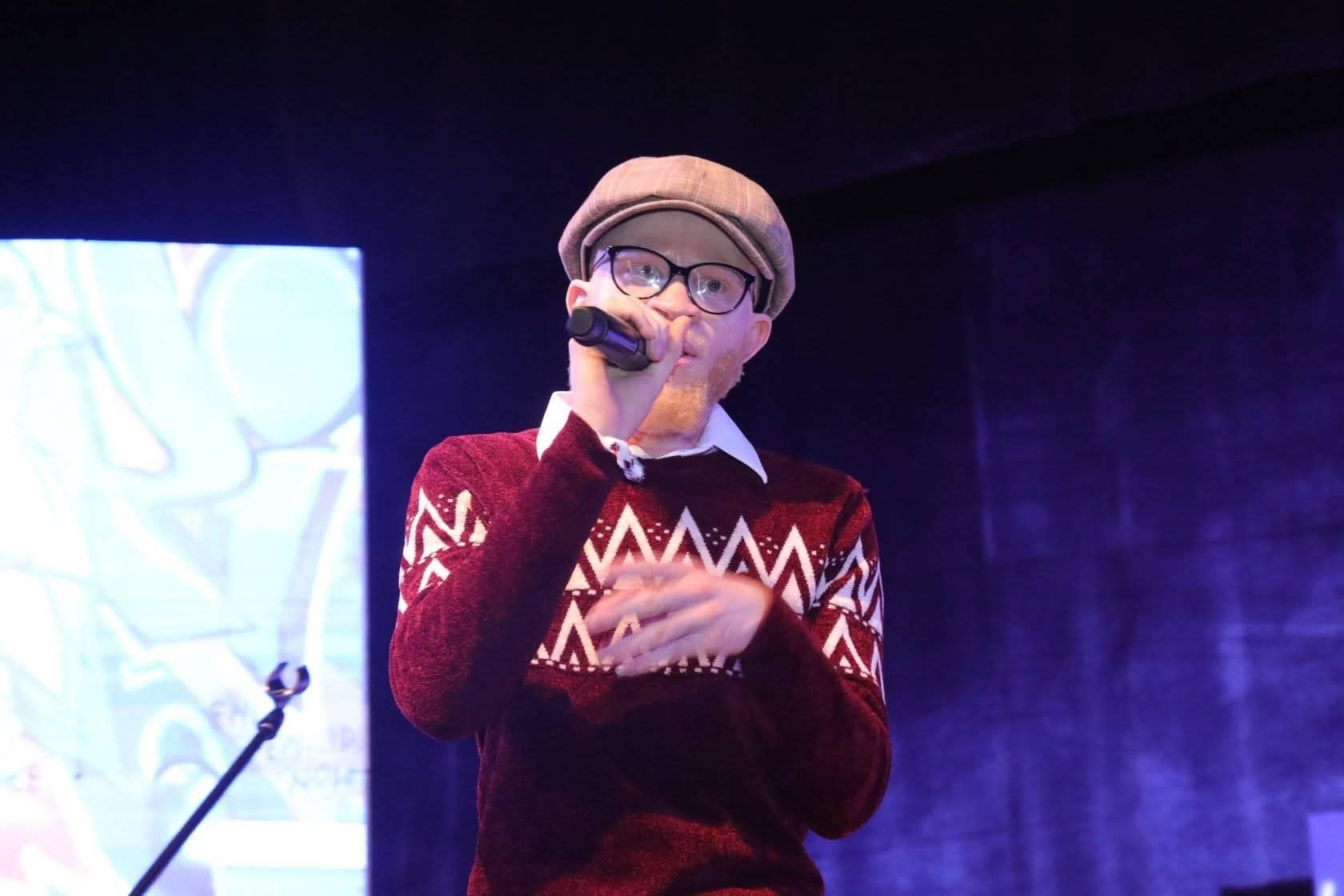
At first, I was hesitant, but I did, and scouting marked a turning point in my life. That was where I gained confidence in myself and also discovered my music talent. I realised that music is not only meant for entertainment but can also be used to address issues such as drug abuse, human rights, and justice. I was ready when my friend Denis Mkenya suggested recording a song about albinism.
In 2019, we released a song titled albinism, which talks about the myths and misconceptions surrounding albinism.
Albinism si laana, Albinism ni maumbile
Albinism si laana, Albinism ni maumbile
Albinism si laana, Albinism ni maumbile
Colour imatty, colour imatty
Don’t judge me by my colour (chorus: stressing Albinism as a natural genetic condition)
“High school also brought a number of leadership responsibilities and opportunities for growth and visibility. About this time, my mother lost her job, and my academic prospects looked bleak. Fortunately for me, one day, I attended an event with fellow students where I performed my song on stage. My performance caught the eye of a representative of the Catholic Diocese of Kitale, Madam Scholastic Ingosi, who offered me scholarship from form 3 up to my diploma level (social communication)”.
Academic good fortune would smile on Sisenda again after completing his diploma. As he narrates:
“After my diploma, I often told myself, ‘I have to go back to school’. I realised that most of the opportunities I came across required a bachelor’s degree or higher. In November 2024, I participated in a sunscreen campaign for Persons with Albinism, where I met Raissa Levy, President of Masse World, an organisation that supports Persons with Albinism and Vitiligo. She noticed me, and after we had a conversation and I shared my story, she promised to support me in pursuing a degree. Thus, in August 2025, I enrolled for a Bachelor of Arts in Leadership and Management at Tangaza University under the VitAl Scholarship by Masse World. I am currently in my second year.”
Critical connections
Besides opportunities or growth and visibility, high school would deepen and broaden Sisenda’s horizons on albinism. They offered opportunities for workshops and fellowships where Sisenda became familiar with frameworks on disability, including albinism. “That was when I understood that the challenges faced by persons with different disabilities are interconnected” From then on, I shifted my focus from advocating for albinism alone to speaking more broadly about disability inclusion, he said.
Handling discrimination
Obstacles will always be there, but we must face them with courage – Sisenda
But advocating for disability doesn’t exempt one from discrimination. In Africa, for example, there are still many superstitious beliefs about people with Albinism. Some believe that they do not die but disappear into thin air. There’s also the belief that their body parts could bring wealth and good fortune. As a result, persons with disabilities experience persecution (including ritual killings) and discrimination of varying degrees. Sisenda recalls a personal experience:
“Around 2010, there were reported cases of Persons with Albinism being persecuted in Tanzania. One day, I was walking to school with my mother and siblings when a stranger threatened to take me to Tanzania. My mother immediately confronted him and protected me. That experience deeply affected me. It made me realize that my mother had to face such situation just because of my disability.”
But he reminds that discrimination isn’t only experienced by persons with disabilities. Non-disabled people also face various discrimination, he emphasises. Explaining how he has managed these thousand soft cuts, he says, “As a child, I would fight those who made fun of me… eventually, I chose to ignore negative attitudes. My coping strategy has been to give my best in everything I do, as though I may never have another chance to do it again.” ‘This approach has opened up more opportunities for me’, he concludes.
Sharing similar advice with young persons with disabilities, he says: “First, learn to love yourself and never be afraid to show your potential…whatever opportunity comes your way, give it your very best and make the most of it.”
Participating and contributing
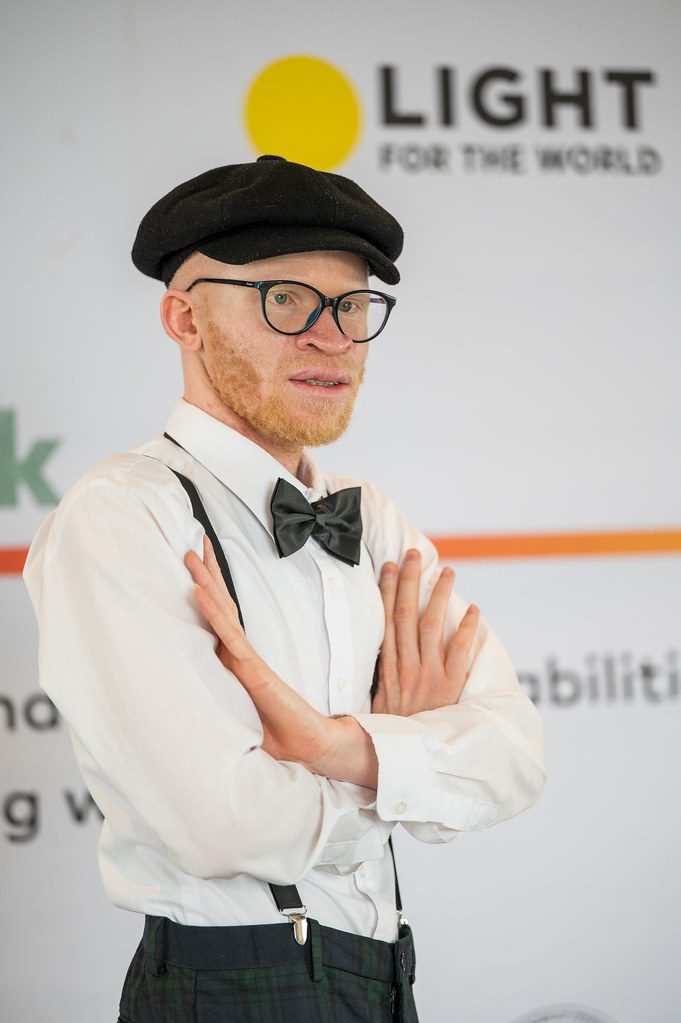
My disability has shown me that I can participate and contribute just like anyone else, Sisenda says. He goes on to point out how active participation boosts confidence, with fellow students often coming to him for guidance. “At such moments, I sometimes forget that I have a disability.”
Disability is inspiration
As I am accustomed to do towards the close of these interviews, I put the hard question ‘Is disability a bad thing?’ to Sisenda. ‘No, disability is not a bad thing’, he shot back. He goes on to explain what he thinks of disability:
“In many ways, it can be a source of innovation and positive change. Because of disability, many people have developed creative solutions to make the world more accessible. Others have built careers by becoming experts in disability inclusion, while many persons with disabilities have traveled the world, sharing their stories and inspiring others.” He sums up with the question: Is the impact you are creating positive or negative?
Sisenda’s favorite philosophy to life is: “I am who I am. Not who you think I am. Not who you want me to be. I am Me.”
The DCS is a collaborative project with Madam Joy Bolarin, Executive Director, Jibore Impeccable Foundation, and anchored by Alexander Ogheneruemu (Disability writer)
Special acknowledgement to TOLA Foundation for backup support.