

By Esther Olaifa
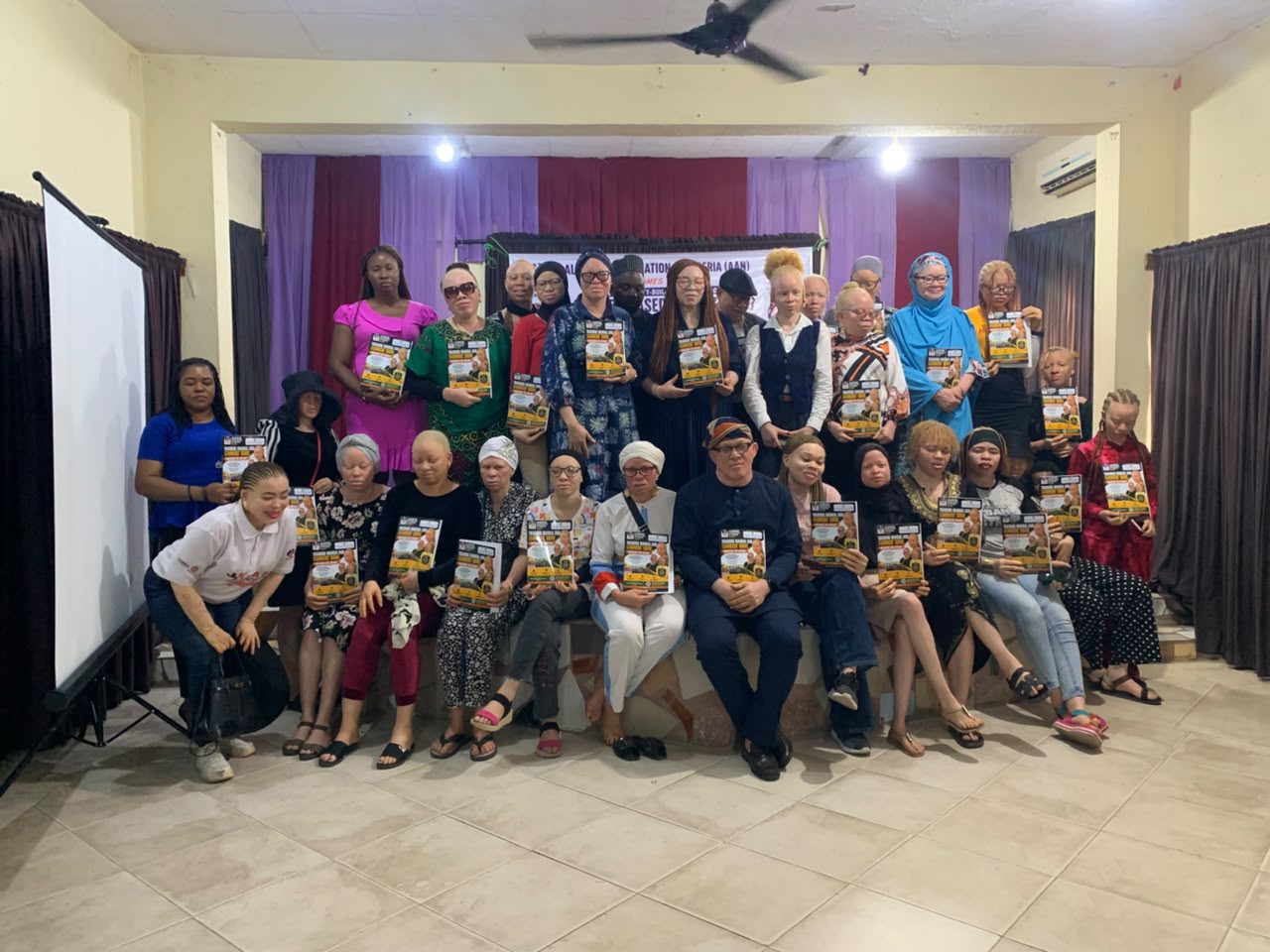
The Albinism Association of Nigeria (AAN) has unveiled a capacity-building training manual aimed at combating gender-based violence (GBV) against women and girls with albinism in Lagos State.
The two-day workshop, held from Tuesday, 13th to Wednesday, 14th October 2026, in Alausa, Ikeja, targeted participants from the Ikorodu and Alimosho local government areas.
Organised under the theme “Breaking the Silence: A Community-Led Response to Gender-Based Violence Against Women and Girls with Albinism” and funded by Fondation Pierre Fabre, the programme sought to strengthen knowledge and awareness of GBV, promote prevention and early response, empower women and girls with albinism, and build the capacity of community leaders and stakeholders.
Discussing the Day One theme, “Understanding GBV, Human Rights, Gender Equality and the Legal/Policy Framework,” Joseph Akuse, National Programme Manager of Albinism, explained that the training manual he designed supports the implementation of the programme and is structured into six principal modules.
He noted that the learners’ guides cover key areas: Module One addresses gender-based violence—its definition, concepts, risks and forms of violence; Module Two focuses on human rights violations; Module Three deals with referral systems; Module Four examines connectivities and ways to ensure prevention and support for those whose rights are violated; while Module Six provides a summary of the preceding modules.
“Participants can take the material home to study further and also support others who are not here,” Akuse said.
He described the project as timely and expressed hope for additional funding to cascade the training to other states.
“The challenge is resources. So, if we get more funding opportunities, we can step down this approach, move to other states of the country, and then ensure that we also do the same implementation by expanding and having a wider coverage.”
Akuse added that advocacy visits would be paid to relevant stakeholders after the training to foster collaboration.
“After this training, we are going to pay advocacy visits to some of our relevant stakeholders, like the police, the Civil Defence Corps, the Lagos State Gender-Based Violence Agency, and other constituted establishments of the Lagos State Government that have an interwoven relationship with gender-based issues so that we discuss, put a copy of the training manual on their tables for them to also support and collaborate with us.
“We’ll even move to wider media coverage, visiting radio and television stations where we have live phone-in programmes, discussing these issues and ensuring prevention measures.
“We’re going to hand over the project to the Lagos State chapter of the Albinism Association of Nigeria, where they will have a step-down to cover the other remaining local governments.”
In her opening remarks, Mrs Josephine Omolola, National President of the Albinism Association of Nigeria, clarified that “breaking the silence” does not mean pressuring survivors to disclose their experiences publicly.
Rather, it involves creating safe, confidential and accessible environments where survivors can speak when ready, report abuse without fear, obtain appropriate support and participate in decisions affecting their lives—ensuring that reports of violence are taken seriously, survivors are treated with dignity, and their privacy and safety are protected.
“Every woman and girl deserves to live without fear of violence. Every survivor deserves to be heard, believed with due regard to fair and appropriate processes, treated with dignity, and connected to the support she needs,” she said.
A panel session featured members and executives of the association who discussed barriers faced by women and girls with albinism in accessing services, as well as recommended pathways and strategies for improvement.
Comrade Tolani Ojuri, AAN Lagos State Chairman and Project Lead, received the learners’ and training manual guide titled “Breaking the Silence: Training Manual and Learner’s Guide for Women and Girls with Albinism”. He thanked Fondation Pierre Fabre of France and assured that the material would be used to guide, monitor and evaluate issues around GBV affecting women and girls with albinism.
Hajiya Mariya Isiaka, former Vice President of AAN and Project Lead in Kano, stressed the importance of collective action to curb GBV, noting that many women and girls remain silent about their experiences.
“We want people to talk without keeping quiet, report any form of violence. Let’s talk about it because if you don’t talk, how can we find a solution to the problem and stop it from spreading?”
She urged participants to share the knowledge gained with other members of the association.

A participant, Kabirat Hamzat, said the sessions helped clarify her rights as a woman with albinism and how to respond to harassment or violence. She expressed hope of using the knowledge to advocate for people with albinism and train other young girls in her community.
Adeniji Aderonke, another participant with albinism, noted that she can now identify signs of gender-based violence and better understand the difference between exploitation and harassment.