

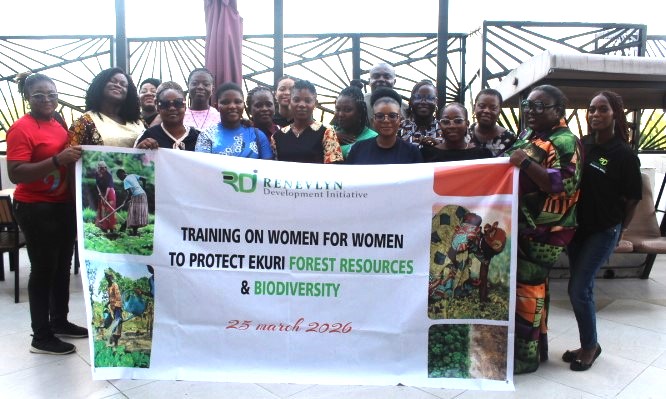
The Renevlyn Development Initiative has trained women journalists and rural women to address illegal logging activities and climate-induced deforestation in Ekuri community, Cross River State.
The training, themed “Women for Women to Protect Ekuri Forest and Biodiversity,” aimed to build the capacity of women journalists to confidently report on the impact of logging activities on women to engender policy response and connect women on the frontlines of illegal logging impacts with journalists.
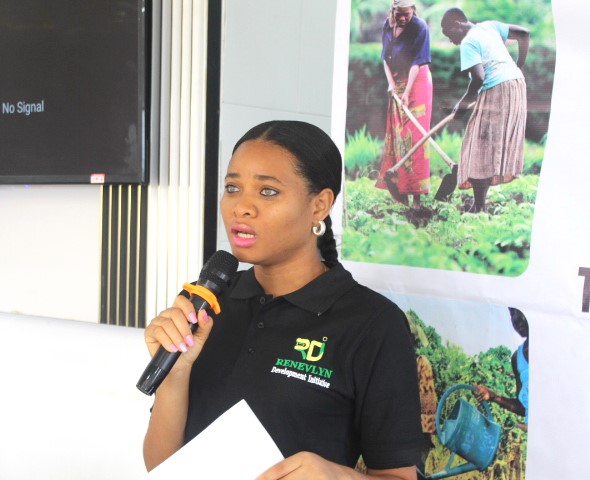
According to RDI Project Officer, Linda Amadi, illegal logging activities in Ekuri forest have been in the news and the reports are unmistaken in describing the state of the once pristine forest, which unfortunately is now a shadow of what it used to be.
Amadi noted that the challenges women contend with as they play the role of providers in Ekuri are hardly captured in news reports when impacts of illegal logging are reported.
“Despite forming the largest population that suffers the socio-economic situation in Ekuri, in the decision-making processes concerning the forest the Ekuri women are hardly mentioned or consulted,” she said.
According to Amadi, Global Forest Watch recently alerted that illegal logging activities have cost Ekuri and the environs the loss of more than 540 square miles of tree cover as of 2024.
She added that reports indicate more than 200 truckloads of timber and other exotic wood leave Ekuri every day, and efforts by locals to halt the practice are met with harassment and brute force by security personnel hired by logging merchants.
“Women in Ekuri are mainly farmers who depend on the forest resources for food and medicine but due to illegal logging activities that have ravaged the once pristine forest they are unable to access the forest for their basic needs. When it is inevitable, the women wander far into the forest in search of fuel wood, medicinal plants and other necessities to take care of their families. These tasks that are socially imposed on them make them vulnerable to harassment,” Amadi said.
Speaking on “Reporting Women and Illegal Logging: What is the Missing Coverage?” international journalist Vanessa Adie Offiong said journalists most often engage in armchair reporting on matters concerning illegal logging because they do not have the funding to visit such places.
Offiong opined that a journalist who knows their craft could look at stories concerning the gradual disappearance of particular fruits or foods indigenous to a particular community and use that as entry point to a bigger story.
Dr. Chioma Okonkwo, an environmental biochemist at the University of Port Harcourt, in her presentation on impacts of illegal logging on biodiversity and food sovereignty, explained that these issues are often overlooked when illegal logging is discussed.
Okonkwo re-echoed Offiong’s position that particular seeds, fruits and shrubs in places like Ekuri have become scarce or totally unavailable due to the reckless plundering of the forest.
She cited a recent report showing that an estimated 91,000 tons of timber leave Cross River State annually due to illegal logging, adding that the situation puts additional burdens on women who are typically farmers in affected communities like Ekuri.
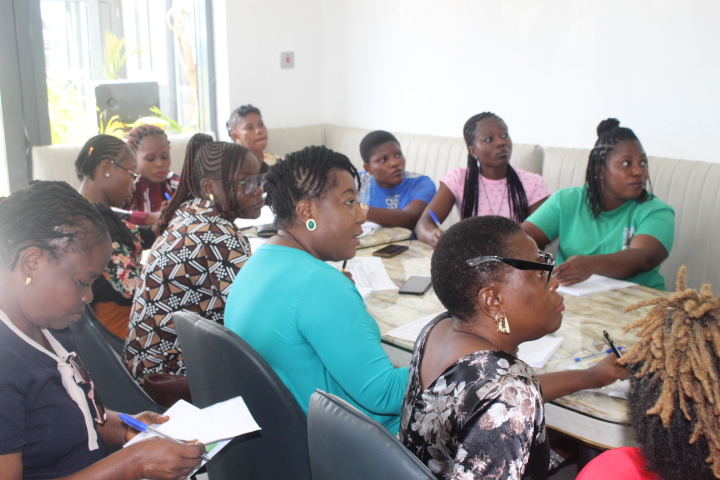
Ndivile Mokena of Gender CC-South Africa explained that due to sustained advocacy, women in South Africa are increasingly recognized as key custodians of natural resources, driving urban forestry, biodiversity conservation, and shaping policy pathways.
Mokena said climate change and urbanization are reshaping cities in South Africa, and the leadership of women is reshaping environmental management by blending community action, science, and governance.
She opined that journalists must amplify women’s grassroots leadership stories, expose gaps in policy implementation and resource allocations, promote solutions and drive accountability by holding policymakers to gender and climate commitments.
Javier Garate, Senior US Policy Advisor on Land and Environmental Defenders at Global Witness, explained that the media is crucial in documenting the impact of illegal logging and mining activities in Africa.
He pointed out that Global Witness documented the dire situation in Ekuri in 2025 and observed the same patterns of threats faced by women land and environment defenders in Chile and many other Global South countries.
Some of the familiar patterns include cases of threats to activists, exploitative laws that criminalize agitation for environmental justice, and the use of social media to bully activists.
He recommended more independent news stories of the situation in impacted communities, in view of the close collaboration of the state and extractive firms and their prioritization of profits over the people.
Asigbe Anakan of Cypress Global Health explained that illegal logging is a pervasive problem, causing enormous damage to forests, local communities, and the economies of producer countries.
He listed deficiencies in the laws in Cross River to include weak enforcement of existing laws, lack of government accountability and possible complicity, violation of community forest rights, poor coordination between institutions, and inadequate monitoring and surveillance.
He thereafter recommended that the fight against illegal logging should no longer be only in the forest but also online so women can become powerful voices in digital space promoting hashtags like #saveEkuriForest, #womenforforest or #stopillegallogging.
The training ended with the creation of a network christened Women4Women Network on Forest and Biodiversity and a decision by the Ekuri women to petition the Cross River State House of Assembly on their plight and the way forward.