
The Healthy Food Policy Youth Vanguard (HFPYV) has called on the Lagos State Government to boldly address the rising Non-Communicable Disease (NCD) deaths linked to high Sugar-Sweetened Beverage (SSB) consumption by implementing a state-level SSB tax.
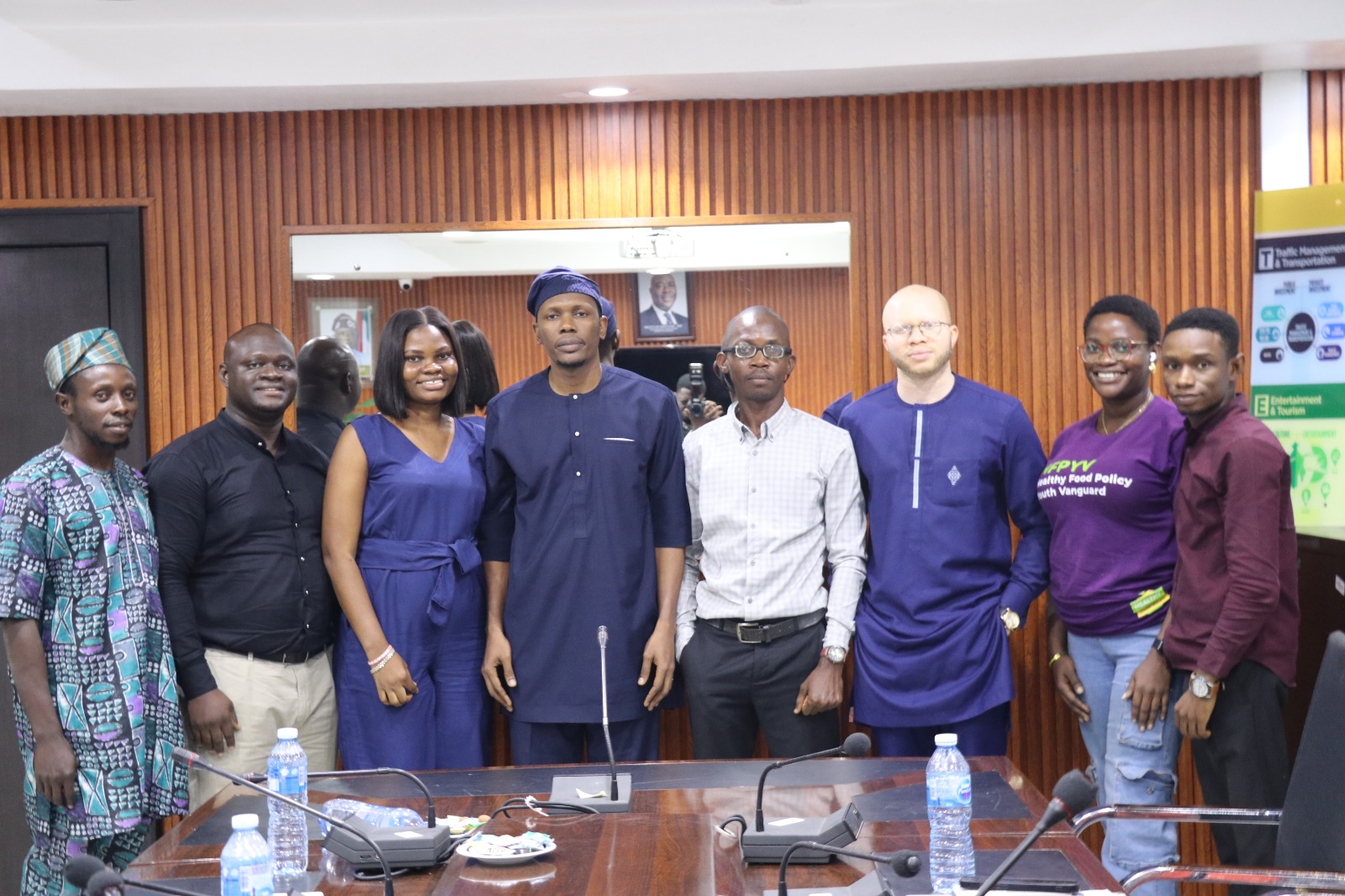
During an advocacy visit to the Lagos State Commissioner for Finance, Mr Abayomi Oluyomi, members of HFPYV, led by Blessing Oladunjoye, the Publisher of BONews Service, emphasized that a stronger SSB tax is not only a matter of health policy but also an investment in the well-being and economic sustainability of Lagos residents.
In her remarks, Oladunjoye mentioned that Nigeria joined more than 100 countries globally to introduce the SSB tax through the Finance Act of 2021, and especially with its rate adjustment and policy review under the 2025 Nigerian Tax Reform, public health experts have called for increased earmarking of these revenues towards health and nutrition interventions.
She, however, noted that this has not yet been fully realized at the federal level.
Oladunjoye hinted that this creates a powerful opportunity for Lagos to demonstrate state-level leadership.
“Lagos has consistently led the way. We believe the state can once again take the lead—this time, by introducing a state-level levy on Sugar-Sweetened Beverages and other SIN products. This levy would be earmarked to support public health priorities, including nutrition education, youth-led campaigns, and healthcare delivery in underserved communities,” she said.
Oladunjoye appealed to the Honourable Commissioner to “endorse HFPYV as a partner in public sensitization, initiate the process to explore and design a state-level SSB levy for Lagos with clear earmarking provisions, and to support the national advocacy by engaging Lagos legislators on the importance of the SSB Tax Amendment at the federal level.”
She reiterated that a stronger SSB tax would reduce harmful sugar consumption, improve long-term health outcomes, and generate new revenue streams for vital public services.
“An SSB tax is more than a tax, it is an investment in the people of Lagos, in their health, in their future, and in the sustainability of public finances,” she added.
Also speaking on behalf of the group, Mr Babatope Adebayo, Associate Director, Corporate Accountability and Public Participation Africa (CAPPA), said the ultimate goal of increasing SSB tax is to reduce the consumption of SSBs, safeguard public health and reduce the potential burden of NCDs among Nigerians in the not so far future.
In his response, Mr Akolade Oni, the Executive Assistant to the Governor on Finance, who received the group on behalf of the Commissioner, commended the young advocates for leading the campaign, which he described as an important issue.
Mr Oni, who acknowledged that a lot of young people are prone to NCDs because of their diet, agreed that there is a need to take steps to safeguard public health.
Mr Oni noted that the state-levy tax on SSB is a good approach to reduce SSB consumption, but noted that the new tax law discourages subnationals from introducing new tax laws. He, however, noted that the tax administration process at the national level needs to be strengthened and efficient.
He also identified the need to invest the money generated from SSB Tax to promote safe drinking water and healthier alternatives.
He pledged the support of the Ministry to partner with the youth group to advance the messaging on SSB tax.
On his part, Mr. Ama Oghomwen Emina, the Senior Special Assistant to the Governor on Finance, also encouraged the youths to increase advocacy to industry actors to reduce the sugar content in the SSB products and ensure stiff enforcement by regulatory agencies.
Other members of HFPYV in attendance at the advocacy visit were; Anjola Fatuase, Digital Media Lead with CAPPA, Ibrahim Ismail, a teacher and a catfish farmer, Nnaemeka Martins, a Post Graduate Student of Agricultural Economics & Extension Management, and Oyinkansola Olotu, Technical Consultant with Inlaks.