

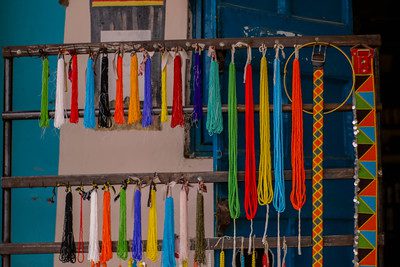
Rodger Mugaragu sews bags at Kakuma Refugee Camp in Kenya. Nancy Akai decorates them with beadwork in nearby host community. Together, they’ve built something neither could manage alone. And their orders keep coming in.
From Craft To Business
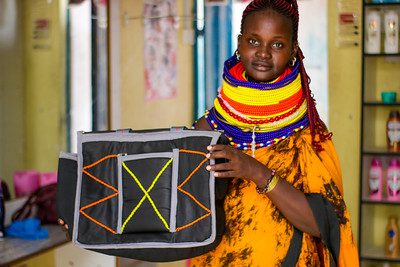
Nancy began her beadwork journey in 2018, in Turkana County in northern Kenya. A mother of three, she took classes to learn to bead, and began producing handmade items to support her family.
But for years she struggled to make her business work. ’I knew how to make beadwork,’ Nancy explains. ‘But I didn’t know how to calculate the cost of materials or how to price my products to make sure I earned a profit.’
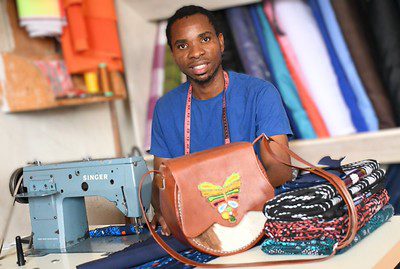
At Kakuma Refugee Camp, Rodger had also begun building his own business, but faced a different problem. The young refugee from the Democratic Republic of Congo began sewing clothes and bags after arriving in Kakuma six years ago. He had a talent for tailoring, but customers were had to find.
‘At first my business was small and not many people knew about my work,’ Rodger says.
Learning New Skills And Meeting New Partners
In May 2025, both Nancy and Rodger participated in business training hosted by the International Trade Centre, which works with refugees and host communities in Turkana County to help them build sustainable incomes through trade.
’When artisans from different backgrounds collaborate, they are able to combine skills, create more competitive products, and access larger markets,’ ITC Programme Manager Ludmila Azo says. ‘This is exactly the kind of entrepreneurship we aim to support where refugees and host communities work together to build sustainable livelihoods.’
Over three days, they learned key business skills, including pricing products, calculating costs, managing profits, and identifying new market opportunities.
For Nancy, that changed how she approached her work. ‘Before, we didn’t know how to calculate our costs properly,’ she says. ‘The training helped us understand how to run our businesses and avoid losses.’
Participants also travelled to Nairobi to show their products at the Bizarre Bazaar festival. That’s where they first met.
Beadwork on a bag — and a 40% price increase
It was during the 2025 Bizarre Bazaar event that Nancy and Rodger first connected. Rodger specialized in sewing bags. Nancy specialized in beadwork. As they shared their products and experiences, Nancy quickly saw the potential for collaboration.
‘I saw that Rodger is very good at sewing bags,’ Nancy recalls. ‘I told him he could make the bags and I would decorate them with beadwork so they would become different from ordinary bags.’
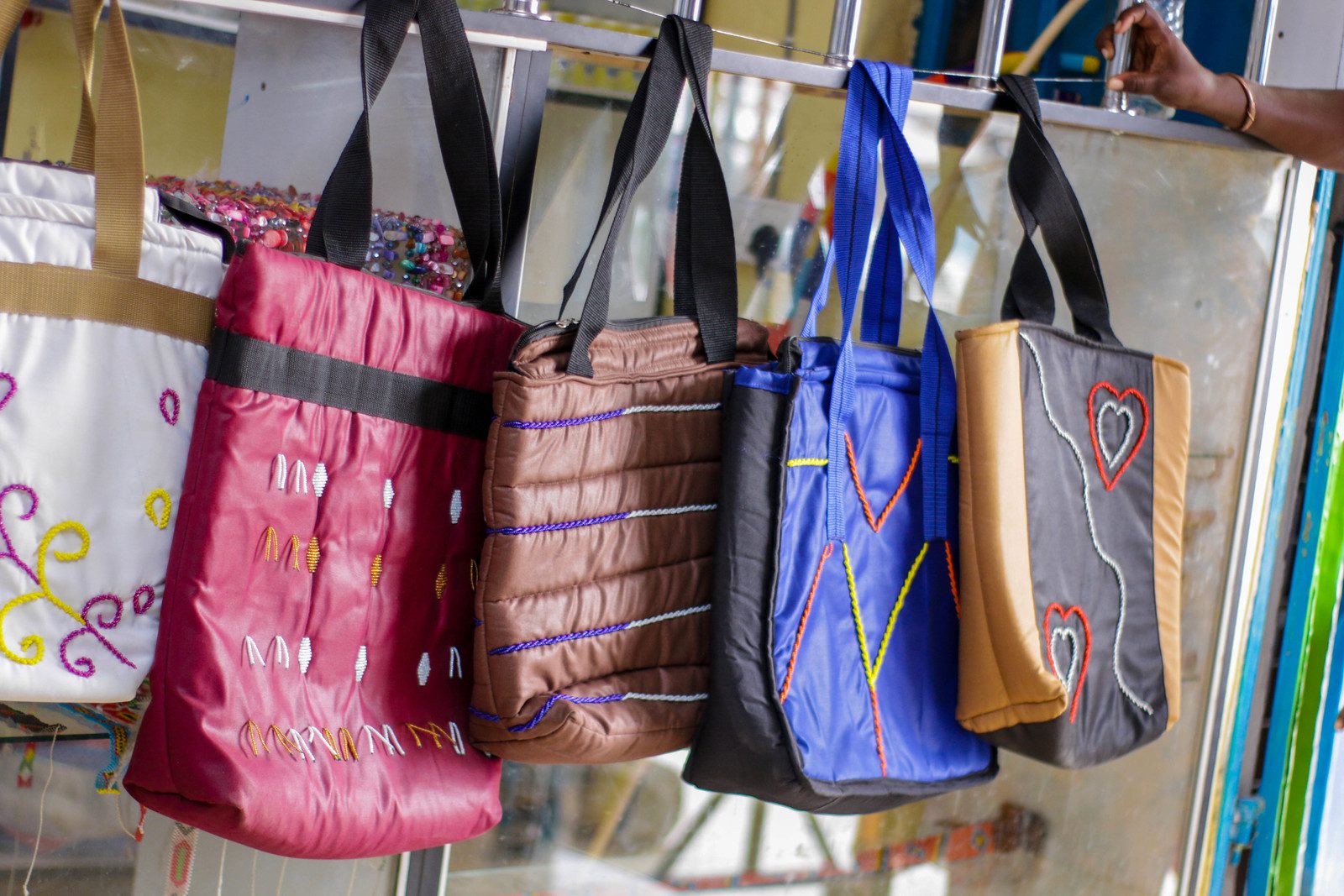
By combining Rodger’s tailoring skills with Nancy’s beadwork artistry, the two artisans created a unique product handmade bags decorated with intricate bead designs. Without the beads, the bag sold for 800 shillings ($6). Once decorated with beadwork, the bags sell for about 1,250 Kenyan shillings ($10) – a 40% premium.
From A Small Idea To A Growing Demand
The partnership began with a small order. Rodger made 26 bags, which Nancy decorated with beadwork and then sold through her networks and at the Turkana Cultural Festival (Kakuma Got Talent).
The response from customers was immediate. ’People really liked the bags,’ Nancy says. ‘The demand was very good.’
Encouraged by the positive reception, Rodger makes about 10 bags every two weeks while Nancy beads them. As the bags gained popularity, demand grew rapidly. Today, Rodger produces 30 to 40 bags every month for the partnership.
The bags are sold in markets and exhibitions across the region, where customers appreciate the unique combination of tailoring and traditional beadwork.
Creating Opportunities For Others
As orders increased, Rodger realized he could no longer meet production demand on his own.
‘Before, I worked alone,’ Rodger explains. ’Now I have trained two or three other people to help with production because the orders are increasing.’ This expansion has created additional work opportunities for others in the community.
For Nancy, the business’s growth helps her pay her children’s school fees, cover household expenses, and support other family members. ’This business helps me support my children and my family,’ she says.
Collaboration That Strengthens Local Markets
Their partnership is one example of how collaboration among artisans can create new economic opportunities for both Turkana’s refugee and host communities.
Both believe that working together has been the key to their success. ’When we collaborate,’ Nancy says, ‘we can create better products and grow our businesses together.’
About The Project
The THRIVE project, implemented by the International Trade Centre (ITC) with funding from KOICA, supports refugees and host communities in Turkana County to earn income through trade. Working with local partners, the project provides practical skills, shared tools, and access to buyers across artisanal, beekeeping, and digital value chains.
This work is part of ITC’s wider effort to ensure refugees and host communities can take part in markets on fair terms, including people with disabilities who are often excluded from economic opportunities.