
In a media landscape often dominated by policy rhetoric and charity-driven narratives, a recent episode of the Difficult Conversation Africa Podcast has cut through with something rarer: lived truth.
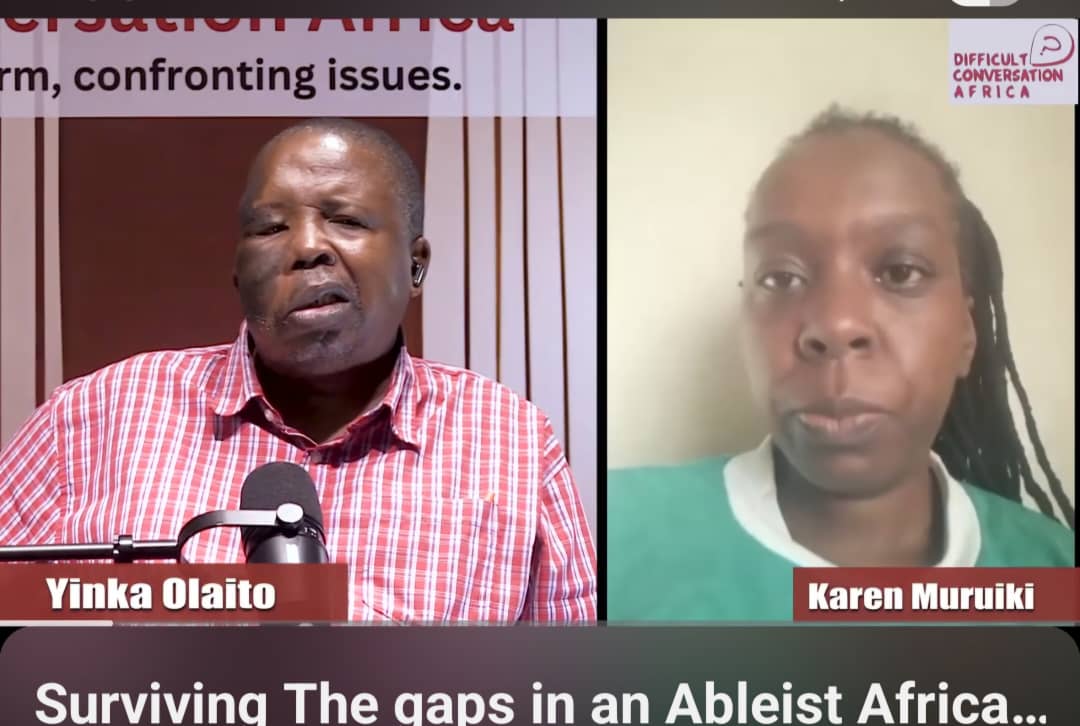
Hosted by journalist and disability inclusion advocate Yinka Olaito, the episode features Kenyan disability rights advocate Karen Muruiki in a candid, wide-ranging discussion on what it truly means to live, thrive and resist in an ableist African society. Far from a feel-good conversation, the episode interrogates the deep structural and cultural barriers that continue to marginalise persons with disabilities across the continent, while also offering practical pathways toward inclusion and empowerment.
From the outset, Olaito frames disability not as a personal tragedy but as a social justice issue rooted in systems, attitudes and power. Muruiki responds with lived experiences that expose how ableism is woven into everyday African life—from inaccessible public spaces and exclusionary education systems to social norms that equate disability with weakness, dependence or shame.
“Many of the barriers people with disabilities face are not about impairment,” Muruiki notes during the conversation, “but about how society is designed and who it is designed for.” Her reflections challenge long-held assumptions and push listeners to reconsider where responsibility truly lies.
The discussion moves beyond personal stories to examine the broader structural gaps that sustain exclusion. Both speakers highlight how policy commitments to disability inclusion often remain symbolic, with little translation into action. While many African countries have ratified international disability rights frameworks, implementation is frequently undermined by weak political will, limited funding, and a lack of meaningful consultation with persons with disabilities themselves.
Crucially, the episode does not linger on problems alone. It offers listeners concrete strategies for change—ranging from inclusive communication and allyship to grassroots advocacy and community organising. Muruiki emphasises the power of collective action and peer support, stressing that empowerment begins when people with disabilities are recognised as leaders and knowledge holders, not merely beneficiaries.
Olaito, drawing from years of journalism and advocacy, challenges institutions—media houses included—to rethink how disability stories are told. “If the only time disability appears in the news is during charity drives or inspirational features, we are reinforcing stereotypes,” she argues. “We need reporting that centres rights, agency and accountability.”
The episode also calls on allies—educators, development practitioners, policymakers and social entrepreneurs—to examine their own practices. Inclusion, the speakers insist, cannot be reduced to slogans or token representation. It requires intentional design, sustained engagement and a willingness to confront uncomfortable truths about privilege and exclusion.
For listeners with disabilities and their families, the conversation offers something often missing from mainstream discourse: validation. By naming shared struggles and systemic failures, the podcast creates a sense of community while also pointing toward practical ways of navigating societal gaps.
For students and young Africans interested in human rights and development, the episode provides a grounded entry point into disability discourse—one that situates disability firmly within broader conversations about equity, democracy and social transformation on the continent.
“This isn’t pity talk,” Olaito concludes. “It’s truth, resistance, and a call to rethink inclusion beyond slogans.”
As African societies grapple with questions of development and equity, the Difficult Conversation Africa Podcast episode stands out as a timely reminder: disability inclusion is not a side issue. It is central to the kind of Africa being builtand who gets to belong in it.