
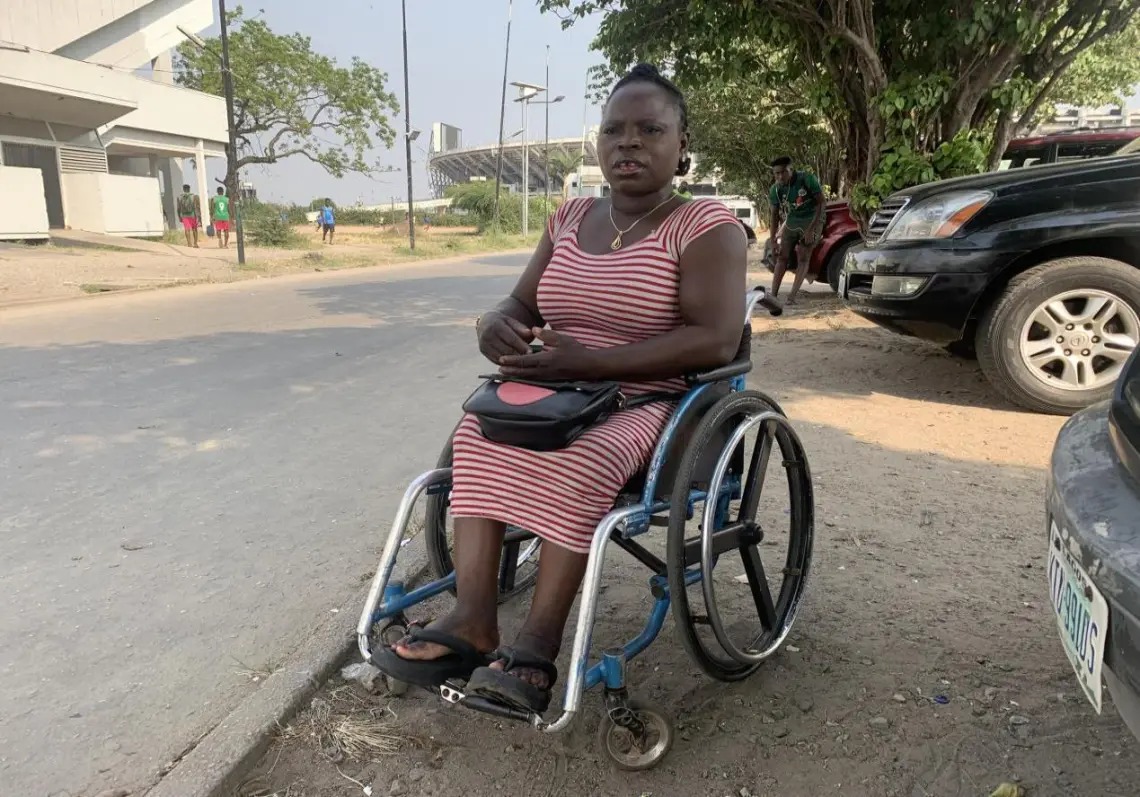
Tosin Odumosu’s hearing impairment has often been an obstacle to her growth. A business education graduate of the Federal College of Education, Oyo, employers overlook her credentials as soon as they realise she cannot hear.
“One time, I went for an interview, but they did not attend to me because of my deafness. They were wondering how I would cope with the job,” Ms Odumosu recalled.
For many Nigerian university graduates, life after school is a difficult waiting game. But for graduates living with disabilities, that wait often turns into a long and isolating road.
With scarce opportunities, deeply rooted societal biases, and inaccessible systems, this transition into adulthood and the workforce becomes a period of indefinite uncertainty, a stage many have described as “waithood.”
This limbo is more than just a delay; it is a consequence of structural inequality. Many Persons with Disabilities (PWDs) in Nigeria come from low-income backgrounds, often relying on scholarships or charitable sponsors to access education in the first place — resources that are not readily available.
According to the National Bureau of Statistics, over 53 per cent of Nigerian youths were unemployed in 2022.
According to the Nigeria Graduate Report, many graduates find it difficult to secure employment, and graduates with HND are affected the most.
However, graduates with disabilities face significantly deeper barriers, from inaccessible application processes and physical infrastructure to discriminatory hiring practices that shut them out before they even get a foot in the door.
Discrimination at the door
With her NCE, Ms Odumosu planned to work as a teacher in a deaf school, where she believes her skills can be used without communication barriers.
“Looking for a job in Nigeria is already challenging, but as a deaf person, these obstacles are even worse,” said Daniel Sunday, an Economics and Special Education graduate.
Mr Sunday aspired to work in banking and finance. However, his job search in Nigeria has revealed the deep-rooted challenges PWDs face.
“When I manage to secure interviews, companies don’t provide sign language interpreters, creating an immediate communication barrier,” he said of his experience as a deaf person. “Instead of seeing my qualifications and capabilities, employers focus solely on my disability.”
Mr Sunday described the psychological toll of such repeated rejections as immense.
Vincent Okoye, a history graduate of the Nasarawa State University, Keffi, was in a 13-month internship at the British Council until COVID-19 disrupted operations in 2020. As a person with albinism, he had aspired to be a tech entrepreneur but needed to work first to save some money to start.
In 2022, he applied for an executive assistant position at an outsourcing company. After excelling in online interviews and written assessments, he advanced to the final interview stage with the firm’s senior management.
“I knew I performed well, and the feedback was positive,” he recalled.
However, the tone shifted when the company requested his passport photograph, which he didn’t include in his CV.
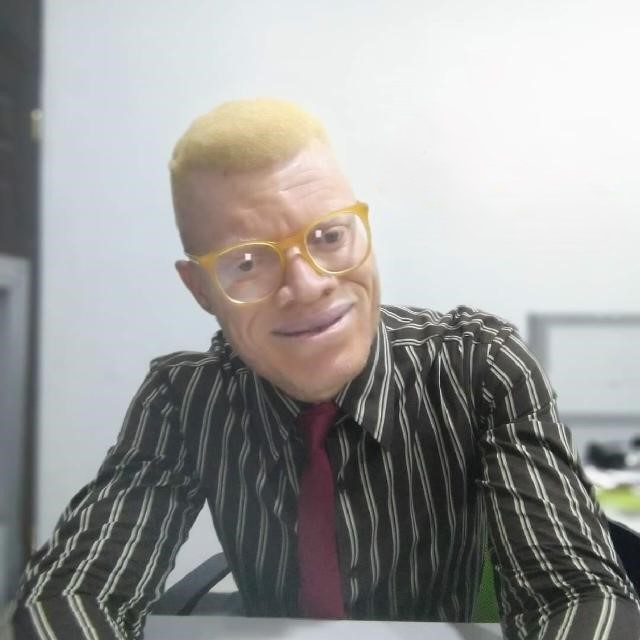
“After submitting my photo, which revealed my albinism, all communication ceased. Despite my follow-up attempts three weeks later, I never received a response,” Mr Okoye explained.
A cycle of rejection
Abayomi Soetan was confined to life in a wheelchair at the age of four due to polio. Mr Soetan, a 2011 Agricultural Extension and Rural Development graduate of the Federal University of Agriculture, Abeokuta, recounted his experience: “It is a long story,” he said.
“I wrote so many applications, I met prominent people for contacts to gain employment, but nothing worked, so I returned for my master’s degree. Even after that, no employment.”
Graduates like Sunday, Vincent, Abayomi, and Odumosu faced systemic obstacles.
“Recent graduates with disabilities face compounded challenges in the job market,” said Adebukola Adebayo, a disability inclusion expert consultant with the World Bank Nigeria.
Mr Adebayo pointed out how employment platforms, processes, and assessments are often not designed with PWDs in mind. He noted that beyond the usual employment hurdles, they encounter multiple forms of discrimination and often can’t even access job postings, as these are provided in unsuitable formats.
He said this creates a cycle of frustration and limited opportunities, even when positions are available.
For PWDs, the path to gainful formal employment is riddled with hurdles—biases, logistical challenges, and societal misconceptions.
In 2018, the Nigerian government passed the Discrimination Against Persons with Disabilities (Prohibition) Act. This legislation mandates workplace inclusivity and requires employers to maintain at least five per cent of their workforce as PWDs.
However, the findings of this reporter show that implementation is still low.
Tomiwa Abidakun, a human resources manager at an international NGO in Abuja, said most organisations do not have a policy around hiring PWDs.
Organisations with this policy have a ratio of 50 to one to those that do not have it. It is hard to spot PWDs during the application phase,” he said.
A labour market assessment study conducted by Sightsavers reveals another challenge: when employers are willing to hire PWDs, they often encounter a skills gap.
“The labour market generally doesn’t give PWDs as many chances at employment; they have limited experience and, in turn, don’t have enough experience to cut screening processes,” he noted.
Against All Odds: Success stories of inclusion
Despite these challenges, there are stories of PWDs thriving in their fields, offering a glimpse of what is possible when barriers are removed.
Junaid Ahmed, a man in his late 30s who was born blind, is a civil servant in Ogun State. Mr Ahmed’s path was far from easy, but he credited his determination and drive for personal development, especially for acquiring ICT and management skills while still at the university.
“Apart from just going to school, you need to acquire the skills employers will always need,” he said. “As a visually impaired person, I don’t know how you are going to function in any company without ICT skills because we are in the age where you can’t do anything without the use of a computer.”
Mr Ahmed’s investment in personal development helped him navigate the job market.
Eleanora Boyo, a teacher and human resource professional working with BAOBAB for Women’s Human Rights, said she grew up with the mindset that as a person with a disability, one has to do four times what a person without a disability would do.
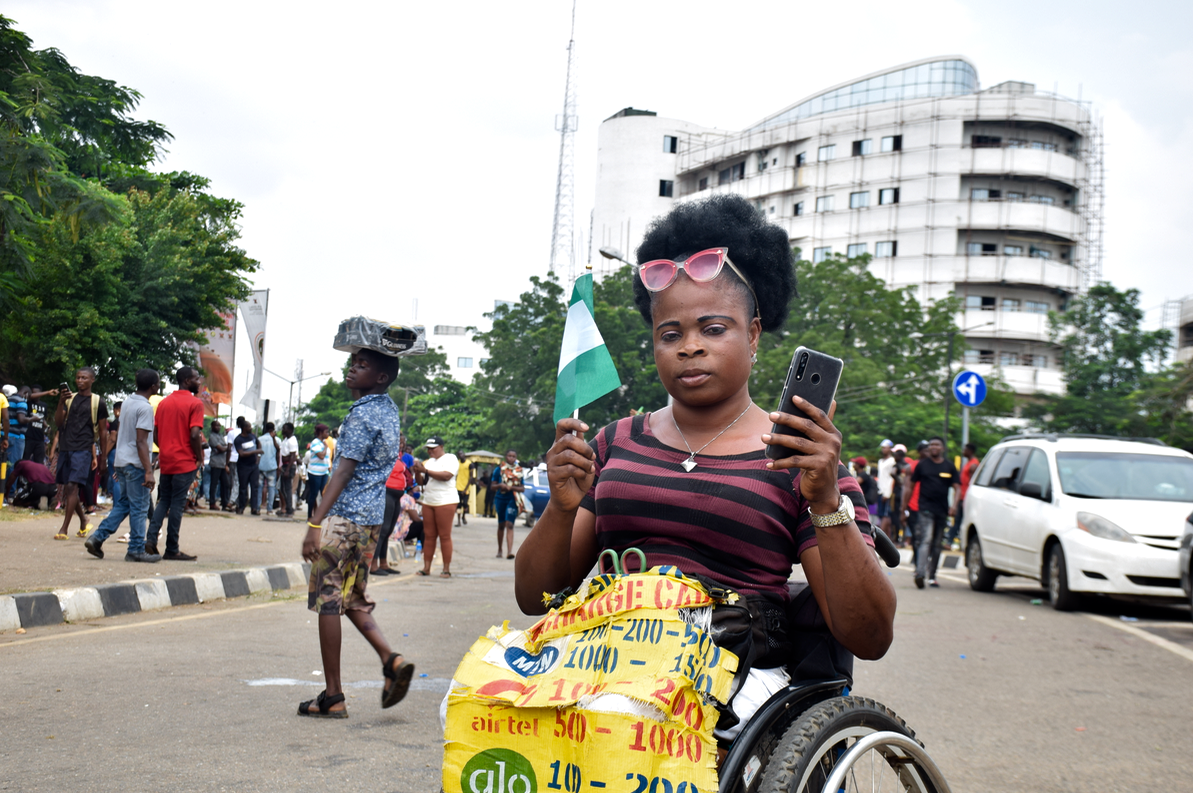
Ms Boyo said, “I say four times because first, I am a PWD, and I am a woman, so if a woman would do two times what a man would do, a woman with a disability has to do four times that,” she explained.
“While at the university, I took certification courses and sought a job. I started learning how to use the computer when I was in JSS 3. Aside from doing that, I was looking for opportunities to volunteer,” she said.
Key provisions of the Disability Act related to employment
The National Disability Act makes substantial provisions for the employment of PWDs. Sections 28 and 29 provide that PWDs have the right to “work on an equal basis with others, and this includes the right to an opportunity to gain a living by work freely chosen or accepted in a labour market and a work environment that is open.”
Public institutions must have PWDs constituting at least five per cent of their workforce.
The Act also imposes a penalty of up to N250,000 on organisations that contravene its provisions regarding employment access for PWDs.
Ikem Uchegbulam, the director of Compliance and Enforcement at the National Commission for Persons with Disabilities (NCPWD), said the federal government, through the commission, has made progress in implementing this policy.
“Through the NCPWD, we have secured a commitment from government Ministries, Departments and Agencies (MDAs) to comply with the five per cent employment quota for PWDs,” Mr Uchegbulam said.
He noted that the Office of the Secretary to the Government of the Federation issued a service-wide circular making this requirement official. Additionally, the Federal Character Commission now includes PWD representation as one of its conditions for compliance.”
Mr Adebayo, the disability inclusion expert consultant, however, said implementation of the law has been weak, leaving many PWDs unsupported. “Those who get these jobs are few and far between. There is still a huge population of unemployed PWDs. The law has not been implemented to the fullest,” he said.
The NCPWD recently unveiled the national framework for access to work schemes for people with disabilities.
According to Mr Adebayo, the framework encourages private-sector employers to employ PWDs by helping them cover the disability cost. That is, whatever assistive aid the employers need, the federal government, through the NCPWD, would cover that cost.
The Way Forward: Creating lasting change
Due to the work of civil society organisations, the media, and government agencies, people are being sensitised and enlightened about the skills and talents of people with disabilities. However, addressing “waithood” among disabled graduates in Nigeria requires a multi-faceted approach.
Mr Adebayo said PWDs have the right to work, and society must do everything to make access to work equitable and create equal employment opportunities.
“When we begin to enforce the prohibition against the PWDs law, it punishes employers who refuse to employ PWDs due to discrimination,” he said.
He said this puts the responsibility on PWDs to develop their capacity and make themselves employable.
Ms Boyo advised that initiatives like job readiness training and mentorship can equip PWDs with the skills and confidence needed for successful employment integration when they lack the necessary skills that the labour market requires.
“Continue to build capacity, most especially in the use of technology. Take employability skills training, such as how to write a CV, cover letter, and interview skills, to remain competitive,” she said.
Mr Adebayo said organisations of persons with disabilities (OPDs) need to do a lot of advocacy to convince employers that there is no type of value that PWDs cannot bring to work. “PWDs should not be seen as objects of shame,” he emphasised.
Mr Adebayo said society must ensure equitable access to work opportunities for PWDs.
He, however, said this is a two-way street. “While we fight discrimination, PWDs must continue developing their professional skills to enhance their employability.”
This reporting was completed with the support of the Centre for Journalism Innovation and Development.