

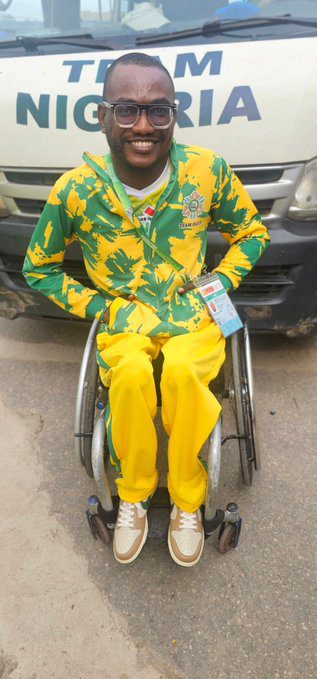
Mr. Ibrahim Omotosho, a wheelchair user, has petitioned the Nigerian Civil Aviation Authority (NCAA) to address what he describes as “unsafe, undignified, and discriminatory” practices by MAX Air.
In an open letter to the NCAA Director General, Omotosho detailed his distressing experience at Lagos airport, where the airline failed to provide accessible transport, leaving him stranded for over three hours and offered only unsafe alternatives that violated his dignity and Nigeria’s accessibility laws.
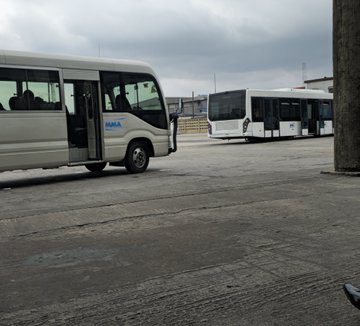
He explained that two buses were provided at different intervals, but neither was accessible for wheelchair users.
“I therefore declined to board and requested an accessible vehicle,” he recounted. “Despite my request, I was left waiting without support. On the tarmac, I was almost pushed out of my wheelchair before being told that no accessible bus was available. I was advised to use the regular bus and offered to be lifted into it a practice I found unsafe, undignified, and discriminatory.”
Omotosho argued that the incident violated several protections under Nigerian law and international aviation standards. He cited the Discrimination Against Persons with Disabilities (Prohibition) Act, 2018, which guarantees equal access to public facilities, as well as the United Nations Convention on the Rights of Persons with Disabilities (CRPD), which Nigeria has ratified. He further noted that ICAO Annex 9 Standards require airlines and airports to provide assistance for passengers with reduced mobility.
The incident also stands in sharp contrast to assurances issued by the Federal Airports Authority of Nigeria (FAAN).
In its circular, FAAN emphasized: “Passengers with disabilities, the elderly ones, and those requiring wheelchair assistance, we care about your comfort and convenience. Special arrangements are available for passengers with disabilities, senior citizens and travelers who require wheelchairs or mobility support. Wheelchair services are provided from check-in through boarding and on arrival. Dedicated staff are available to offer guidance and support. Priority is given at security checks and boarding gates. Accessible facilities including restrooms and elevators are available throughout the terminal. Your safety, dignity and comfort remain our priority.”
While FAAN promises wheelchair services from check-in to boarding and dedicated staff support, Omotosho said he was left stranded and asked to be physically lifted into a regular bus.
He therefore urged the NCAA to hold MAX Air accountable for failing to meet accessibility standards.
He also called on the regulator to enforce stricter compliance across the sector, ensuring that accessible vehicles and facilities are always available to passengers with disabilities.
Omotosho further demanded a formal update from the NCAA on actions taken regarding his complaint. “Accessible transport and facilities must always be available, not sometimes, not occasionally, but always,” he stressed.
Omotosho appealed to the NCAA to ensure that policies match practice. “I trust that the NCAA will take this matter seriously and ensure that no passenger with a disability is subjected to such indignity in the future,” he wrote.