
The Media Rights Agenda (MRA) has called on female journalists in Nigeria to report attacks against them to combat gendered violence and protect press freedom.
Edetaen Ojo, MRA’s Executive Director, emphasized that reporting attacks not only safeguards individual journalists but also upholds the public’s right to information, a cornerstone of democracy.
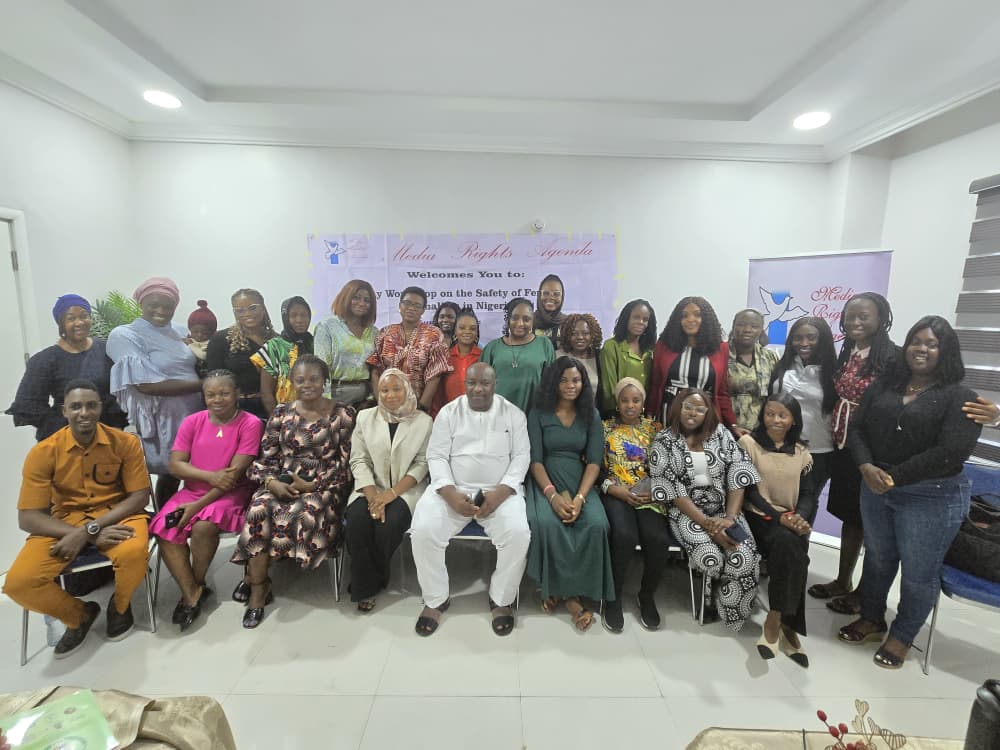
During a two-day workshop on female journalists’ safety, organized by MRA with support from IFEX—a global network of organizations in 70 countries dedicated to promoting and defending freedom of expression—Ojo emphasized the hostile environment confronting journalists, especially women.
He noted that the workshop addressed the broader challenges of an increasingly hostile climate for journalists, while highlighting the unique, gender-specific threats and attacks faced by female journalists, which often remain unreported and unaddressed.
“Attacks on journalists, whether physical assaults, arbitrary or unlawful arrests, online harassment, or other forms of threats and attacks, not only endanger individual media workers but also undermine media freedom, democracy, and the public’s right to information,” he added.
Ojo also stated that many journalists who suffer attacks are reluctant to exercise their rights, thereby encouraging perpetrators.
“The more we fight back, the more perpetrators know there are consequences,” he stressed.
The MRA’s ED highlighted that Nigeria’s legal and institutional framework offers several avenues for reporting attacks on journalists and seeking redress. He admonished participants to make effective use of these available channels.
Outlining several avenues for seeking redress, Ojo stated that “The Nigeria Police Force should be the first point of contact when threats, assaults, or other actions against journalists amount to crimes.
“The National Human Rights Commission serves as is an independent extra-judicial mechanism for promoting and ensuring respect for human rights in Nigeria.”
He also identified the Police Service Commission, the Judiciary, and various international frameworks that can enhance the safety of female journalists.
Ojo, who noted that journalists often hesitate to pursue cases due to limited resources, encouraged them to approach organizations, law firms, and individual lawyers in Nigeria and abroad to defend their rights when violated or threatened.
He further urged female journalists to seek MRA’s legal assistance, noting that the organization has over 100 lawyers across Nigeria who provide pro bono support for journalists willing to seek redress.
In her presentation titled “Gendered Attacks on Female Journalists in Nigeria: Mapping the Risk,” Blessing Oladunjoye, the Publisher of BONews Service, explained that gendered attacks specifically target women because of their gender and their profession as journalists.
She emphasized that these attacks ranging from online abuse and physical assaults to workplace discrimination are not random but calculated efforts to silence women’s voices in the media.
Oladunjoye noted that the impact of gendered attacks extends far beyond the immediate incident potentially inflicting profound personal and professional damage that ultimately undermines public discourse and democratic accountability.
She explained that the consequences of gendered attacks on female journalists could lead to self-censorship, mental health issues, isolation, career stagnation, and ultimately silencing public interest issues.
The BONews Publisher then recommended that media organizations establish gender-sensitive protocols and policies for reporting and responding to harassment, online abuse, and physical threats against female staff.
She also advocated for the creation of new and expansion of existing informal or semi-formal women-only safe spaces (online or offline) where female journalists can share experiences, offer emotional support, and strategize collectively without fear of judgment or further harassment.
During her session, Ayomide Eweje, MRA’s Programme Officer, urged female journalists to be intentional about planning for their physical and digital safety while performing their professional duties.
She also shared digital tools that can help to enhance journalists’ safety and work efficiency.
Monday Arunsi, MRA’s Legal Officer, familiarized the journalists with legal frameworks protecting female journalists in Nigeria.
He encouraged them to understand the provisions of the law and be willing to seek redress.
The participants, drawn from print, online, and broadcast media platforms in Abuja, expressed appreciation for MRA for hosting the training, which they described as essential to their work.