
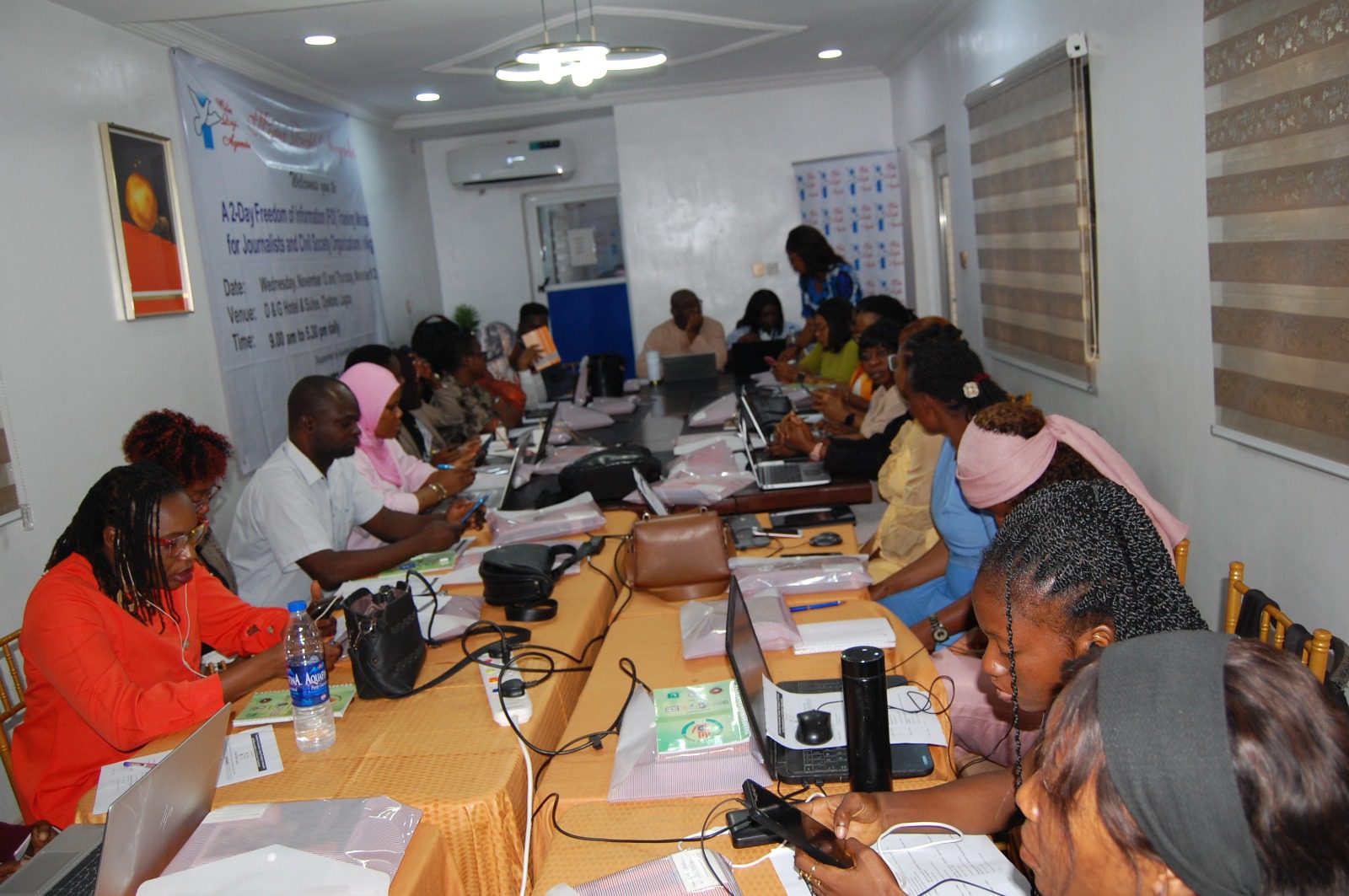
Media Rights Agenda (MRA), with support from Luminate, has concluded a two-day capacity-building workshop aimed at equipping journalists and civil society organizations (CSOs) in Nigeria’s South-West region with practical skills to effectively use the Freedom of Information (FOI) Act, 2011, for investigative journalism, advocacy, and accountability.
The two-day capacity workshop, held for 33 participants from the media houses and CSOs across the South-West geo-political zone of Nigeria, featured expert presentations, hands-on exercises, including analysis of key provisions of the FOI Act and related jurisprudence; hands-on drafting of FOI requests and other simulated exercises; how to use responses to FOI requests for reporting and advocacy, as well as monitoring government’s implementation and compliance with the provisions of the Act.
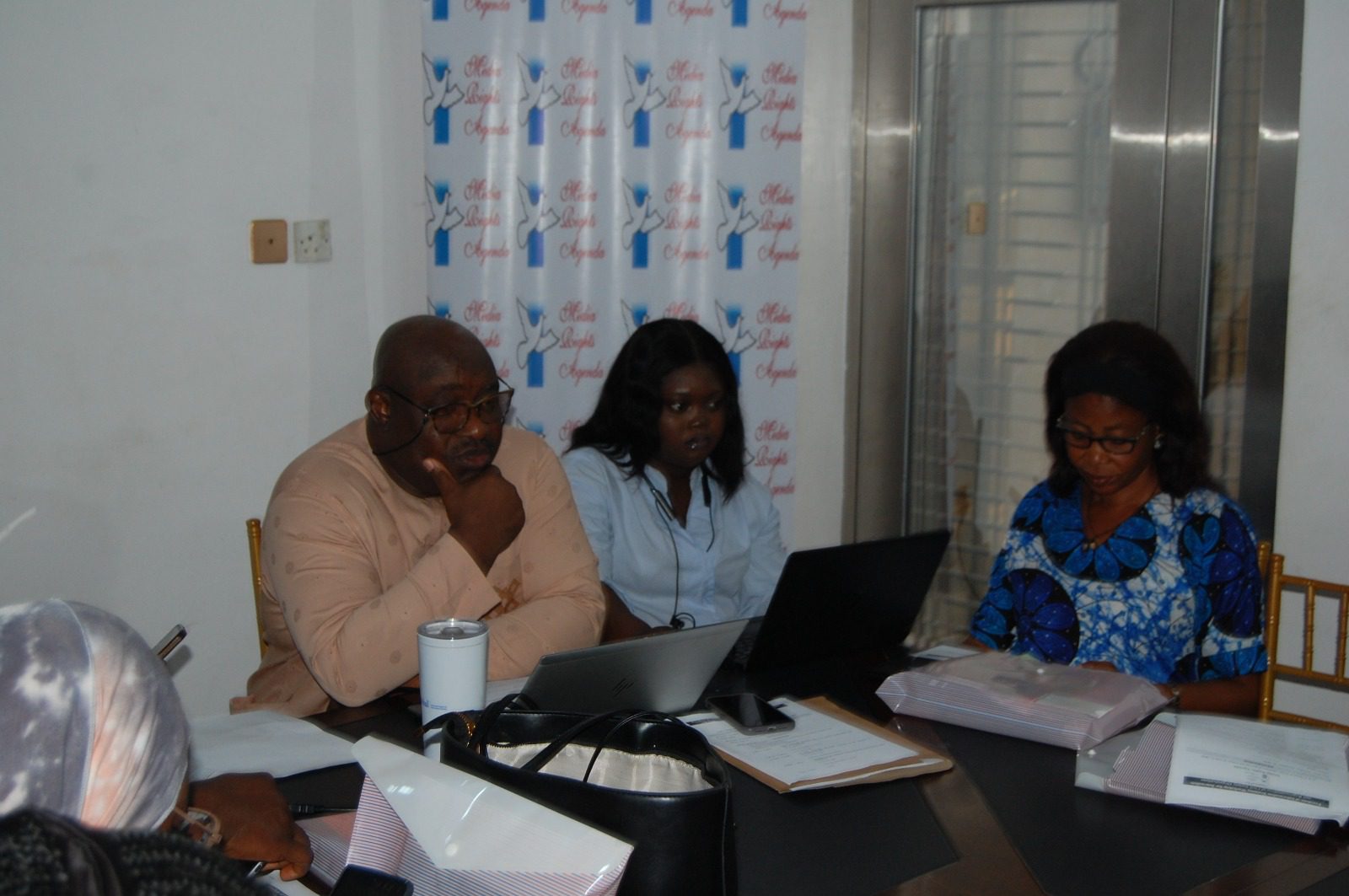
MRA’s Executive Director, Edetaen Ojo, stated that nearly 15 years after its enactment, the FOI Act’s potential remains largely unfulfilled due to persistent secrecy in public institutions and limited use of the law by citizens and activists.
“Without access to information, citizens cannot meaningfully participate in governance, hold public officials accountable, or make informed decisions about issues that affect their lives,” Ojo added.
He encouraged participants to collaborate, share experiences, and amplify each other’s work, saying: “By doing so, we can enhance the effectiveness of the FOI Act and turn it into a living instrument for democratic governance. Together, we can ensure that the right to information becomes a norm rather than an exception in Nigeria’s governance system.”
Ojo also thanked Luminate for supporting the workshop, adding: “We appreciate their commitment to strengthening transparency and protecting the public’s right to know.”
A communiqué issued at the end of the workshop highlighted the need for sustained public enlightenment for citizens of their right to access to information and how to exercise it.
Participants called for continuous sensitisation, training, and mentorship programmes for journalists and civil society actors nationwide to strengthen understanding and implementation of the FOI Act. They urged that similar awareness and training initiatives be extended to civil servants and public officials at all levels of government to ensure they understand their obligations and comply fully with the law.
Federal and state governments were asked to demonstrate stronger political will by appointing dedicated FOI Desk Officers, enforcing mandatory reporting, streamlining request-processing procedures, and sanctioning officials who violate the Act.
Participants recommended that journalists and civil society actors adopt digital tools to track requests, analyse data, and make disclosed information more accessible to the public, while public institutions should develop online platforms to simplify the submission and processing of FOI requests.
Participants commended Media Rights Agenda for its sustained work in promoting freedom of information, media freedom, and accountability in Nigeria, and thanked the facilitators and Luminate for supporting the workshop.
They reaffirmed their commitment to collaborate in advancing the effective implementation of the FOI Act and upholding the public’s right to know as a cornerstone of democracy and good governance.