
Stakeholders in the water, sanitation and hygiene (WASH) sector have called for urgent reforms to address sanitation challenges in Kano State following a consultative meeting on the review of the state’s Open Defecation Free (ODF) Roadmap.
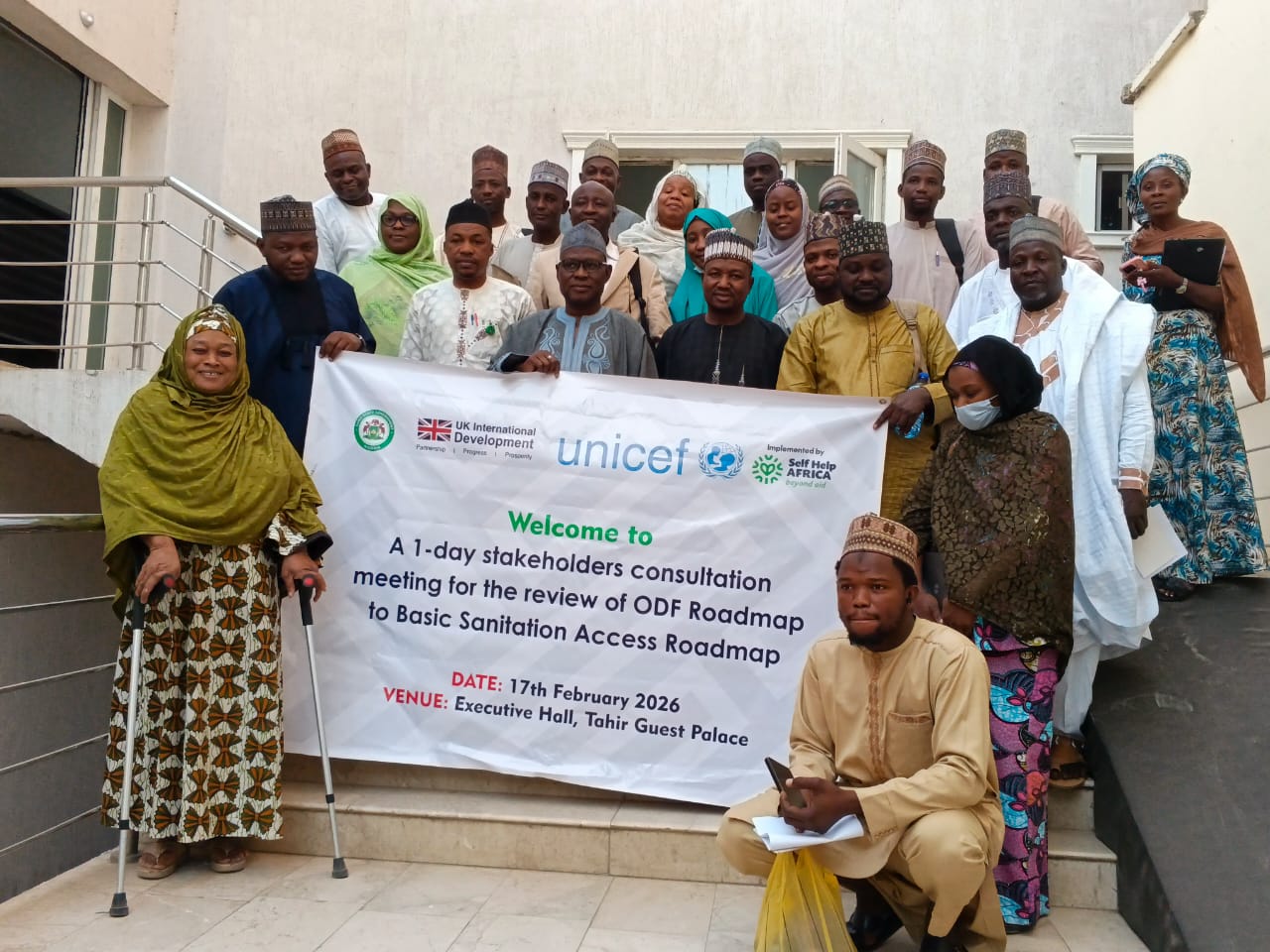
The meeting, held on February 17, 2026, resulted in the outlining of new directions toward a Sustainable Basic Sanitation Access Roadmap.
The consultative forum brought together representatives of government, civil society organisations, the private sector, academia and religious leaders to build consensus on transforming the existing ODF Roadmap into a sustainable sanitation access plan.
Participants observed that sanitation remains a major public health concern in Nigeria, with Kano State facing serious gaps. According to the communique, “12 of 44 local government areas are still lacking Open Defecation Free (ODF) status,” while wastewater and faecal sludge continue to contaminate water sources. The document further noted that toilet infrastructure is inadequate and that hygiene education and enforcement remain weak, adding that “the sanitation challenges in Kano State need urgent attention.”
The meeting agreed that these challenges could be addressed by expanding access to improved sanitation facilities and strengthening systems for human waste collection, transportation, treatment and safe reuse or disposal. It stressed the need for “innovative approaches that are context specific and appropriate” to ensure long term sustainability of sanitation services across the state.
The engagement was organised by the Kano State Task Group on WASH with support from Self Help Africa and UNICEF, with discussions focusing on market-based sanitation, climate resilience, gender equity and social inclusion.
According to the communique, the one-day workshop generated stakeholder perspectives on sanitation gaps and priorities, it provided a retrospective review of the 2022–2025 ODF Roadmap and laid the foundation for the next phase of the roadmap covering 2026–2031. It also helped to build ownership among stakeholders and produced actionable recommendations to guide future interventions.
The meeting identified several emerging issues, including inadequate resource mobilisation, weak private sector participation and the absence of market-based sanitation at scale. Other concerns included “inappropriate technology options and insensitivity to the needs of women, people with disabilities, girls, children and other vulnerable groups,” as well as limited community response to climate resilient sanitation approaches and insufficient data for planning, monitoring and evaluation.
In response, stakeholders recommended increased funding for sanitation programmes, stronger private sector engagement in the sanitation value chain and the institutionalisation of market based sanitation. They also called for the promotion of gender equitable and socially inclusive sanitation, climate resilient approaches guided by research, and the development of a robust sanitation information management and monitoring framework.
The communique concluded with stakeholders reaffirming “their collective commitment to collaborate on the development and implementation of a Sustainable Basic Sanitation Access Roadmap,” aimed at achieving and sustaining ODF status and ensuring safely managed sanitation services across Kano State.