

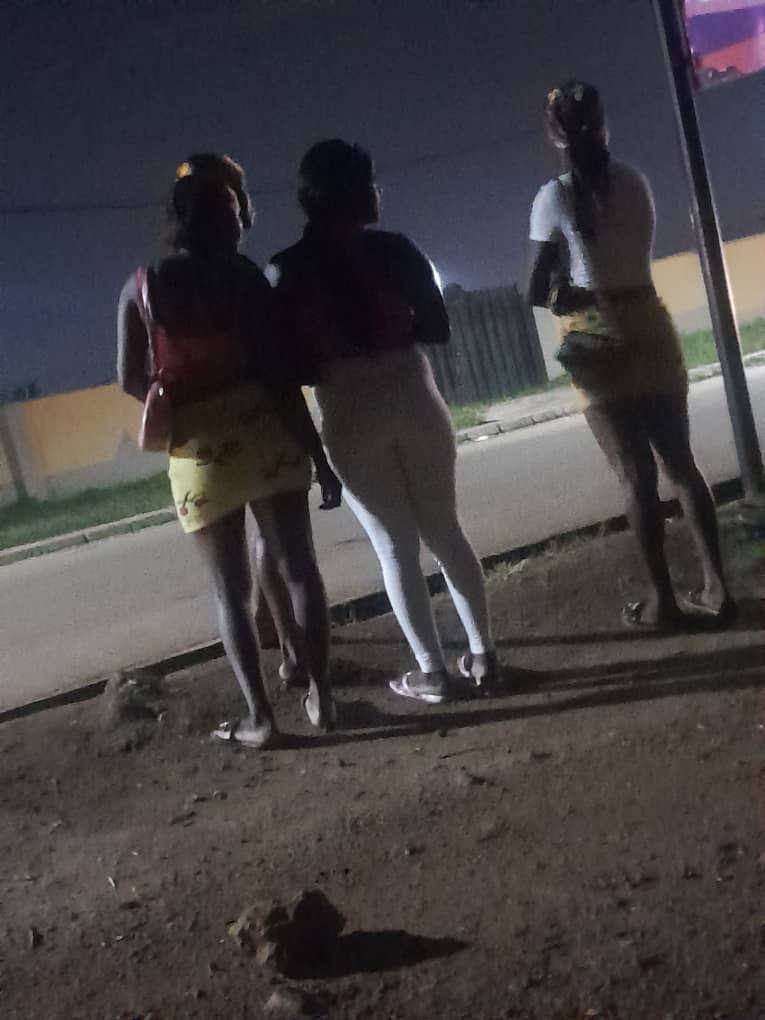
When Folake Adeola (not her real name) turned 21, she abandoned her dream of further education and turned to sex work in Akure, the Ondo State capital. Adeola found herself standing by the roadside in the Alagbaka area. Like dozens of young women in the southwest city, she now identifies as a “hookup girl”— a euphemism for commercial sex work.
For Adeola, it was not a choice made out of desire but a survival strategy in the face of poverty, family breakdown, and the harsh realities of Nigeria’s economy.
Education had once been her escape plan. She told this reporter that she wanted to study Mass Communication at Obafemi Awolowo University but could not afford the tuition fees. She eventually obtained an OND at Edo State Polytechnic, but hardship pushed her into sex work.
While in school, Adeola said she frequently had to suspend her studies to do sex work so she could cover her tuition and living expenses.
“Anytime I got broke, I had to leave school to hustle for money. Now, I know what I’ve achieved through this hookup business,” she said. “It’s not that I don’t want to return to school, but is every graduate in Nigeria employed?”
Why hookup
Adeola’s story mirrors that of many young women trapped between broken families, limited opportunities, and the lure of fast cash. She is the firstborn in her family, and when her parents separated years ago, she was forced to join her mother as a street vendor, selling hot drinks and beans from a pushcart in Akure.
“My mother would have loved to give us a good life, but she didn’t have the means. I can’t lie against her. My father doesn’t contribute to our welfare—in fact, he asks me for financial help at times.”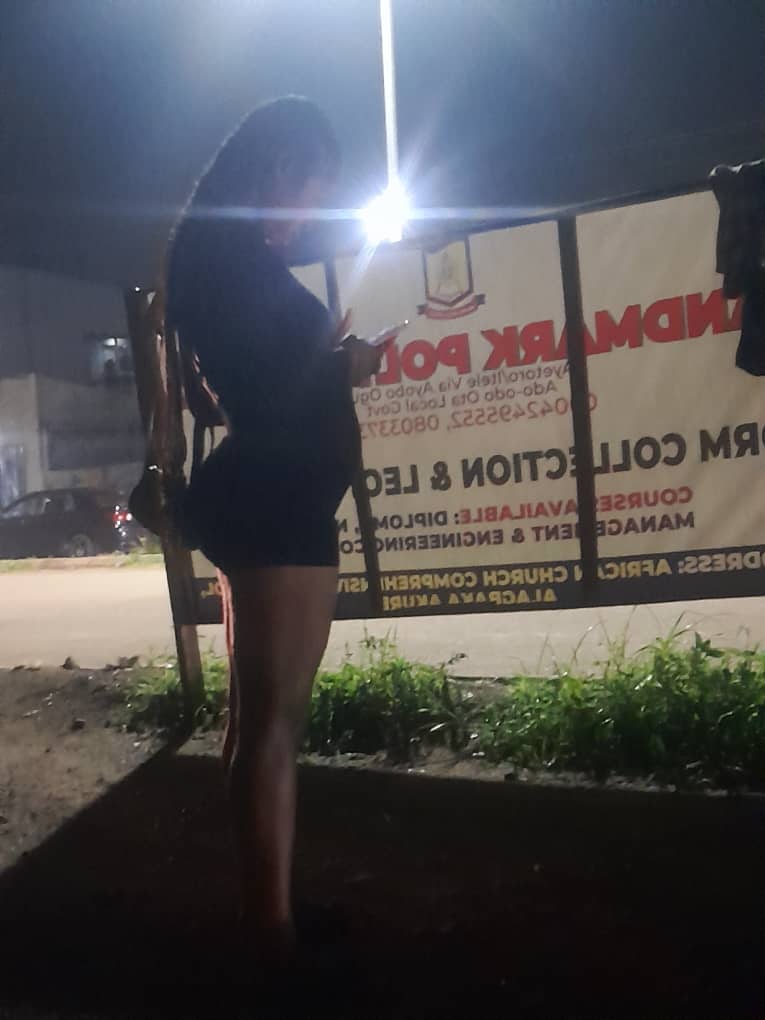
“When parents are separated, children’s lives rarely progress smoothly,” she said, recalling the parents’ separation when she was growing up. “As the firstborn, I must do everything to succeed. I don’t want my children to experience what I went through. That’s why I want to be financially independent before considering marriage.”
“Money as a motivation”
Adeola said sometimes she gets frustrated doing sex work. But I always push myself because I need the money, she said.
“It’s not a thing of joy to stand by the roadside working,” Adeola added, “I take care of my younger brother and recently paid his WAEC fees, but people who don’t know the reality keep criticising hookup girls.”
In Akure’s nightlife economy, Adeola rents a small room in Araromi for N18,000 a year. She said she charges her clients N10,000 for short encounters or N35,000 for an overnight stay.
To confirm how much Adeola charges her clients, I worked with a male journalist who went undercover and booked a rendezvous with her. She accepted an offer for a one-hour hangout with the journalist for N10,000.
She said she has saved about N3 million, and her goal is to travel abroad or open a big shop before quitting the trade.
“Many guys here start demanding sex immediately without spending a dime on you. I once asked my ex-boyfriend for N5,000, and he couldn’t provide it. I thought to myself, if I can offer sex for free, why not make money from it? At least I can save and invest.”
“I can’t waste what I’ve worked hard to earn on expensive wigs because I sleep with some men I could never develop feelings for, but the money is the motivation. By the time I have a big shop, no one will question where the money came from.”
A Crackdown that failed
Prostitution is illegal in most parts of Nigeria, including Ondo State.
In April, the Ondo State government announced a clampdown on hotels and clubs that allowed the sex workers to operate. This led to their disappearance from the streets.
But within two months, the “hookup girls” were back—only that they now wait till around 8 p.m. before taking positions by roadsides, unlike before, when it was as early as 5 p.m.
A Peer network of “Gen Z” sex workers
Unlike older sex workers now confined to brothels, this new set operates through loose peer networks, sometimes across states.
For instance, Joy, 22, said she moved from Auchi in Edo State to Akure after friends told her the business was lucrative. “I’m interested, that’s why I’m here. I need money to survive,” she said, charging N40,000 for overnight services.
Joy is also considering an ushering job that will pay N10,000 per event. “At least something will come out of it.” She pays N5,000 daily for a local hotel room and urgently needs money to secure her own apartment.
Another lady who introduced herself as Helen, from Benue, was blunt: “I heard the business thrives here.” She demanded N35,000 before walking away from my partner, who was disguised as a potential client.
Susceptibility to Exploitation
The dangers are clear. Many of the women say they operate alone, with little or no protection.
Adeola said she gets scared when clients approach her at night from cars with tinted windows.
When asked if she feared being attacked by clients or being used for traditional rituals, as reported in some parts of the country, she said, “Everything is a risk. God will protect me, knowing that I’m not doing this willingly.”
Her only friend in the business, she recalled, received N2 million from a man who claimed to be a prophet and asked her to quit. She said the man also claimed to be a bitcoin seller, raising concerns about his motive and causing her to pray for her friend.
Asked if she had a “godmother” or a ‘controller’ in the business, Adeola rejected the idea, saying it would be difficult to succeed under one.
She expressed her determination not to spend too long in the trade like senior sex workers, who she said boasted of being in the business for over a decade.
On a Friday evening in August, around Alagbaka Grammar School, I observed how some of the sex workers converged in groups and appeared scared. WhenI positioned my phone to take pictures of them, they ran off. “It’s like that woman is recording,” one said.
Many of them also hide their profession from their neighbours. They leave their neighbourhoods fully clothed, then look for a private area to change into skimpy, seductive outfits. Some dress as if heading to a church vigil, making it difficult to suspect their involvement in sex work before they arrive at the hookup spots.
Social workers raise an alarm
Experts say the surge in young women taking to prostitution in Akure signals deep social cracks.
Martin-Mary Falana, CEO of Kids & Teens Resource Centre, described it as “a violation of these girls’ rights to protection, dignity, and education.”
“Many are minors failed by the system. Instead of stigmatising them, the government must create safe spaces and alternatives.”
Some of these girls enter the trade after fleeing abuse or neglect at home, Falana said, calling for safe, youth-friendly spaces where at-risk girls can find refuge and support.
In the same vein, Alo Martins, who leads the Coalition of Civil Society Organisations in Ondo, linked the trend to poverty, peer pressure, social media glamorisation of “fast money,” and weak institutional support.
“Prostitution comes off as the fastest means of survival. Peer influence, coupled with the glamorisation of fast money lifestyles on social media, pushes many young girls into transactional sex,” Martins said.
Similarly, Ajayi Adeyemi, a social worker in the Ondo State Ministry of Health, attributed the increase in young sex workers to younger students entering higher institutions. He said children as young as 15 are now in higher institutions, where their immaturity makes them vulnerable to being lured into such activities.
Interviews with male clients revealed that many prefer younger sex workers because they consider them “fresh” and offer the “desired sensation” compared to older counterparts. Some also believe they provide a “better experience.”
What Students and Experts Recommend
A survey I conducted among the students of Adekunle Ajasin University and Rufus Giwa Polytechnic found that 21.4 per cent of respondents knew peers aged 19 to 23 who were involved in hookups, citing financial need and peer pressure as the main drivers.
The students suggested more parental support, open conversations, business funding, and counselling to deter peers from sex work.
A 300-level student, aware of a 22-year-old peer involved in sex work due to financial needs, advised parents to provide adequate support for their children in school.
Another student, aware of a 24-year-old peer influenced by friends after gaining admission to a higher institution, noted that some girls are connected to clients through a male intermediary using his apartment as a meeting point.
“Parents and school authorities should enlighten young girls from a young age so they don’t stray when sent to school.”
Civil society advocates also urged the government to provide scholarships, micro-grants, skills training, and mentorship to vulnerable girls.
“Holistic, community-based solutions are better than arresting them on the street,” Falana said, adding that reliable data on the scale of the problem is urgently needed.
“Effective policy requires reliable data. This data can inform more effective interventions, enable monitoring and evaluation, and hold duty bearers accountable. Disaggregated data is particularly valuable in tailoring responses. Girls who have transitioned away from street life can become powerful mentors.”
He also urged stakeholders to fund research to track the scale, patterns, and triggers of the issue and called for policy reforms to prioritise vulnerable youth in urban planning and social development strategies.
Alo Martins, who leads the coalition of CSOs in Ondo, emphasised the need for the government to strengthen social protection, enforce child rights, and provide empowerment opportunities.
He urged civil society organisations to run advocacy, mentorship, psychosocial, and skills programmes for at-risk girls, while families and communities must uphold moral values and offer supportive environments. Martins also called on the media to shift narratives from blame to empathy and highlight solutions, concluding that a holistic approach combining prevention and rehabilitation is crucial.
This report was facilitated by the Wole Soyinka Centre for Investigative Journalism (WSCIJ) under its Report Women! Female Reporters Leadership Programme (FRLP) Fellowship, with support from the Bill & Melinda Gates Foundation.