

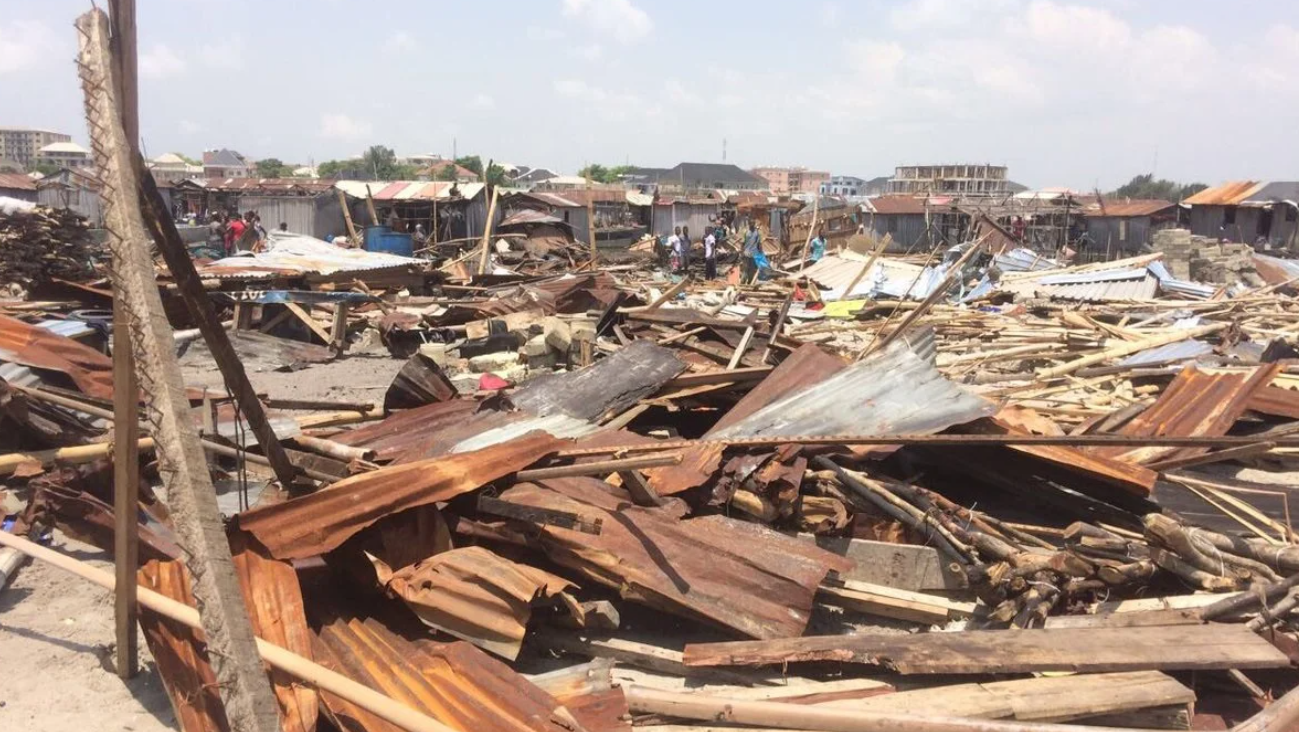
The National Human Rights Commission has expressed grave concern over ongoing demolitions and forced evictions in Lagos State waterfront and informal settlements, warning that the actions raise serious human rights implications.
Dr. Tony Ojukwu, Executive Secretary of the Commission, described the ongoing demolitions in Makoko, Lagos, as alarming, noting that thousands of residents have been displaced.
Ojukwu noted that the demolitions were carried out without adequate notice, compensation, or resettlement plans, leaving many families homeless and destroying their sources of livelihood.
He stressed that such actions violate constitutional guarantees of dignity, housing, and family life, as well as international human rights standards to which Nigeria is a signatory.
“The courts have issued pronouncements prohibiting forced evictions, yet these rulings are being disregarded. This undermines the rule of law and erodes public confidence in governance,” he stated.
The NHRC chief emphasized that development projects must not be pursued at the expense of fundamental human rights.
He called for an immediate halt to the demolitions to allow for meaningful consultations with affected communities and the provision of adequate resettlement and compensation.
Ojukwu warned that forced evictions erode trust in government, deepen social vulnerabilities, and risk fueling instability.
He added that Nigeria’s progress must be anchored in justice, fairness, and respect for human dignity.
The Executive Secretary assured that the Commission will continue to closely monitor the situation and engage relevant authorities to ensure compliance with the nation’s human rights obligations.
The demolitions in Makoko and other Lagos waterfront communities have displaced thousands of residents, with civil society organizations reporting that the evictions violate subsisting court orders and prior engagement between communities and the Lagos State Government about partnership toward holistic planning and community-led regeneration.
The affected communities, including Makoko, Oko Agbon, and Sogunro, are home to tens of thousands of residents, many of whom have lived in the areas for generations.