

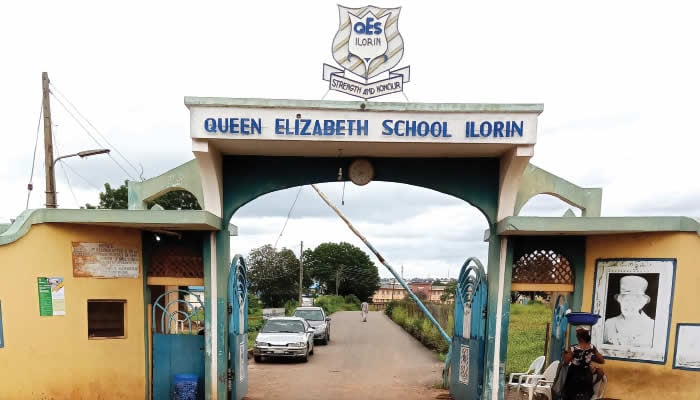
The Centre for Infrastructural and Technological Advancement for the Blind (CITAB) has commended the Kwara State Government for approving the immediate admission of visually impaired girls into Queen Elizabeth Secondary School, Ilorin, after ten years of exclusion from the institution.
The organisation made this known in a statement issued on Sunday by its Executive Chairman, Mr Jolomi George Fenemigho, who described the development as a historic breakthrough for inclusive education in the state.
According to Fenemigho, the government has promised to provide free education, feeding, and accommodation for the admitted students, bringing hope and dignity back to visually impaired girls and their families.
He highlighted the joy of students like Agnes Daniel, Bushra Abas, Muibat Babanloma, and Jariat Mohamonu, calling their reactions proof of what happens when genuine political commitment fulfils long-held aspirations.
CITAB credited sustained advocacy by civil society groups, investigative journalism, and pressure from families for finally pushing the government to address the decade-long injustice.
“For ten years, visually impaired girls were denied education by the deliberate misallocation of resources, notably hostel accommodations meant for students but conveniently reallocated to staff. This represents a blatant violation of equality and fundamental human rights,” he stated.
However, Fenemigho warned against overlooking the years of institutional neglect that created the problem, noting that visually impaired girls were denied education not just due to lack of facilities but through deliberate misallocation of resources.
The CITAB chairman emphasised that despite the passage of the Kwara State People with Disabilities Bill, which guarantees every child with a disability the right to free, quality, and inclusive education without discrimination, visually impaired students have continued facing exclusion and a lack of appropriate resources.
Fenemigho described a troubling gap between legislative promises and actual implementation, noting that many students have been kept out of educational opportunities even as legal provisions gather dust in government offices.
The organisation cautioned the state government against treating the admission as mission accomplished, stressing that it represents only the first step toward genuine inclusion.
CITAB demanded that Queen Elizabeth Secondary School be equipped with modern assistive learning technology, including a computer lab with screen reader software, talking calculators, talking dictionaries, and a braille embosser for printing textbooks in braille.
“True inclusion means enabling students not only to attend school but to flourish, compete, and prove that disability is no excuse for mediocrity.
“Professional expertise is not a luxury; it is a lifeline, and our students deserve nothing less than the best that is available,” he added.
The organisation stressed the importance of recruiting qualified special educators from recognised institutions, warning against turning the crucial mandate into a dumping ground for unqualified personnel.
CITAB called on Governor Abdulrahman Abdulrazaq to immediately establish a dedicated committee to track the progress of Queen Elizabeth Secondary School and monitor the welfare of visually impaired students.
The proposed committee would be responsible for producing detailed periodic reports to keep the system accountable and ensure that students and their families remain the priority.
Fenemigho urged education authorities nationwide to learn from Kwara State’s mistakes while replicating its progress, emphasising that the intervention should ignite a new era for inclusive education across Nigeria.
“The People with Disabilities Bill makes it clear that equality and barrier-free access should be the rule, not the rare exception, in every classroom,” he concluded.
The organisation maintained that only through sustained genuine action can legal provisions be transformed into a daily reality for all students with disabilities across the country.