

By Alexander Ogheneruemu
As a disability-centric thinker, writer and advocate (who myself am disabled), I often find myself musing and asking the hard questions around disability and its lived experience. These musings provide insights and drives towards approaching disability narratives from less talked about perspectives. “Allies”, a spin-off from the Disability Champions Series (DCS, a narrative-profile of persons with disabilities pushing barriers to achieve, impact, and live meaningful lives – now going to its 27th episode), is one of these.
Anchoring the DCS gave me rare, up-close opportunities and insights into lived experiences of disabilities – directly from the horse’s mouth. From these, a lot is made out of the sheer determination, will power, hard work, etc, of the interviewees. But, there’s also a remarkable common thread in these stories of disabled people that hooked my attention, namely, “the powerful influence of actors who do identify as disabled” (often, but not limited to parents, siblings, individuals, organizations, etc, count in). Again and again, survivors in the series who reached dizzying heights, directly and indirectly, reference the role of these often-unheard allies. Thus, I found myself musing the unfairness of not centering these important voices within disability stories. “Allies”, as a series centering voices of non-disabled enablers in the disability movement, was conceived to fill that gap.
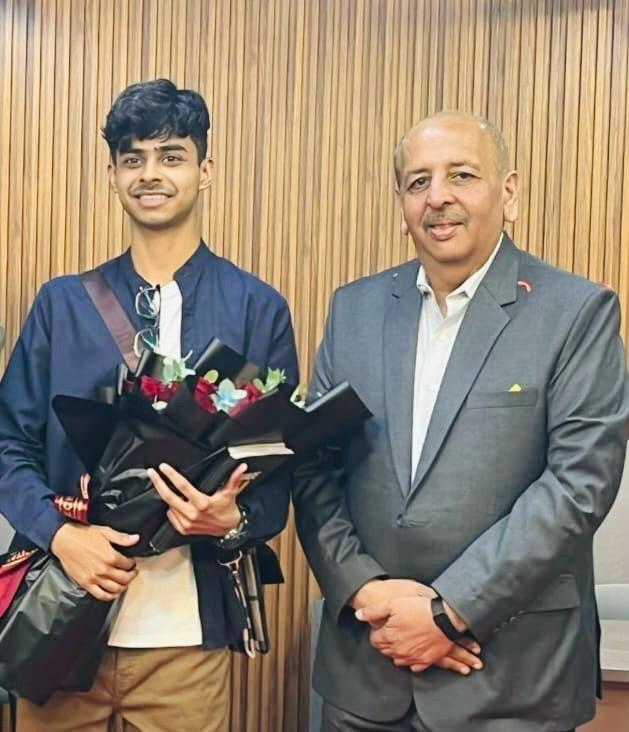
In the first of the series, we feature Nadim Salim. Salim is the father of a Deaf, disability inclusion and climate justice activist. His son Kashaf sums up the impact of his father’s allyship in his journey to the top:
“If you ever wonder where I found the strength to stand tall in this world, know this: it came from my father’s arms, from the quiet vow he made... In this interview with Alexander Ogheneruemu over the phone, Salim shares candid thoughts and powerful nuggets on allyship with the disability movement.
Alexander: Tell us a bit about yourself and what prompted your involvement with disability?
Nadim: I am Nadim, a researcher by profession, a father by divine design. But more than that, I am a witness. I did not choose the path of disability advocacy. It arrived like unexpected rain, in the form of my son. He came into the world wrapped in silence yet bursting with light. And when you love someone the world does not fully understand, you begin the lifelong pilgrimage of building bridges between silence and sound, exclusion and belonging, indifference, and love.
Alexander: Can you cite a specific moment or experience that made you commit to being involved with disabled people?
Nadim: It was the day I saw my son Kashaf return from school, rejected not for who he was, but for how he communicated. I remember the way he smiled, still, like the sun rising despite clouds. In that moment, I realized if I did not fight for his dignity, who would? That was the beginning. What began with him became a devotion to every child left unheard.
Alexander: How would you define allyship, particularly in the context of disability?
Nadim: Allyship is not about speaking over others; it is about creating space where every voice can be heard in its own language and cadence. In the context of disability, it means standing beside – never above. It is the conscious act of partnership rooted in mutual dignity. True solidarity listens before it moves, and when it moves, it does so with humility, guided by those whose lives it seeks to support. Disabled people are not seeking rescue; they are demanding recognition. They ask for what is owed to all human beings: the right to be seen, respected, and given a fair chance. Anything less is not a shortcoming, it is an injustice that diminishes us all.
Alexander: What drives your ongoing commitment to supporting people with disabilities/disability causes?
Nadim: I could say it began with my son, Kashaf, and that would be true. But what sustains this commitment is what lies beyond our doorstep – doors that remain shut, voices dismissed, potential wasted not by inability, but by indifference. The world too often turns away from what it does not wish to confront. I cannot. Because each time a child is denied education, or a woman is refused work because she uses a wheelchair or a hearing aid, humanity itself is made smaller. This is not merely personal, it is moral. We have a shared responsibility to create a world where access and respect are not privileges granted at whim, but guarantees as natural as air and sunlight.
Alexander: Are there specific values or beliefs that guide your approach to allyship?
Nadim: I choose the side of justice, not as an abstract ideal, but as a daily discipline. I believe in listening deeply, not as a courtesy, but as a way to act with integrity. I believe in empathy, not the kind that soothes without changing anything, but the kind that disrupts complacency and demands transformation. I do not claim to hold all the answers, but I have learned this: disability is not a limitation of the person, it is a limitation of the structures, attitudes, and systems around them. Difference is not a burden to be managed; it is a truth to be honoured. And honouring it means reshaping the very architecture of our societies to hold all of us, not just a chosen few.
Alexander: How has your involvement with disability changed your views on inclusion and access?
Nadim: Inclusion is not the slope of a ramp or the wording of a policy. It is not something you write once and store in a file. Inclusion is a living culture, a constant act of welcoming. I once thought access was about compliance with rules; now I see it as a deeper human connection. True inclusion means you are not merely allowed to enter; you are expected. You are not a guest at the table, you are part of the reason it exists. It means the classroom, the workplace, the community space already holds a place for you, because your belonging was never in question. That is the world Kashaf and I are working toward, a world where access is not granted because it was never withheld.
Alexander: What specific actions have you taken, are currently taking, or plan to take that you feel have/will have a meaningful impact on disability justice?
Nadim: Being Kashaf’s dad means I’m always right there beside him, not trying to bulldoze a path ahead. Sure, I’ve spoken up when I see doors slammed shut on him or others, but mostly, I work to make sure those doors don’t close silently anymore. I link him up with opportunities, not because he needs a special road, but so that road exists for every kid who’s coming next. Right now, I’m pushing to make disability a main course in conversations about education, climate change, and policy, not just some garnish on the side. My dream? Programs where disabled youth aren’t just asked what they think, but actually decide. Honestly, impact to me isn’t about how many battles I fight for Kashaf, it’s about how many battles he and his friends won’t have to fight at all.
Alexander: What challenges have you faced as an ally of persons with disabilities? How did you confront/solve them?
Nadim: Oh, the polite “Yes, yes, we’re working on it”, while nothing changes. That’s the toughest. Institutions can sound like they’re fluent in “inclusion,” but they often still keep people out. My trick? I ask the uncomfortable questions, get it in writing, and then bug the heck out of them until things move. It’s exhausting but worth it. On the emotional side, watching Kashaf face rejection for things completely unrelated to what he can do – that’s a punch in the gut every time. I can’t protect him from everything, though I try, but I remind him that persistence and dignity outlast any system’s resistance. Sometimes it means sending one more email or showing up at one more meeting. Not because I expect to win every time, but because giving up is just not in our vocabulary.
Alexander: Can you share a moment where you saw the impact of your allyship?
Nadim: Here’s a little story: When we went through Dubai immigration, I braced for the usual slow shuffle. Instead, the officers treated Kashaf like a VIP, fast-tracked us, helped with luggage, and smiled like they actually cared. I half-expected to get a “Where’s my autograph?” joke next! It was small but powerful – a reminder that real change can be as simple as genuine respect. And then there was the Pakistan Day celebration in Dubai. I had pushed the organisers to show Kashaf’s sign language interpretation of the national anthem big and proud, not tucked away like some afterthought. Watching the crowd watch, moved and attentive, that moment was everything. It wasn’t just about visibility; it was about making out space where there wasn’t any before.
Alexander: What important lessons or insights have you learned from your involvement with disabled individuals or communities?
Nadim: I have learned that disability justice is never about charity. It’s about equity and dignity. Pity can be surprisingly harmful because it pretends to be kindness, whereas it quietly keeps someone in a dependent box. Kashaf taught me that. He doesn’t wait for anyone’s permission to dream big – astronaut, alpinist, you name it. One time, I asked him, “Do you think that’s even possible?” and he just smiled and signed, “If it’s not possible, I will make it possible.” That made me rethink my own questions. I stopped asking, “What can we give them?” and started asking, What brilliance are we losing out on by not letting them lead? That shift changes everything.
Alexander: What advice would you give to someone who wants to support people with disabilities but doesn’t know where to start?
Nadim: Start with listening, really listening, without rushing to fix or advise. Disabled people already know what works best for them; the world just needs to stop talking over them. Then take a good, honest look at your surroundings, your workplace, your school, even your family events, and ask, “Where would someone with a disability feel left out?” That’s where your work begins. And remember, you don’t need a degree in disability studies to be an ally. You just need the courage to stick around when things get uncomfortable.
Alexander: What more do you wish you could do?
Nadim: I wish I could tear down the systems that treat accessibility like a nice bonus instead of a basic right. I want Kashaf to be measured first, by his skill and passion, not his hearing status. And I would love to create a fully self-run platform for disabled youth, one where they don’t just get a seat at the table, they own the table, the chairs, and the whole building. No gatekeepers, no asking for permission, just leading on their own terms.
Alexander: If there’s one thing you wish everyone understood about working with, and supporting the disability community, what would it be?
Nadim: It’s not a one-way favour, it’s a partnership. If you think you’re “giving more than you’re getting,” you have missed the point. Disabled people aren’t looking for special treatment, just the removal of barriers that shouldn’t have been there in the first place. That’s not kindness. That’s justice. And honestly, justice benefits everyone, even the ones who think they’re just there to “help.”
Alexander: Any additional thoughts you’d like to share?
Nadim: Being Kashaf’s dad is like having a front-row seat to the world’s best masterclass on strength and vision. I remember once he set out on a climb. The group leader looked a bit skeptical until Kashaf was halfway up the rock face before most people had even adjusted their helmets. He doesn’t just dream big; he acts like the impossible is just a longer scenic route. And there is the lesson I carry: when we include disabled people, the world isn’t “helping” them. The world is completing itself, and trust me, it’s a far better, richer, more interesting place when it’s whole.
I have watched doors slam in my son’s face for a crime he never committed – being born deaf. I have seen him win when others prayed for him to fail. If there is one thing you take from my words, let it be this, disability is not weakness. It is defiance wrapped in human skin. And my son, like millions of others, is not here to ask for your pity. He is here to rewrite the damn rules and disrupt the narratives.
“Allies” is a collaborative project with Madam Joy Bolarin, Executive Director, Jibore Foundation, anchored by Alexander Ogheneruemu (Disability issues blogger).
Special acknowledgement to T.O.L.A Foundation for backup support.