

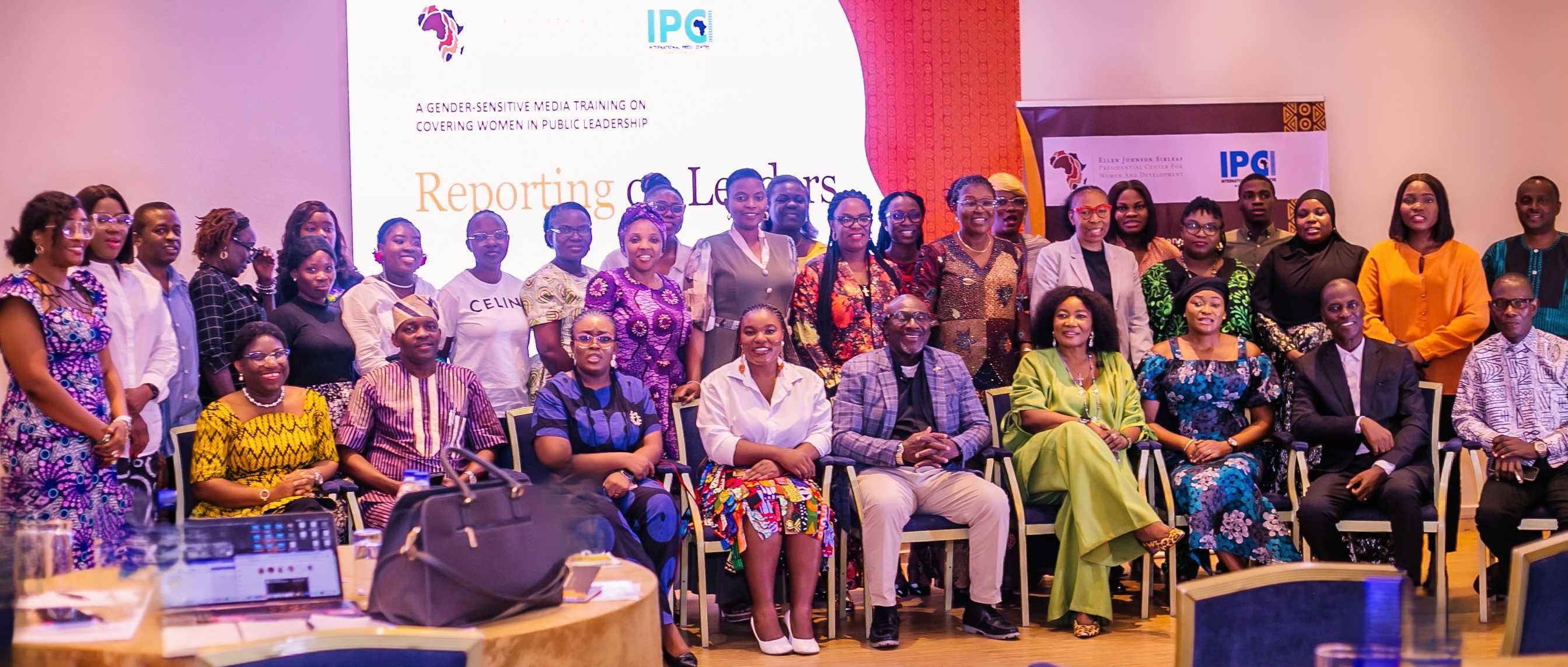
Media professionals, civil society leaders and gender advocates have called for more deliberate and fair reporting of women in leadership, noting that the media plays a critical role in shaping how women leaders are perceived and understood.
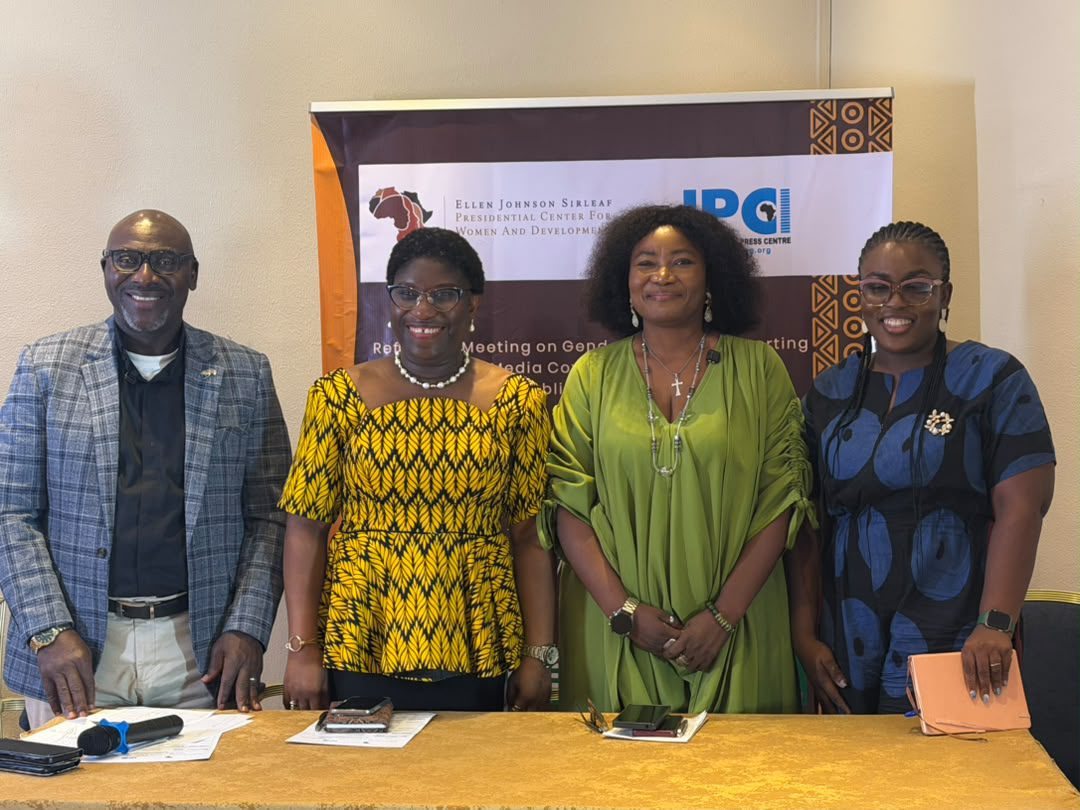
The call was made during a three-day Reflection Meeting and interactive dialogue on Gender-Sensitive Reporting and Media Coverage of Women in Public Leadership organised by the Ellen Johnson Sirleaf (EJS) Presidential Center for Women and Development, in collaboration with the International Press Centre (IPC), Lagos.
In her opening remarks, Noella Ngunyam, Communications Lead, EJS Centre, said the reflection was aimed at examining how the media covers women in public leadership, stressing that the conversation should not be limited to politicians.
“We are trying to analyse how the media frame female leaders, not only politicians but also business executives, academics, philanthropists and others occupying influential positions in society,” said Ngunyam.
She said the media needs to increase its reportage of women and “pay attention to women’s representation and understand that there is a real gender gap in leadership of women.”
Lanre Arogundade, the Executive Director of IPC, emphasised the need for impactful reporting of women in political positions, particularly during elections.
He also called for mechanisms to protect and support women in politics when they face public attacks.
“We need to build defence mechanisms for when women in politics face public assault,” Arogundade said.
Mrs Motunrayo Alaka, the Executive Director of the Wole Soyinka Centre for Investigative Journalism (WSCIJ), noted that while journalists have a responsibility to report on women, women themselves also have a responsibility to make themselves visible.
Alaka cautioned journalists against turning reporting into public relations, stressing the importance of independent and critical journalism.
She urged journalists to become more curious about the women they cover and to conduct deeper research into their backgrounds, work and contributions, so they can write indepth and detailed stories about women.
She also identified culture and religion as major factors that influence perceptions of women and leadership.
Anike-Ade Funke Treasure, a seasoned media professional and board member of IPC, observed that the boundaries between social media and traditional media reporting were becoming increasingly blurred, creating new opportunities for journalists to engage audiences and tell more stories about women leaders.
She encouraged the media to explore different ways of profiling women, including exclusive interviews and other forms of storytelling that can give women greater space to explain their work and perspectives.
Toun Okewale-Sonaiya, the Chairwoman of Women Radio 91.7, challenged journalists to examine biases in their own reporting.
Okewale-Sonaiya, who was represented by Funmi Bamgbala. Programmes Manager, Women Radio, emphasised that “we have biases that we haven’t confronted; it could affect our report,” urging journalists to apply the same standards to men and women.
“If we give a man a pass, we should give women a pass too,” she added.
Lekan Otufodunrin, Executive Director of the Media Career Development Network, called on journalists to consciously audit their reports and become more systematic in their approach to covering women.
He said journalists needed to examine their reporting practices rather than assuming that gender-sensitive reporting would happen automatically.
Participants also discussed the importance of building alliances among journalists, media organisations and other stakeholders to strengthen the coverage of women in leadership.
The organisers said the reflection meeting is part of a wider regional process examining media coverage of women in public leadership. The initiative is being piloted in Nairobi, Kenya, with similar reflections planned for Southern and Northern Africa.
At the end of the three-day meeting, participants developed a toolkit to support journalists, editors, and digital creators in covering women in public leadership, in a more gender-sensitive and fair manner.