

Public health advocates from across Africa have converged in Lagos for the third edition of the Africa Centre for Tobacco Industry Monitoring and Policy Research Tobacco Industry Monitoring training course, aimed at strengthening Africa’s capacity to monitor, expose and counter tobacco industry interference in public health policy.
The five-day event, being held in Nigeria for the first time, brought together participants from 12 countries: Kenya, Nigeria, Benin, Botswana, South Africa, Sierra Leone, Cote D’Ivoire, Ethiopia, Uganda, Zambia, Senegal and Zimbabwe.
The training is led by internationally renowned tobacco control expert, Prof. Lekan Ayo-Yusuf, with a team of facilitators including lecturers from the University of Bath in England, as well as policy advocates and researchers from the United States, Nigeria, Brazil, and Togo.
Ayo-Yusuf, who is Head of the School of Health Systems and Public Health at the University of Pretoria and Director of ATIM, highlighted studies showing that tobacco industry interference in public policy and public health remains a continent-wide challenge, contributing to preventable deaths and undermining effective tobacco control.
He explained that the training is designed to fortify the continent’s response to the problem by moving advocates from reacting to tobacco industry interference to proactively anticipating, monitoring and countering it through evidence-based action.
“The course is intended to strengthen the capacity of tobacco control advocates to effectively monitor and counteract tobacco industry interference in public health policies in Africa. It is also intended to help advocates better understand the tobacco industry and help them hold it to account – which is crucial to further progress in tobacco control,” Ayo-Yusuf said.
He expressed confidence that at the end of the training, advocates would be better equipped to identify and document tobacco industry interference, analyse emerging industry tactics, search and interpret industry documents, identify front groups and third-party allies, and generate evidence to support effective policy advocacy.
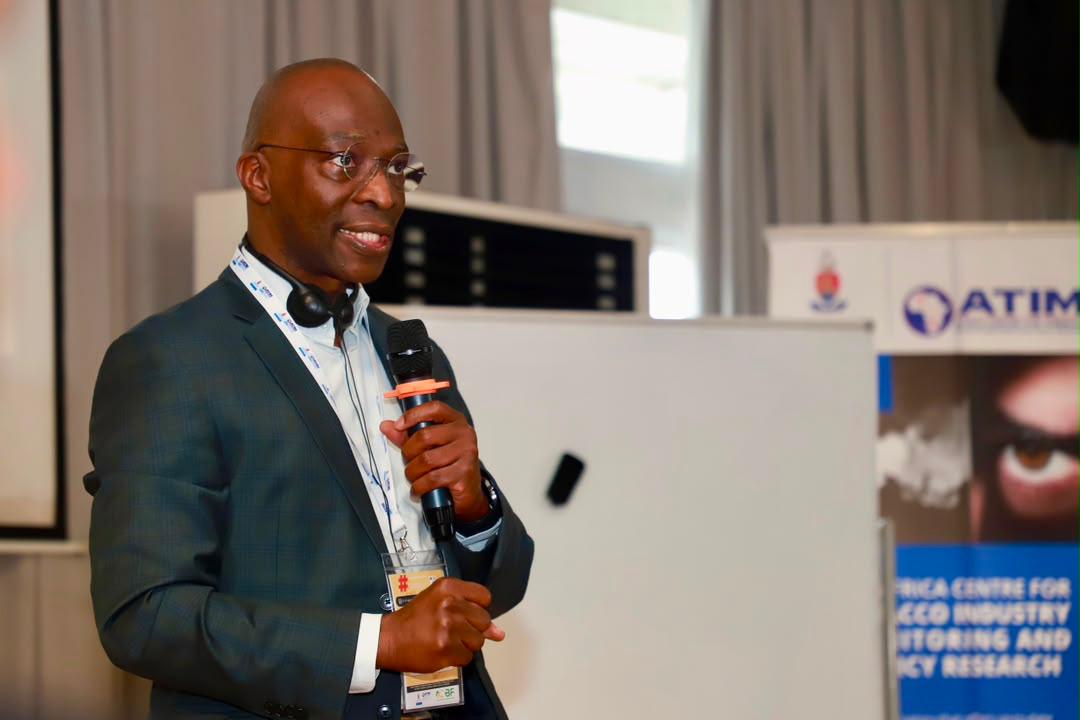
“They will also be able to draft effective tobacco control policies and implementation and draft effective and efficient advocacy strategies for their organisations or countries,” Ayo-Yusuf added.
Akinbode Oluwafemi, one of the facilitators and Executive Director of Corporate Accountability and Public Participation Africa, warned that the tobacco industry had continued to reinvent itself, hence the need to groom a new generation of advocates to continue the fight for public health.

“Some of us have been in tobacco control advocacy for close to three decades and we recognise the need to build the next generation of advocates. Among the participants, you’ll find government officials, civil society organisations, public health advocates, economists, among others. ATIM is building their capacity to take the baton to the next level,” Oluwafemi said.
He said the need for such capacity-building had become even more urgent as the industry increasingly promotes a false narrative of harm reduction.
“It is necessary to ensure that advocates get updates about how the industry continues to spread misleading narratives, get our youths and children addicted and how government should enforce the WHO Framework Convention on Tobacco Control and the national laws as appropriate,” Oluwafemi added.
Participants commended ATIM for organising the course.
Emmanuel Onwuka, a journalist and Communications Officer at the Nigeria Tobacco Control Alliance, highlighted the training’s relevance, particularly as the tobacco industry develops new products and marketing strategies targeting young people.
“The ATIM Building Capacity in Industry Monitoring for Effective Tobacco Control Advocacy in Africa (BETA 3.0) training has come at a crucial time, especially as the tobacco industry continues to develop new tactics and increasingly targets young people,” Onwuka said.
“Through the training, I am gaining valuable knowledge about tobacco use trends and the tobacco industry’s agenda across Africa. I am confident that by the end of the programme, I will be better equipped with the skills and knowledge needed to effectively monitor, document, and report on tobacco industry interference.”
“We are here in Lagos, Nigeria participating in the ATIM course and, so far, their training has been perfect. We’ve learnt a lot. We’ve been able to gain hands-on skills on how to conduct industry monitoring and how we can also research and access tobacco industry documents. Additionally, we’ve been able to understand and reflect on the WHO FCTC,” said Jackline Mbone Juma, a youth tobacco control advocate for the Kenya Tobacco Control Alliance and Health Promotion.
Based at the University of Pretoria, ATIM is a specialised African centre for tobacco industry monitoring, intelligence and policy research. It tracks tobacco industry activities and interference across Africa while supporting research, policy protection and capacity building in line with the WHO Framework Convention on Tobacco Control.
The TIM course, delivered in English and French, is open to tobacco control advocates, researchers, academics, journalists and government policymakers across Africa.