


Climate experts, researchers, urban planners, and media professionals have officially launched the Hotsteppers Project, a landmark three-year research-and-action initiative designed to confront the worsening public health risks driven by extreme heat, poor air quality, and rapid urbanization across Lagos State.
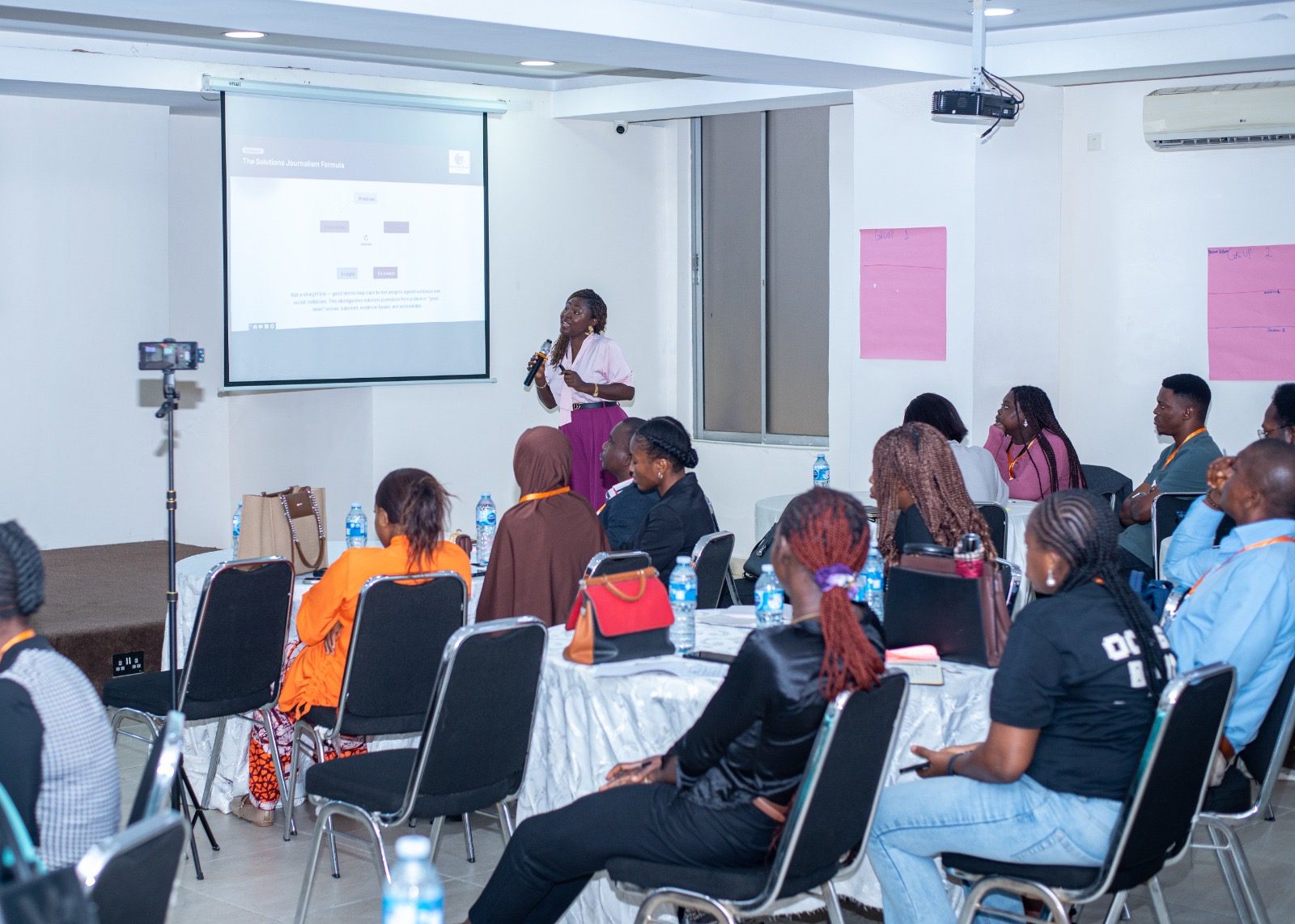
The multi-sectoral initiative opened with a three-day Climate and Health Media Workshop, equipping Nigerian journalists with technical skills to drive evidence-based, human-centered climate reporting on one of Africa’s most overlooked environmental threats: rising urban temperatures.
Funded by the Wellcome Trust, the project is implemented through a strategic partnership involving the Lagos Metropolitan Area Transport Authority (LAMATA), Lagos Urban Development Initiative (LUDI), the University of Lagos Centre for Housing and Sustainable Development, UrbanBetter, Institute Metabolic Science (IMS), Epidemiology, University of Cambridge, and HotStepper.
Making the ‘Invisible’ Heat Crisis Visible
Addressing media professionals during the opening session, Hotsteppers Project Communications Lead, Abimbola Badejo, highlighted that traditional climate discussions in Nigeria have predominantly focused on visible disasters like flooding and erosion, leaving the insidious dangers of rising temperatures unaddressed.
“This project is not just a research project; it is a research and action project. One of our major goals is to make visible the impacts of extreme heat and poor air quality on the health of everyday people whose voices are often not heard,” Badejo stated.
Badejo emphasized that while many residents dismiss rising temperatures as mere weather discomfort, prolonged exposure to heat poses severe public health complications, including cardiovascular diseases, severe dehydration, reduced physical activity, and declining economic productivity.
“When people hear climate change, they immediately think about flooding or pollution. But heat is one of the invisible crises we must begin to report because its impacts on health are real and increasing. People simply say, ‘It is hot.’ But it is much more than that. Heat is a public health risk, and understanding that is one of the objectives of this training,” she added.
The combination of dense concrete infrastructure, dwindling vegetation, automobile emissions, and high air pollution significantly elevates thermal stress for commuters, outdoor traders, transport operators, and pedestrians moving along the city’s transit corridors daily.
Mapping Lagos’ Urban Heat Hotspots
To establish concrete scientific baselines, researchers on the Hotsteppers Project revealed how advanced spatial analysis tools such as Geographic Information Systems (GIS), satellite imagery, remote sensing, and thermal mapping are currently being used to pinpoint thermal vulnerability across Lagos.
The team utilizes environmental metrics including Land Surface Temperature (LST), Normalized Difference Vegetation Index (NDVI), Normalized Difference Building Index (NDBI), and the Building Heat Index (BHI). Preliminary findings show that high-density infrastructure directly escalates surface temperatures.
“The biggest environmental modifier of urban heat is vegetation,” a project researcher revealed while demonstrating satellite heat maps.
Satellite assessments have evaluated over 1,200 Bus Rapid Transit (BRT) facilities, including major hubs like Ojota, Oshodi, and Yaba. Researchers found that heavily built-up transit points dominated by asphalt and concrete lack critical shade, exposing commuters to extreme thermal stress. Conversely, areas featuring dense vegetation, wetlands, and tree-lined corridors provided natural cooling effects.
To capture micro-level environmental data, researchers deployed iButton temperature-monitoring devices in pilot areas like Fadeyi and Yaba, continuously logging thermal stress metrics to guide future urban design interventions.
Structured for Action: The Core Work Packages
Unlike traditional academic studies that remain confined to publications, the Hotsteppers Project’s three-year implementation plan bridges scientific research and community action through a structured series of strategic Work Packages:
• Policy and Literature Review (Work Packages 1 & 2): Comprehensive desktop reviews analyzing existing interventions, city policies on non-motorized transport (NMT), active mobility, and heat mitigation in Lagos.
• Health Impact Analysis (Work Package 3): Epidemiological research examining direct and indirect health impacts, analyzing hospital admission rates, long-term health trends, and cardiovascular burdens linked to temperature spikes.
• Citizen Science & Route Mapping (Work Package 4): Deploying wearable heat sensors (including high-precision $iButton$ devices) and mobile citizen apps to enable local residents and runners to map out thermal hotspots, shadow coverage, and shade availability across high-risk corridors.
• Active Traveler Engagement (Work Package 5): Surveying and monitoring over 200 active travelers—including street vendors, commuters, pedestrians, and recreational movers—to determine how extreme temperatures disincentivize physical activity and disrupt informal livelihoods.
• Tactical Urbanism & Pilot Interventions (Work Packages 6 & 7): Co-designing and deploying practical, community-centered urban interventions (such as shade structures, greening, or cooling zones) at identified heat hotspots, followed by rigorous evaluation to ensure scalability across other Nigerian cities and nationally via policy integration in Abuja.
Driving Policy Through Solutions Journalism
A central focus of the three-day workshop was training journalists to adopt Solutions Journalism a rigorous reporting methodology focused on investigating responses, evidence, limitations, and accountability rather than merely reporting problems.
“Solutions Journalism does not ask only what the problem is. It asks what responses are working, what evidence supports them, and what the limitations are,” Badejo explained. “Accountability is built when journalists continue following a story, revisit interventions, identify new gaps, and assess whether promised actions are producing results. This is not about praising government or presenting policies as quick fixes. It is about reporting successes and limitations with equal rigour.”
Workshop sessions also highlighted the vital role of community ownership in sustaining climate interventions. Participants cited historical examples where urban tree-planting and beautification initiatives failed because local communities were not informed about their ecological and public health benefits.

Sustained Media Engagement and Network Support
Closing the workshop, Olamide Udoma-Ejorh unveiled a comprehensive support framework to ensure participating journalists maintain long-term engagement throughout the project’s lifespan.
“This training doesn’t end here. We are creating a repeatable engagement cycle that supports media partners throughout the project—from evidence generation to policy impact,” Udoma-Ejorh announced.
Participants will receive a Story Support Package containing executive research summaries, datasets, thermal maps, and multimedia assets. Quarterly Story Sprints will coincide with field research activities across 15 Local Government Areas in Lagos, enabling journalists to report directly alongside field researchers starting this September as research under Work Packages 3 and 4 intensifies.
Furthermore, organisers announced the establishment of the Hotsteppers Media Network. Through this network and its partnership with the UrbanBetter Academy (developed with the University of Cambridge), journalists gain ongoing access to climate-health specialists, masterclasses, and research data.
“If you need to interview researchers or require expert knowledge for any climate or health story, we will connect you with the right experts. This network is designed to support your work beyond this project,” Udoma-Ejorh concluded.
By combining scientific rigor, community participation, and solutions-oriented journalism, the Hotsteppers Project establishes a groundbreaking blueprint for confronting urban heat risks, driving climate resilience, and protecting public health across Nigeria’s rapidly expanding urban centers.