
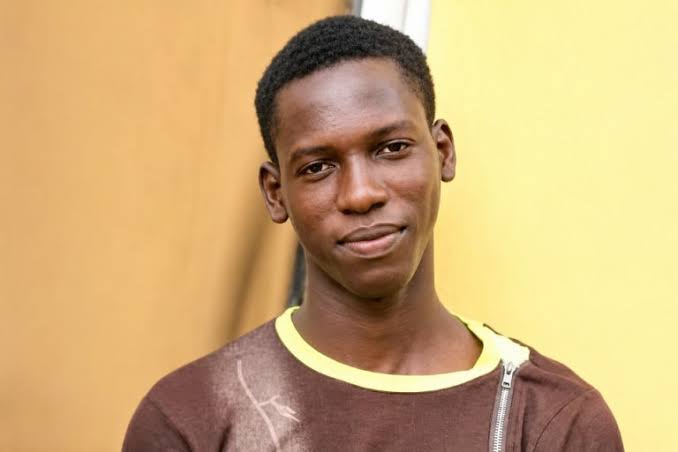
The Coroner Court investigating the death of Pelumi Onifade, a young journalist with Gboah TV who was reportedly shot and arrested while covering the #EndSARS protests on October 24, 2020, has directed that key witnesses to testify at the inquest despite the continued delay in the release of the autopsy report.
The directive is aimed at ensuring progress in the proceedings.
At the latest hearing on July 7, the investigating magistrate, Mrs. Temitope Oladele, explained that the Department of Pathology and Forensic Medicine of the Lagos State University Teaching Hospital was contacted regarding the Court’s earlier order to produce the autopsy report for the late journalist.
She said the Court received feedback from LASUTH that the report had substantially been completed but was awaiting the endorsement of the medical examiner who conducted the examination before it could be formally issued.
Mr. Alimi Adamu, lawyer representing Media Rights Agenda and the parents of the late journalist, emphasized the critical importance of the autopsy report to the inquest.
Adamu, leading Mr. Monday Arunsi and Mr. Victor John, noted that following the conclusive identification of the late journalist through DNA evidence previously admitted by the Court during proceedings on June 23, 2026, the autopsy report has become the principal outstanding documentary evidence needed to establish the precise cause of death.
He urged the Court not to suspend proceedings pending receipt of the report, arguing that witness testimony could commence while the document was being finalized.
Agreeing with Adamu, the Coroner observed that it was appropriate to commence the hearing of evidence while awaiting the autopsy report to ensure that the inquest continued to make meaningful progress.
She ruled that the hearing of evidence from material witnesses should begin immediately and ordered that witnesses with direct knowledge of the events leading to the death of the late journalist be summoned to testify.
The Coroner directed that the first category of witnesses to be invited would be persons who interacted with the late journalist shortly before his death or had first-hand knowledge of the circumstances surrounding the incident, particularly his colleague who was reportedly with him immediately before the shooting.
Adamu informed the Court that the witness had reportedly relocated outside Lagos State but undertook to make efforts to establish contact with him.
The Coroner observed that the witness remained an important source of evidence and directed that efforts should be made to secure his testimony, adding that if his attendance in person posed practical or security concerns, the witness could testify virtually.
Adamu also submitted that the police officers who recovered the deceased and prepared the relevant police records constituted essential witnesses whose evidence would assist the Court in reconstructing the circumstances leading to the death.
He referred to the police report contained in the batch of documents submitted by Ikorodu General Hospital, which is already before the Court and which recorded that the late journalist sustained a gunshot wound before his body was taken away from the scene of the incident.
The Coroner observed that it would be necessary to identify the officers involved in the operation, ascertain who led the team, determine who discharged the firearm, establish the circumstances surrounding the shooting, and examine whether any internal investigation was subsequently conducted by police authorities.
Following a review of the report from Ikorodu General Hospital, ASP Adeyemi Adewale and Inspector A. Augustine were identified as among the officers connected with the matter.
The Coroner directed that the relevant police officers, together with any investigating officer responsible for any subsequent investigation, should appear at the inquest and give evidence.
On whether medical records from Ikorodu General Hospital would be required, Mr. Adebola Araba, who represented the Office of the Attorney-General of Lagos State, explained that if the late journalist arrived at the hospital alive, treatment records should ordinarily exist.
He noted, however, that if he was already dead upon arrival, the available records would most likely be limited to documentation recording that he was Brought-In-Dead.
Saying that the documentary materials already before the Court appeared to indicate that the late journalist was received as a brought-in-dead case, Araba submitted that any available hospital records would remain relevant in establishing the sequence of events and should be obtained where necessary.
Adamu also informed the Coroner that another potential witness was the Director of Gboah TV, who reportedly arrived at the scene shortly after the shooting and interacted with security personnel before the late journalist was taken away.
He said although the Director of Gboah TV was allegedly denied access to the late journalist by the police officers there, his observations of the events immediately following the incident could assist the Court.
The Coroner directed Adamu to provide the particulars of the Director of Gboah TV to facilitate his appearance as a witness.
A substantial portion of the proceedings was devoted to clarifying the scope of the Coroner’s jurisdiction and investigation.
Araba submitted that the proceedings are inquisitorial rather than adversarial, explaining that the Coroner’s principal responsibility is to ascertain the cause and circumstances of death and, where appropriate, make recommendations aimed at preventing similar occurrences in the future.
The Coroner stressed that although findings made during the inquest may subsequently inform civil or criminal proceedings, the immediate objective of the inquest is not to apportion liability but to establish the truth surrounding the death under investigation.
Adamu agreed with the Coroner’s observations but noted that evidence obtained during the inquest could ultimately assist the late journalist’s family in pursuing any remedies available to them under the law.
He submitted that although the immediate concern of the inquest was determining the cause of death of the late journalist, it was equally important to identify the officers involved and understand the circumstances surrounding the shooting, as doing so would naturally advance the Coroner’s objective.
The Coroner encouraged all parties to maintain the momentum by proceeding with witness testimony notwithstanding the outstanding autopsy report.
She added that continued cooperation between the lawyers and the parties is consistent with the inquisitorial nature of the Coroner’s inquest, which requires a collaborative search for the truth rather than an adversarial contest between litigants.
She thereafter adjourned further proceedings to July 29, 2026, to enable the Medical Examiner at LASUTH to return and finalize the autopsy report, facilitate efforts to secure the attendance of the identified witnesses, and commence witness testimony immediately.
Onifade, who was 20 years old at the time of his death, was covering the #EndSARS protests for Gboah TV when he was reportedly shot and arrested in October 2020. His death has remained a focal point in demands for accountability over the handling of the protests and the safety of journalists in Nigeria.