
How solar power is helping tailors and small businesses thrive in one of Abuja’s fastest-growing communities:
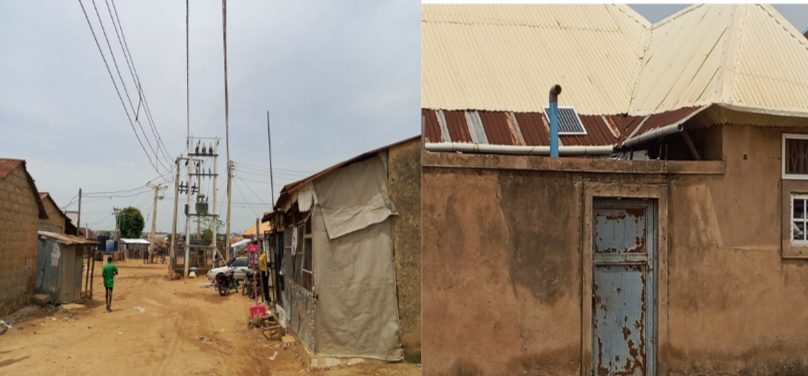
Karamajiji, a rapidly expanding community along Abuja’s Airport Road corridor near Lugbe, is one of the first satellite settlements visitors’ encounter on their way from the Nnamdi Azikiwe International Airport into the city.
Known for its affordability and accessibility, the community attracts residents seeking lower living costs despite the challenges that come with a developing suburb. But for many people here, one challenge has lingered longer than most: electricity.
Five years after demolitions linked to the Airport Road expansion disrupted power infrastructure, many parts of Karamajiji remain without reliable public electricity. Yet, amid the darkness, a quiet revolution is taking place.
Inside narrow streets and modest workshops, sewing machines hum steadily. Fans rotate. Lights stay on. The source of this transformation is not the national grid but the sun.
Across the community, rooftop solar panels are becoming symbols of resilience, powering homes and businesses that can no longer afford to wait for government electricity. At intervals of just one or two houses, another rooftop fitted with solar panels comes into view, a visible sign of a community generating its own electricity.
For fashion designers and tailors, solar energy has become more than an alternative source of power. It has become a lifeline.
Turning Sunlight Into Opportunity:
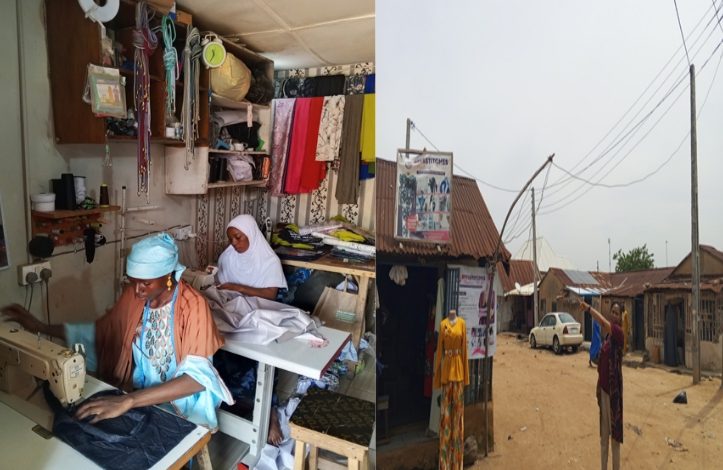
One of the entrepreneurs leading this transformation is Reskat Abdulrazaq, owner of Reesstitches Fashion World.
After years of battling unreliable electricity, Abdulrazaq invested in a solar power system in March this year. Having established her business in 2020, she was determined not to let poor power supply limit its growth.
Today, her 1,000-watt solar generator, purchased for about 650,000 thousand naira(500 Dollars) powers her sewing machines, pressing iron, fan, lights and television. The impact has been immediate.
“With solar, I can now work at any time,” she said. “I will choose solar over and over.”
According to her, customers have become more confident in giving her jobs because they know power interruptions will no longer affect delivery deadlines.
For another tailor, Umar, the transition required a much larger investment. He spent between 1.5 million and 2 million naira(a thousand dollar) on purchasing and installing a solar system for his workshop.
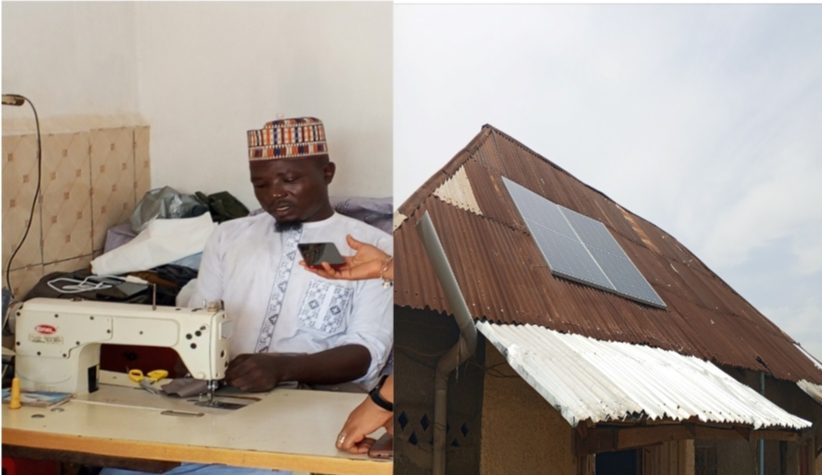
Despite the cost, he considers it money well spent.
Business has improved significantly since adopting solar energy, he said, adding that the seven-year warranty on the system gives him confidence in its long-term reliability.
While he still believes stable government electricity would be ideal, solar power has provided the consistency his business needs to survive.
A similar experience was shared by Usman Salisu, another tailor in Karamajiji.
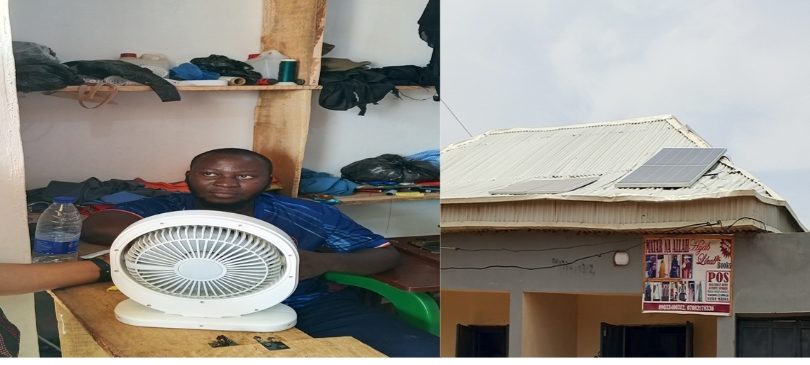
Since installing solar power in January at a cost of about 1.5 million naira, Salisu says he has enjoyed uninterrupted operations and increased productivity.
The switch has eliminated costly disruptions and increased his business turnover by about 20 percent.
He is so satisfied with the system that he says even if public electricity returns tomorrow, he has no plans to abandon solar power.
“I’ve already converted all my machines to run on it,” he said.
A Different Reality Across Town:
The contrast becomes clear when compared to businesses that still depend solely on public electricity.
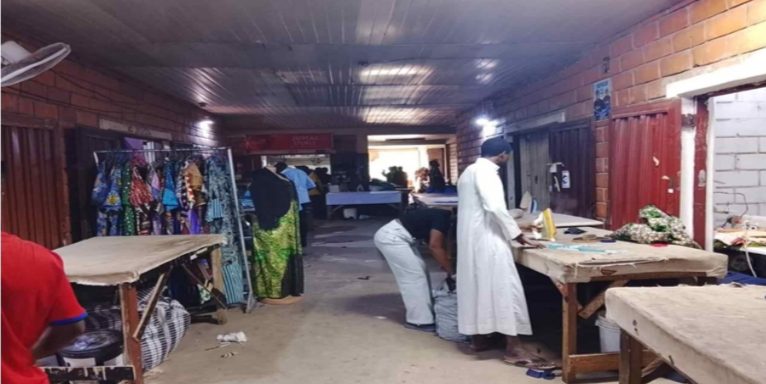
At the Garki Ultra Modern Market in central Abuja, fashion designer Folorunsho Morenikeji faces a different reality.
When public electricity goes off, work stops.
For business owners like Morenikeji, power outages still mean missed opportunities, delayed deliveries and reduced productivity.
In Karamajiji, however, many entrepreneurs have found a way around the problem.
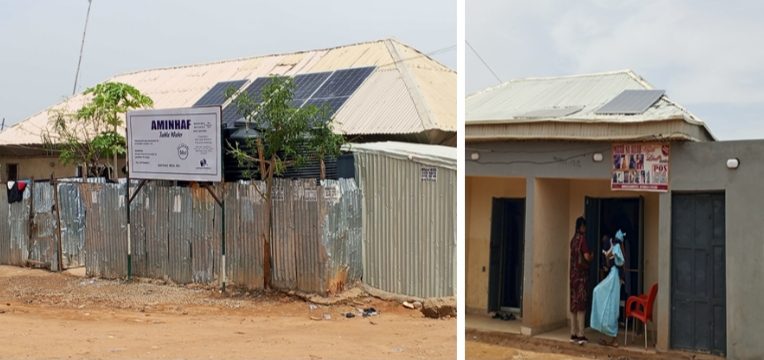
Why Solar Is Gaining Ground:
Like many African countries, Nigeria has been slow in transitioning from fossil fuels to renewable energy sources.
Although Africa is the world’s sunniest continent, solar energy accounts for only a small fraction of electricity generation compared to countries such as Germany and the United States.
Yet the continent also faces one of the world’s biggest energy-access challenges.
An estimated 600 million Africans lack reliable electricity, while in Nigeria nearly half of the country’s more than 230 million people remain underserved by the power sector.
For many communities, solar energy offers more than environmental benefits. It provides access to affordable and reliable electricity where conventional power infrastructure has failed.
The shift has become even more attractive following the removal of fuel subsidies by President Bola Ahmed Tinubu’s administration. Since then, fuel prices have risen sharply, increasing the operating costs of generators that many homes and businesses rely on.
Historically Africa’s largest crude oil producer, Nigeria now faces a situation where fuel has become increasingly unaffordable for millions of citizens, particularly those in rural and low-income communities. As a result, more Nigerians are turning to solar energy and mini-grid solutions.
“There are challenges that are definitely hindering the pace at which renewable energy development could be scaling in the region,” said renewable energy expert Tim Reber of the U.S. National Renewable Energy Laboratory.
In addition, the Federal Government announced plans to expand the country’s electricity generation capacity to 209,000 megawatts by 2050, with 53 large-scale solar power projects valued at about 11 billion dollars expected to play a major role in achieving that goal.
Managing Director of the Rural Electrification Agency, REA, Abba Aliyu, described the initiative as a landmark intervention capable of transforming Nigeria’s energy landscape and accelerating access to electricity in underserved communities.
The push toward renewable energy gained further momentum after Nigeria’s commitments at the COP26 climate summit. While countries such as India pledged hundreds of gigawatts of renewable energy capacity, Nigeria’s headline commitments focused on achieving net-zero emissions by 2060 and providing solar-powered electricity access to five million households by 2030. statehouse.gov.ng
The pledge reflected a recognition that renewable energy would be critical to addressing the country’s long-standing electricity deficit while supporting economic development and climate goals.
The Debate Over Solar Imports:
While solar adoption continues to grow, uncertainty remains over discussions around restricting the importation of solar equipment to encourage local manufacturing.
Speaking during a radio interview on Talking Economy With Toke, Head of Renewable Energy at the National Electricity Management Services Agency, NEMSA, Engineer Simon Theophilus, raised concerns about substandard solar products and poorly executed installations, which have reportedly contributed to fires in homes and businesses.
For entrepreneurs like those in Karamajiji, however, any outright ban raises concerns.
Their fear is simple: restricting access to solar equipment could make reliable power even more difficult to obtain.
Experts argue that the challenge is not solar technology itself but the circulation of substandard products and the shortage of trained installers.
Campaign Director of the Secure Energy Project, Joseph Ibrahim, believes local manufacturing deserves support but warns that policy alone will not solve the problem.
“Discussions around the proposed ban to boost local manufacturing are justified,” he said. “But legislation alone will not work. There is a need for stable policies, access to finance and proper standards for installers.”
Climate change specialist Tosin Sonibare also argues that renewable energy should complement, rather than replace, Nigeria’s broader electricity infrastructure.
According to him, Nigeria currently lacks the capacity to produce solar panels locally at the scale required to meet national demand.
He advocates increased foreign investment, stronger government policies and support for local manufacturing while ensuring solar technology remains affordable and accessible.
Similarly, Dr. Michael Terungwa David, Team Lead of the Global Initiative for Food Security and Ecosystem Preservation, GIFSEP, has urged Nigerians to embrace renewable energy solutions while cautioning against a premature import ban.
He noted that although Nigeria possesses many of the resources needed for local solar manufacturing, domestic production is still far from meeting demand.
According to him, implementing a ban now could worsen energy shortages for millions of Nigerians who already lack electricity access.
Lessons From Beyond Nigeria:
The story unfolding in Karamajiji is not unique.
In Perinjanam, a coastal village in Kerala, India, rooftop solar projects have transformed hundreds of households, significantly reducing electricity costs and demonstrating the power of community-driven energy solutions.
Families installed solar panels on their rooftops, lowered their bills and collectively reduced dependence on centralized electricity systems.
The project has become a model for decentralized energy development.
The question many energy advocates now ask is straightforward: if communities like Perinjanam can achieve this transformation, why not Karamajiji? Why not thousands of other underserved communities across Nigeria?
The answer may determine whether Nigeria can meet its 2030 solar-access targets and stay on course toward its broader ambition of achieving net-zero emissions by 2060.
The Bigger Picture:
Nigeria has made measurable progress since its COP26 commitments, but significant challenges remain. Through initiatives such as the Distributed Access through Renewable Energy Scale-up, DARES, programme, supported by the World Bank, more than 3.6 million people had gained access to electricity by June 2026, with the figure expected to reach 5.2 million by the end of the month.
Despite these gains, the scale of the challenge remains enormous. An estimated 85 million Nigerians still lack access to electricity, making Nigeria home to one of the world’s largest energy-access deficits. The Rural Electrification Agency estimates that about 23 billion dollars will be required to provide electricity to underserved communities nationwide.
Experts note that while Nigeria has moved from climate pledges to concrete policies, implementation continues to lag behind targets because of funding constraints, infrastructure gaps and broader economic challenges. Also, import duty asymmetry hurts local solar manufacturing according to budgit.org
Although solar adoption is growing rapidly and local assembly is gradually expanding, access remains out of reach for many low-income households.
A Community Lighting Its Own Future:
As the sun sets over Karamajiji, the glow from solar-powered homes and workshops tells a larger story.
This is not simply a story about electricity.
It is a story about determination.
It is a story about entrepreneurs who refused to allow power outages to define their futurem
In a community often overlooked by the national grid, residents have found their own solution. They have turned sunlight into opportunity, proving that even where public infrastructure falls short, innovation can still flourish.
Across rooftops, solar panels now stand as symbols of survival and self-reliance.
Not because they are fashionable.
But because they work.
And for many residents of Karamajiji, they have become the light that keeps hope, livelihoods and progress alive.
olatokewa@gmail.com