
- Alexander Ogheneruemu
“I’m not your inspiration”- Stella Young (Australian Disability Rights Activist and Comedian). In 2012, Stella coined the term “inspiration porn” in push back to the framing of disabled people as inspirational (often for doing normal things) in disability stories. She was obviously concerned about society’s proclivity towards lowering expectation for disabled people. The term has since taken a life of its own. These days, it’s not uncommon to see disabled people, who, despite reaching genuinely impressive feats, are wary of having an inspirational tag to their stories. Instead, they push for what’s possible when barriers are navigated and access enhanced for (and by) disabled people. It’s an interesting phenomenon.
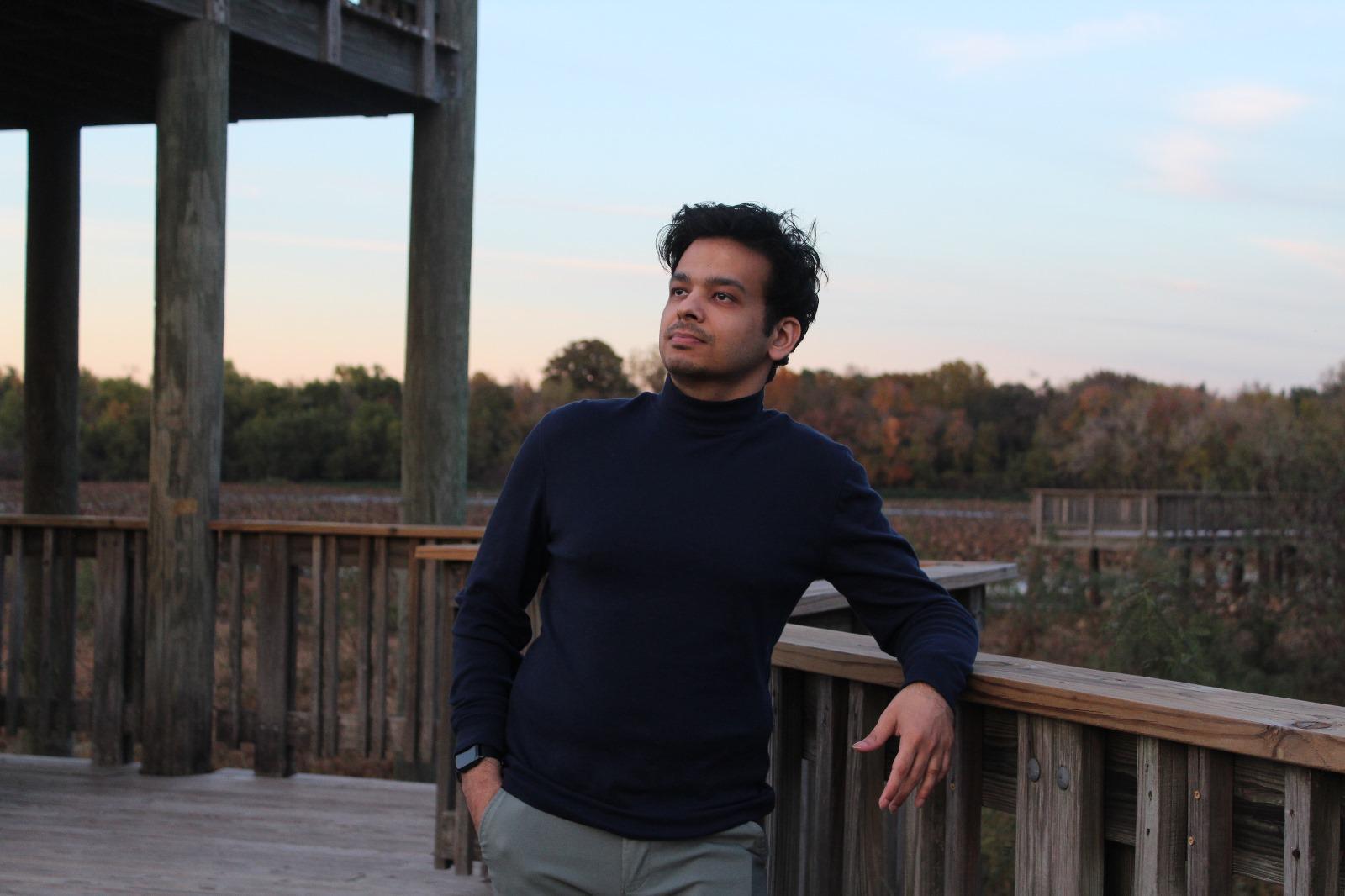
This 29th edition features Shahmeer Baweja, a Pakistan native resident in the United States. Shahmeer who’s in his early 30s holds a hard won doctorate in mechanical engineering – amongst other brilliant feats in math and the sciences. But he shuns the inspiration label:
“My journey is not about inspiration, he quips, it is about what becomes possible with structure, access, and persistence.”
Background – My family wouldn’t shield me from the world because of my disability
Born with a profound, bilateral sensorineural hearing loss on August 15, 1992. Good thing this was diagnosed at birth. This, together with the priceless gift of a close knit family ensured a solid start for Shahmeer. He highlights the critical role family played during our zoom chat: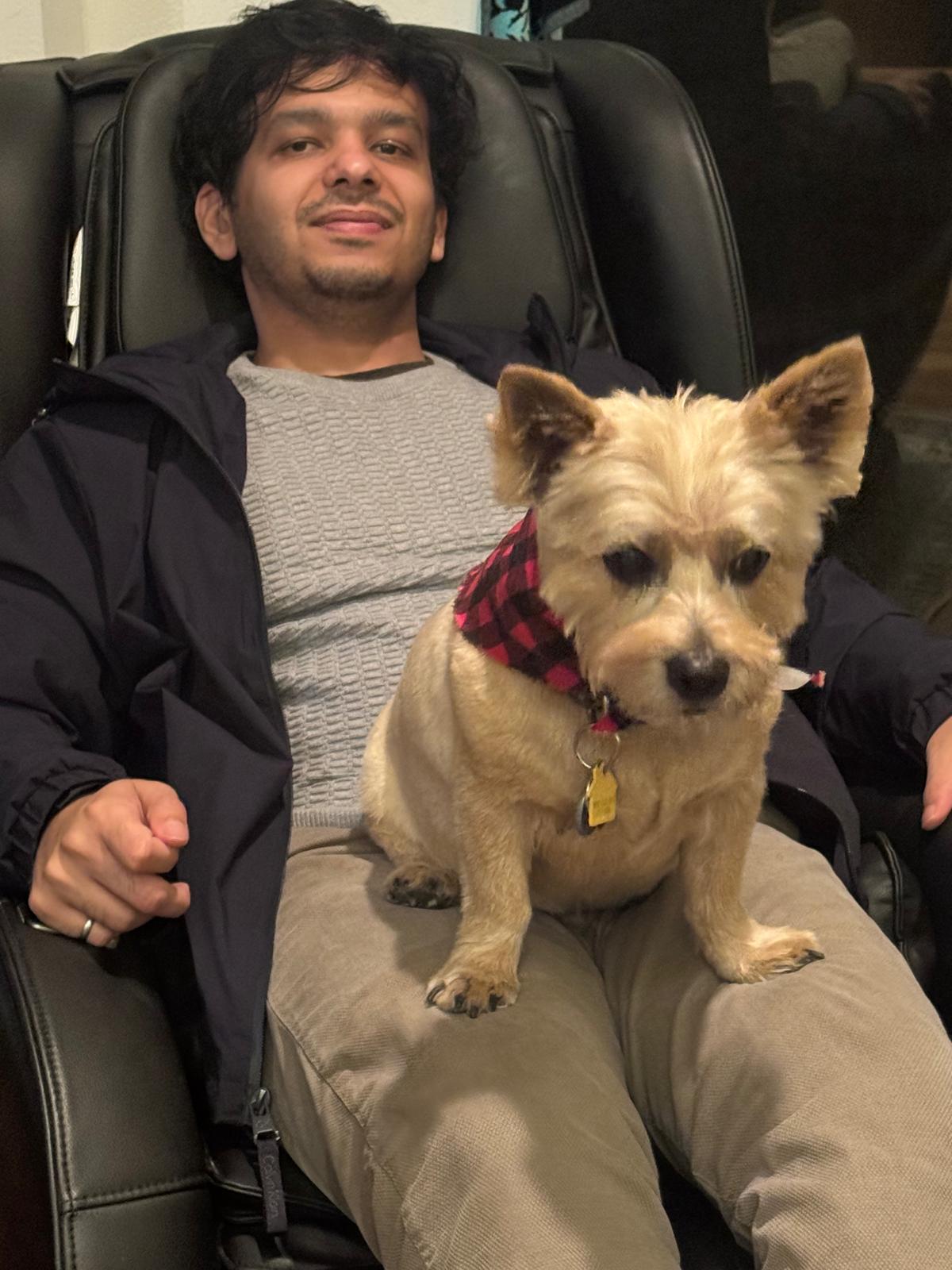
“I grew up in a close knit, family oriented household. My father is a businessman, and my mother is a homemaker who played a central role in shaping who I am. I also have a younger sister who works in psychology and graphic design and has always been a source of creativity and emotional support. My family placed strong emphasis on education, discipline, and perseverance. Just as importantly, they believed in integration rather than isolation. Instead of shielding me from the world because of my disability, they encouraged me to engage with it fully.”
Mainstream over segregation – The early stages
“Challenging yet formative…”
With those words, Shahmeer captured the struggle of early years, as he tried to cope with being deaf in a hearing world. Having had to use hearing aids from early childhood, plus years of speech therapy to aid communication, these, no doubt put extra demands on his young mind. “Progress was slow, but consistency mattered”, he observed.
There are ongoing conversations around mainstreaming or segregation for deaf children. Each school of thought has its own pros and cons. Some of the strongest points for segregated education settings are how it fosters comradeship, sign language skills and identity. While it was a bit surprising that Shahmeer doesn’t use sign language, it’s an apt reminder of the place of agency in disability narratives, and that there are different ways of being in the community.
Reminiscing on his mainstream background, Shahmeer reiterates:
“One of the most impactful decisions my parents made was enrolling me in mainstream schools rather than segregated environments. That pushed adaptation early on and ultimately gave me confidence.”
Mastering disability – a gradual accumulation of small wins
Shahmeer reminds that having a handle on disability is a slow, never ending process – a gradual accumulation of small wins here and there. But as disabled people there are certain hard won wins that stand out – creating memories that last a lifetime. For Shahmeer, these were the victories of ‘learning to speak clearly and fitting into mainstream education. He also mentions the courage it took to deliver technical presentations while struggling with speech anxiety during his PhD program, including securing a postdoctoral position in a competitive interview process.’
He shares the broader lesson he took from those definitive moments: “Mastery is not about eliminating difficulty. It is about building systems that allow you to function at your best despite it.”
For Shahmeer, a huge part of these systems is the strong familial start he had. Growing up surrounded by extended family and neighborhood friends in a vibrant, culturally rich setting was instrumental to thriving in the structured, rigorous academic program he had to navigate from an early age. That pain paid off handsomely.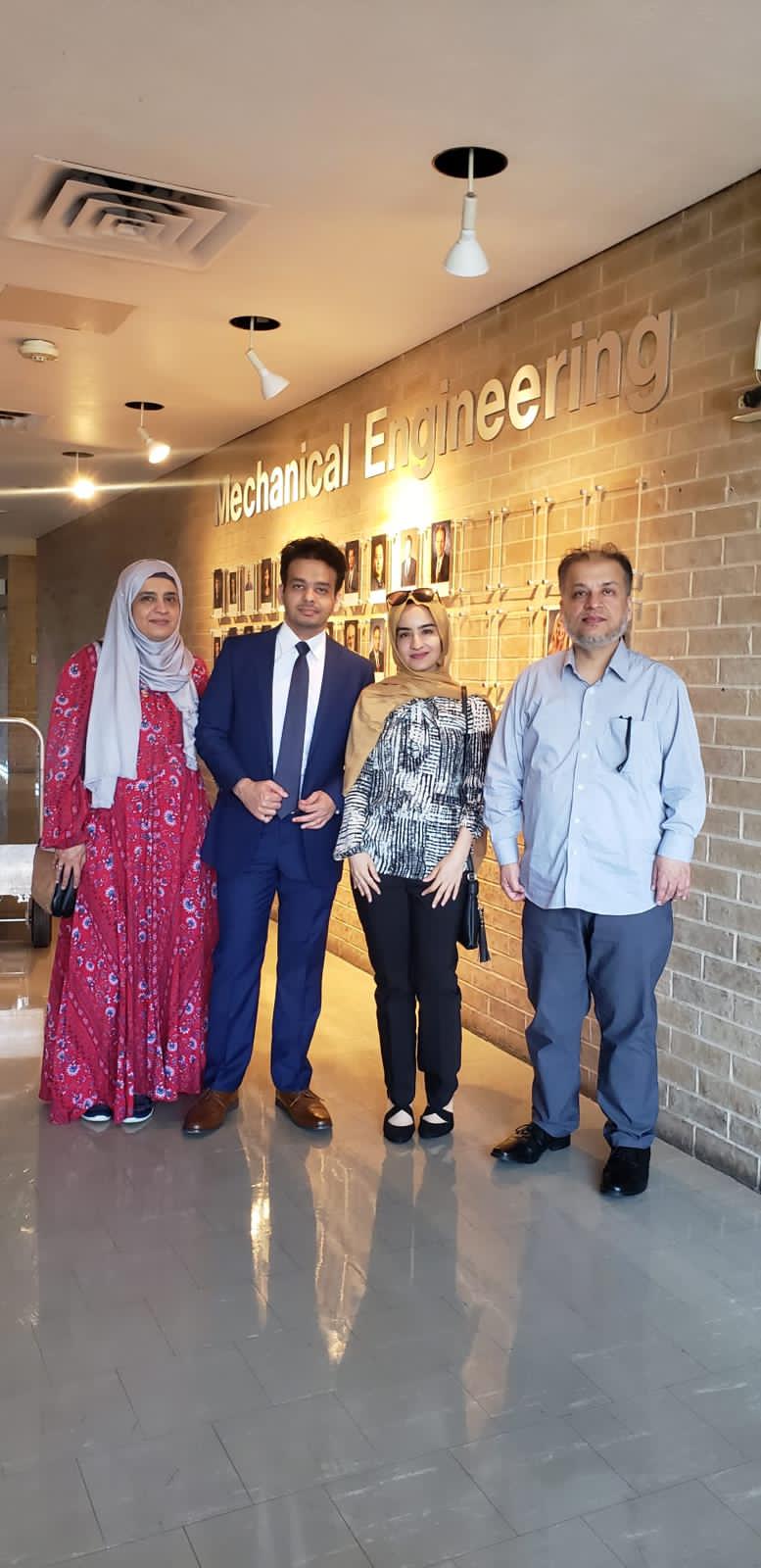
He recalls: “Despite my hearing loss, I performed very well academically, especially in math and science. Being recognized for academic achievement, including appearing on television for exam results, was a powerful affirmation that disability did not limit intellectual ability”
Pulling through academics/work
Shahmeer had his O and A levels in Pakistan under the British education system. He would later move to the United States for over a decade academic journey at the University of Houston where he earned first and second degrees, including a doctorate – majoring in mechanical/aerospace engineering. He recently completed a postdoctoral appointment involving computational materials science and mechanics. How does he pull through in those highly competitive mainstream settings built mostly for the hearing? It wasn’t easy, Shahmeer admits – referring to the communication challenges – fast paced lectures, unaccustomed accents and several conversations happening simultaneously.
“Communication – especially in groups or when it is fast paced remains [one of my biggest] ongoing challenge, Shahmeer admits. In such situations, it can be difficult to follow the full conversation, catch important details, or respond quickly. This has been a challenge in both academic and professional settings, where clear and timely communication is important”
How does he manage it?
“I do not hesitate to ask clarifying questions or request repetition when needed. I also lip read, which helps me pick up context and follow discussions more effectively when I can see the speaker clearly. I coped by advocating for myself, asking for accommodations early, using technology proactively and preparing thoroughly. Throughout my education, I relied on accessibility tools such as CART (Communication Access Real-time Translation), captioning and later AI based transcription tools to fully participate in classes, meetings, and research”
Discrimination
Our conversation steers toward an all too familiar terrain – discrimination. It turns out that Shahmeer has his tale to tell.
“Discrimination was rarely overt, but subtle barriers were common, including being spoken over, misunderstood, or underestimated”
Looking back, he recalls that discrimination was more pronounced and hurtful during his early school years. Like when he was mistaken for unintelligent because he asked for repetition of what was said, and when classmates wouldn’t pass the ball because they did not want to deal with the extra communication effort.
“Sports were particularly challenging for me. Simple moments such as knowing when someone was passing the ball or reacting to sudden changes in the game were not always easy. Many assumed I was not paying attention or was slow to respond, when in reality I simply had not heard clearly. In cricket, I was often placed very low in the batting order and rarely trusted with key roles in the team. It felt as though my hearing loss made others doubt my ability to contribute… These situations were hurtful and sometimes frustrating, especially as a child
But then, these hurtful encounters were not without positive slivers. They furthered the development of backbone, intentionality, discipline resilience and self-awareness. Shahmeer sums it up:
“Over time, I came to understand that such reactions were usually rooted in a lack of awareness rather than […] limitation in my ability. These experiences shaped my belief in the importance of inclusion, patience, and better communication so that individuals with disabilities can participate with confidence and dignity. Most importantly, I learned not to internalize other people’s lack of awareness as personal failure.”
We both laughed over the situation
Humor has often helped me turn awkward situations into positive ones and connect more comfortably with others
Finding ways to laugh over one’s disability instead of taking our failings too seriously is an important survival skill. I try to raise this issue during these interviews and it is interesting listening to the different narratives that come up. Shahmeer shares his:
‘One funny incident happened during my driving test. It was my first time at that testing location, and I had probably misheard the instructor when he told me which car to go to in the parking lot. He handed me the key, and I confidently walked to what I thought was the correct car. I even tried unlocking it manually, but the door would not open. I started getting slightly confused, wondering if the key was not working. Meanwhile, the instructor was walking toward the car to sit with me, and when he reached the lot, he began laughing. It turned out that the actual test car was an identical one parked right next to the one I was trying to unlock. We both laughed about the situation, and it helped ease my nervousness before the test. Moments like these remind me not to take misunderstandings too seriously.’
Lessons from disability
My disability taught me patience, discipline, humility, and empathy
There’s always some virtues to be learned from the disabled experience. Shahmeer says disability forced him to be ‘intentional about preparation, communication, and following through. It also reshaped his view on disability:
“I came to realize that disability is only a barrier when it is treated as one. Like anyone else, people with hearing loss have the ability to excel, compete, and succeed across all walks of life when given access, opportunity, and high expectations”
His favorite quote is
“Nothing is impossible. The word itself says I’m possible.” – Audrey Hepburn. And for a way of life he lives by ‘persistence beats resistance’ and ‘your voice matters, even if it takes effort to be heard’
Is disability a bad thing?
When I put that tricky question to him, Shahmeer responds without a second thought: “No, barriers are. With access, disability becomes a form of diversity, not a deficit”. With that, he tells a discriminating society: ‘Disability is not incompetence. It is difference. When society removes barriers instead of lowering expectations, people with disabilities do not just survive, they contribute’
Advice to persons with disabilities
Finally, speaking as one who’s earned the right to give it, Shahmeer has some piece of advice for coming generations of people with disabilities. He says: “Advocate for yourself early. Use technology without guilt (do not confuse accommodation with weakness). Choose environments that respect you. Be patient [because] progress compounds”
Towards the end of the interview, Shahmeer reminds us again:
“My journey is not about inspiration. It is about what becomes possible with structure, access, and persistence.”
In other words, he wants his story to amplify the conversation around inclusion, technology, and human potential in disability narratives.
The Disability Champions Series, a collaborative project with Madam Joy Bolarin, Executive Director, Jibore Foundation, is anchored by Alexander Ogheneruemu (Disability writer).
Special acknowledgement to T.O.L.A Foundation for constant back up support.