
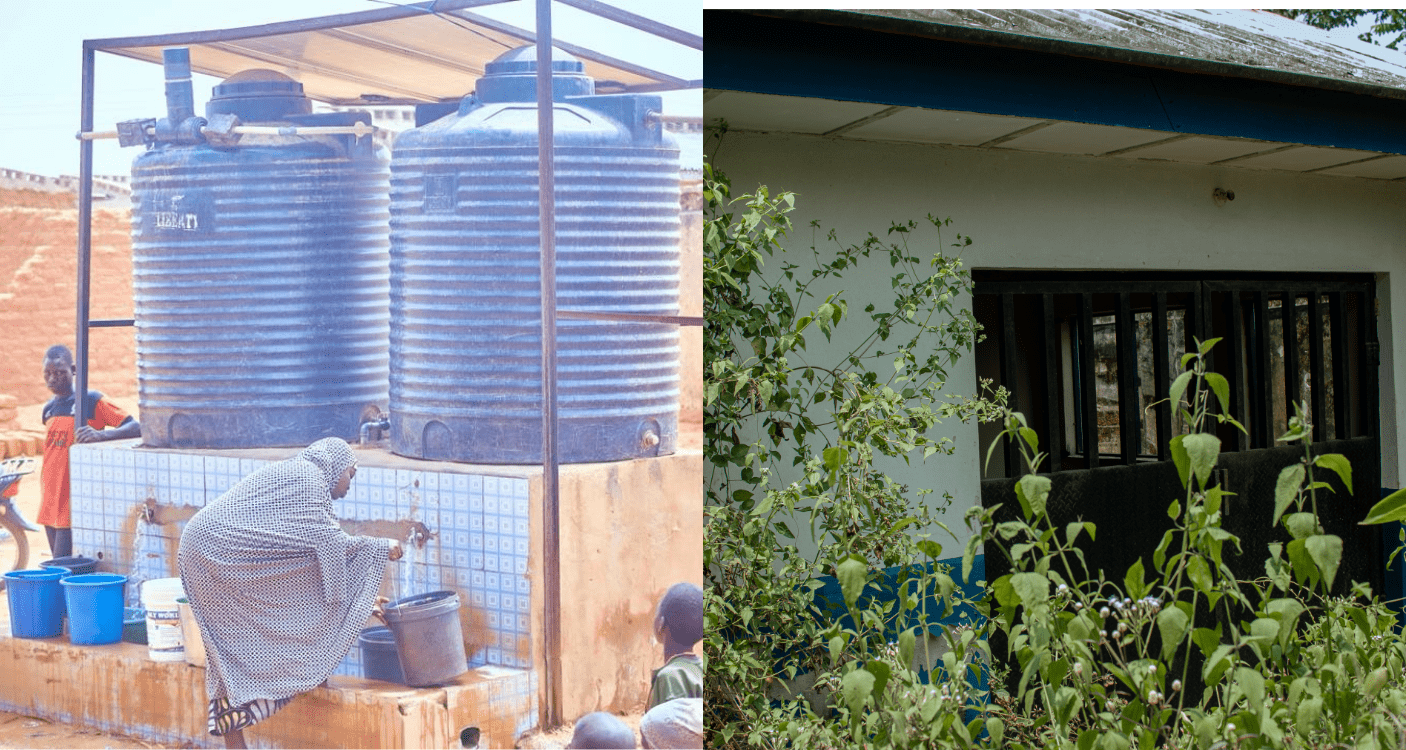
In Maitsidau community of Makoda Local Government Area of Kano State, getting water for basic household consumption required travelling long distances, about 1200 meters for a one-way trip, to fetch from a well.
The journey itself was only part of the burden. At the well, residents often had to engage in physical labour to fetch the water into their containers. For women and children, who bore most of this responsibility, the task required significant strength and had to be repeated several times a day.
“We fetched water from far distances because there were no wells in our homes,” Mallam Nazir Umar, a resident of Maitsidau community, lamented.
Even the presence of borehole water in the community did not bring so much succour. The facility was overstretched. Nearly 2,000 community household members depended on it. While fetching water from the borehole reduced travel distance and physical labour, residents are now faced with a new difficulty — waiting under the scorching sun to fetch from the borehole.
The tide changed when a member of the State House of Assembly facilitated the installation of additional boreholes and water points closer to homes.
When the water was installed, Self Help Africa, in partnership with the University of Michigan, installed an in-line chlorination system to ensure the water is safe for drinking.
A shift from dependence to ownership
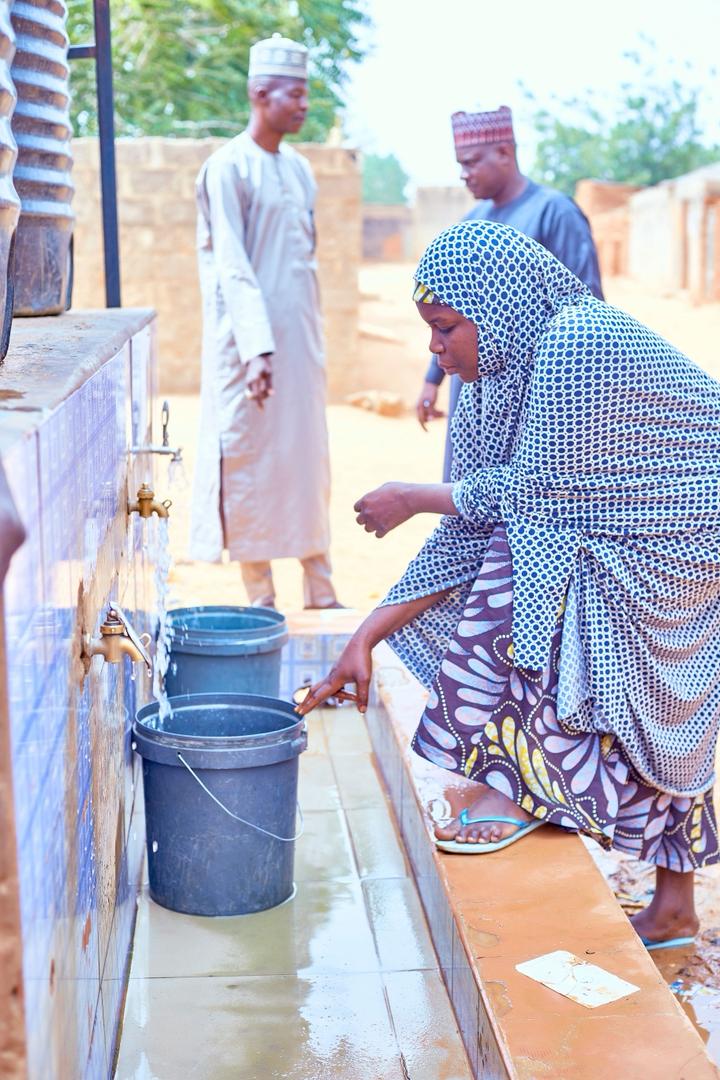
Beyond the infrastructure and technology, what is keeping the system running in Maitsidau is something less visible, ‘community ownership’.
Rather than waiting for government intervention when faults occur, residents contribute money to repair damaged facilities. The community also ensures that when the damage is caused by children, their parents take responsibility for the repair.
“We cannot afford to allow the water facilities get spoiled. We ensure that parents warn their children not to play with the tap heads or do anything that may damage the borehole. When such occurs, parents would pay for the repair,” Mallam Umar added.
This sense of ownership is reinforced by the Local Task Group (LTG) on Water, Sanitation and Hygiene (WASH), whose members serve as informal caretakers of the facilities. They monitor usage, mobilise community members, and promote hygiene practices to sustain the gains made.
“Hygiene facilities often stop working when communities don’t take ownership,” said Hajira Aminu Abubakar, a women’s representative in the LTG. “Now, people understand that it is their responsibility to maintain them.”
This shift has been supported by Self Help Africa, which provides technical guidance, strengthens coordination platforms, and trains communities on maintenance and sanitation practices.
Simple solutions, tangible impact
Beyond water access, sanitation has also improved within Makoda Local Government. Self Help Africa trained some Toilet Business Owners (TBOs) on how to construct SATO pan toilets, designed to use minimal water while preventing odour and insect exposure.
Mr Abdulhamid Yusuf, a TBO in Makoda, said he has installed over 30 SATO pan toilets within the last few months, signifying how community members are embracing good sanitation over open defecation.
“There are many TBOs in Makoda that were trained by Self Help Africa. But for me, I have installed over 30 toilets. Imagine the number of toilets that other TBOs might have installed. It might be more, it might be less. But more people now find SATO pan toilets to be cheaper and safer,” said Yusuf.
For residents like Zuwaira Abubakar, a widow and a mother of two, the change is significant. “There is no smell, and there is no contact with insects,” she said. “Before now, we used an open pit and it was just beside our rooms.”
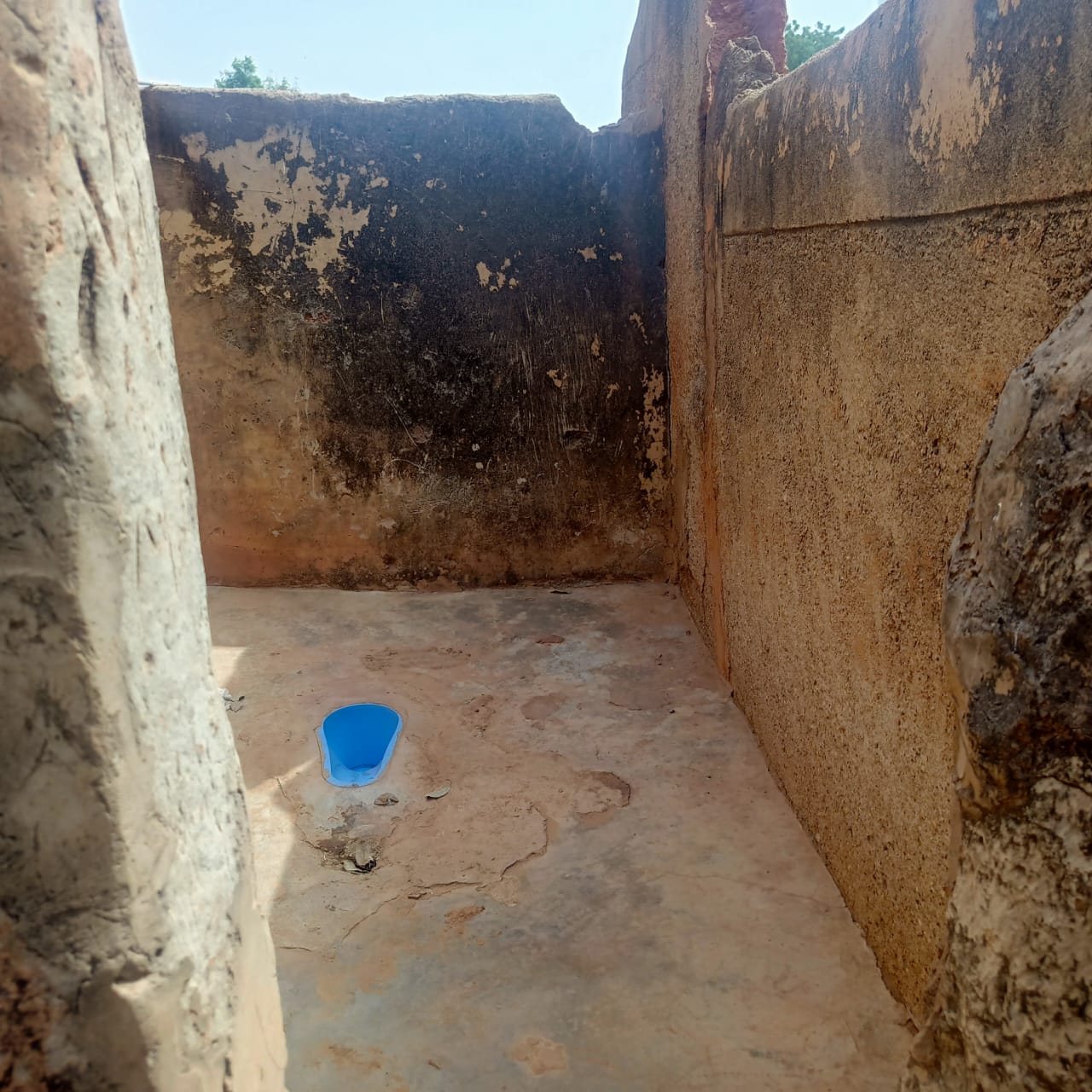
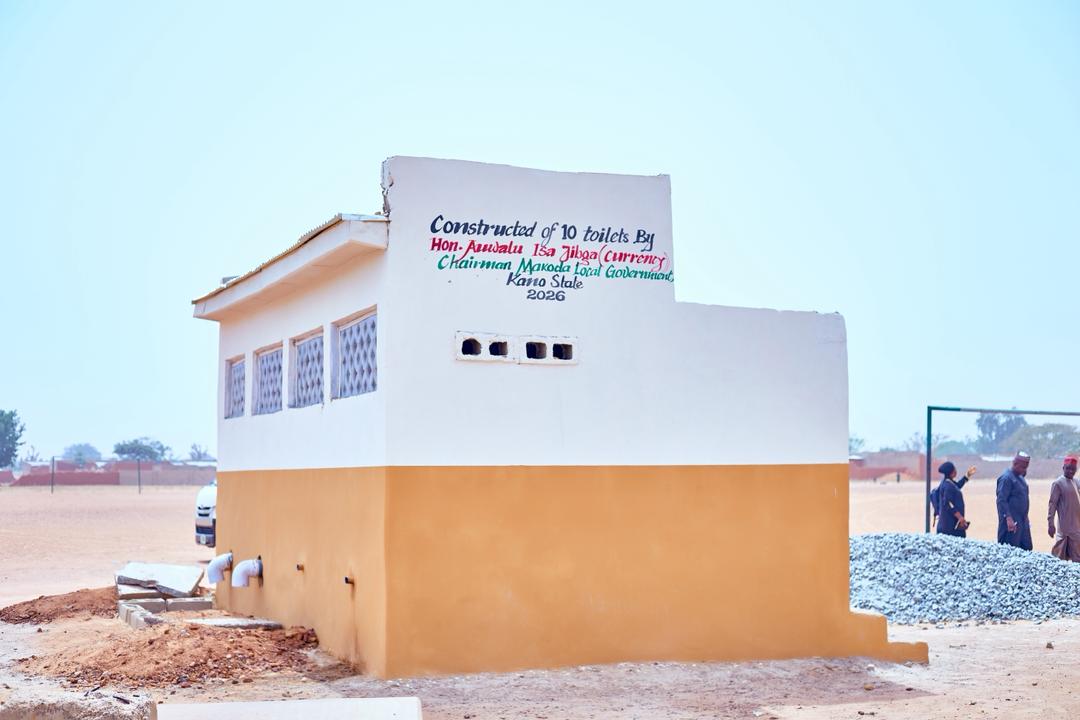
In schools, the impact is equally visible. At the Government Junior Secondary School, Maitsidu, new blocks of toilets for students and teachers have just been built by the Makoda LGA Chair, Hon Auwalu Isa Jibga.
According to Mujtabar Yunusa Umar, the Local Government Education Secretary in Makoda, many schools previously lacked basic sanitation facilities.
“Almost 96 schools did not have toilets at all,” Yunusa Umar said. “Before, children would go back home to defecate, but now, with the toilets, we have been able to retain attendance.”
The newly built toilets were necessitated following an assessment led by Self Help Africa (SHA), under its Water Sanitation for Health (WS4H) initiative, a four-year programme designed to strengthen WASH systems and establish reliable, resilient and inclusive WASH services in Nigeria and Sierra Leone.
In Nigeria, the programme is being implemented in Kano and Cross River States. The programme focuses not only on infrastructure provision/rehabilitation, but also on governance reforms, behavioural change communication and institutional capacity building to ensure long-term sustainability and improved health, school attendance and livelihood.
Sukumun N. Ezekiel, Sanitation and Partnership Coordinator at SHA said, “we assisted in an LGA-wide assessment to understand the access gap, which has informed the LGA to initiate the process of constructing toilets in schools.”
Beyond infrastructure
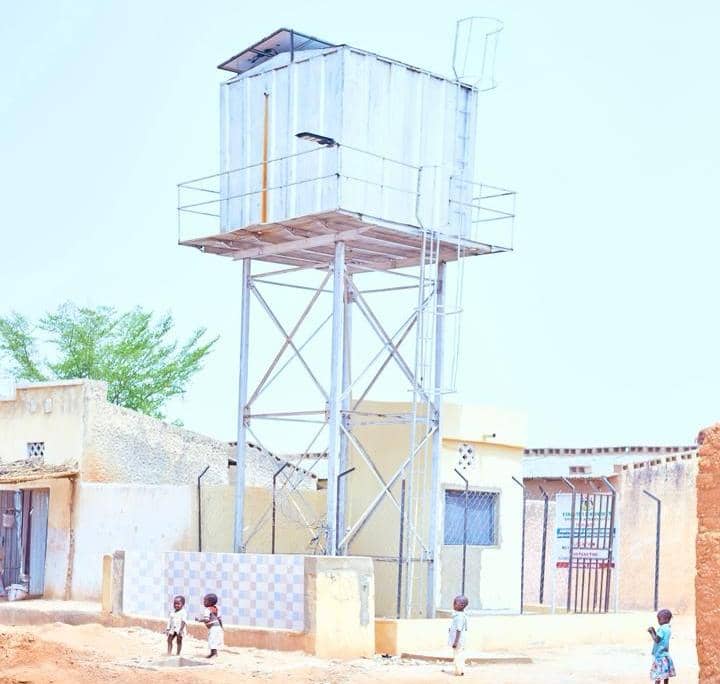
A solar power borehole in Maitsidau, which was constructed by the Kano State Ministry of Water Resources in 2025, also serves as a small economic hub.
A security post attached to the facility doubles as a phone-charging station, generating income for the caretaker while increasing community presence around the site.
“We want the government to adopt these innovations, in-line chlorination and solar power borehole, in other locations,” said Mustapha Husseini, an official of the Kano State Ministry of Water Resources. “It will help prevent diseases caused by unsafe water,” he added.
When systems work—and when they don’t
While communities in Makoda LGA are demonstrating how local ownership can sustain WASH systems, the situation is not the same in Odukpani LGA in Cross River State.
Between 2007 and 2010, the Cross River State Government, in partnership with the European Union Water Supply and Sanitation Sector Reform Programmes (WSSSRP), constructed a small-town water scheme in Akpab-Okoyong community in Odukpani LGA.
Designed to last 25 years, the system included eight boreholes, elevated storage tanks, and a network of water kiosks distributing water across the community. A government-approved tariff of ₦20 per 20 litres was introduced to fund maintenance and keep the system running.
Felix Irek, Head of WASH Services Regulation, Cross River State Ministry of Water Resources, decried the non-existence of a functional water kiosk in the community, and how the water scheme has become a shadow of itself.
Sadly, community members now purchase water at private borehole facilities at the rate of 50 naira for a 25-litre container.
At the Akpap Okoyong Primary Health Centre, there is a functional borehole, provided by the Cross River State Rural Water Supply and Sanitation Agency (CRS-RUWATSSA).
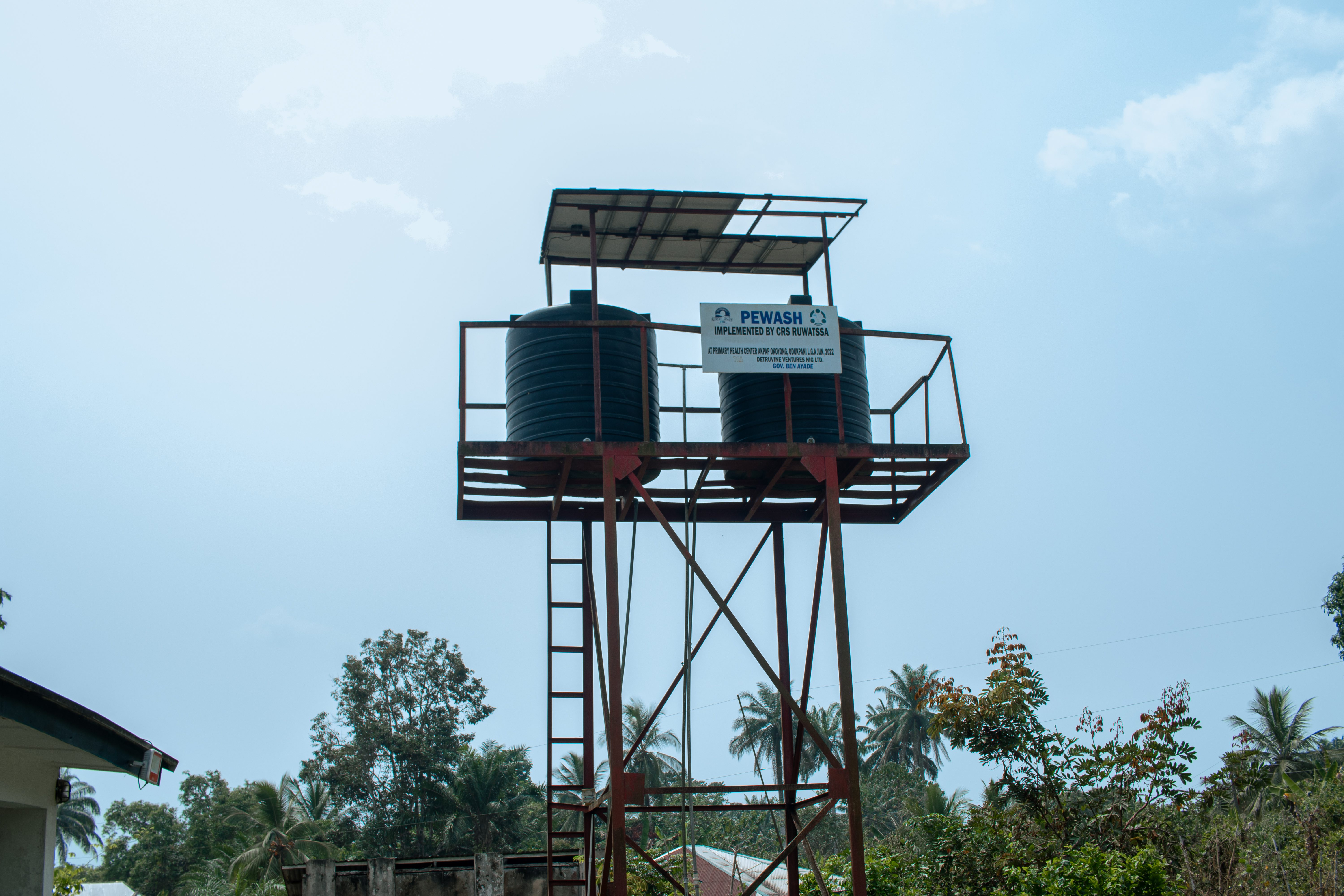
Without a functional solar panel, the PHC relies on a generator to pump the water, which is only located outside the hospital premises.
Mary Ekpo Eyo, Community Health Officer in charge of the facility, said, “there is no channel of water inside the facility. The available water is within the facility’s premises and not in the wards.”
At the Presbyterian Church of Nigeria (PCN) Primary school in Akpap Okoyong, a motorised borehole by the Cross River State Universal Basic Education Board (SUBEB) helps to provide a functional water system within the school premises, but not a proper toilet facility.
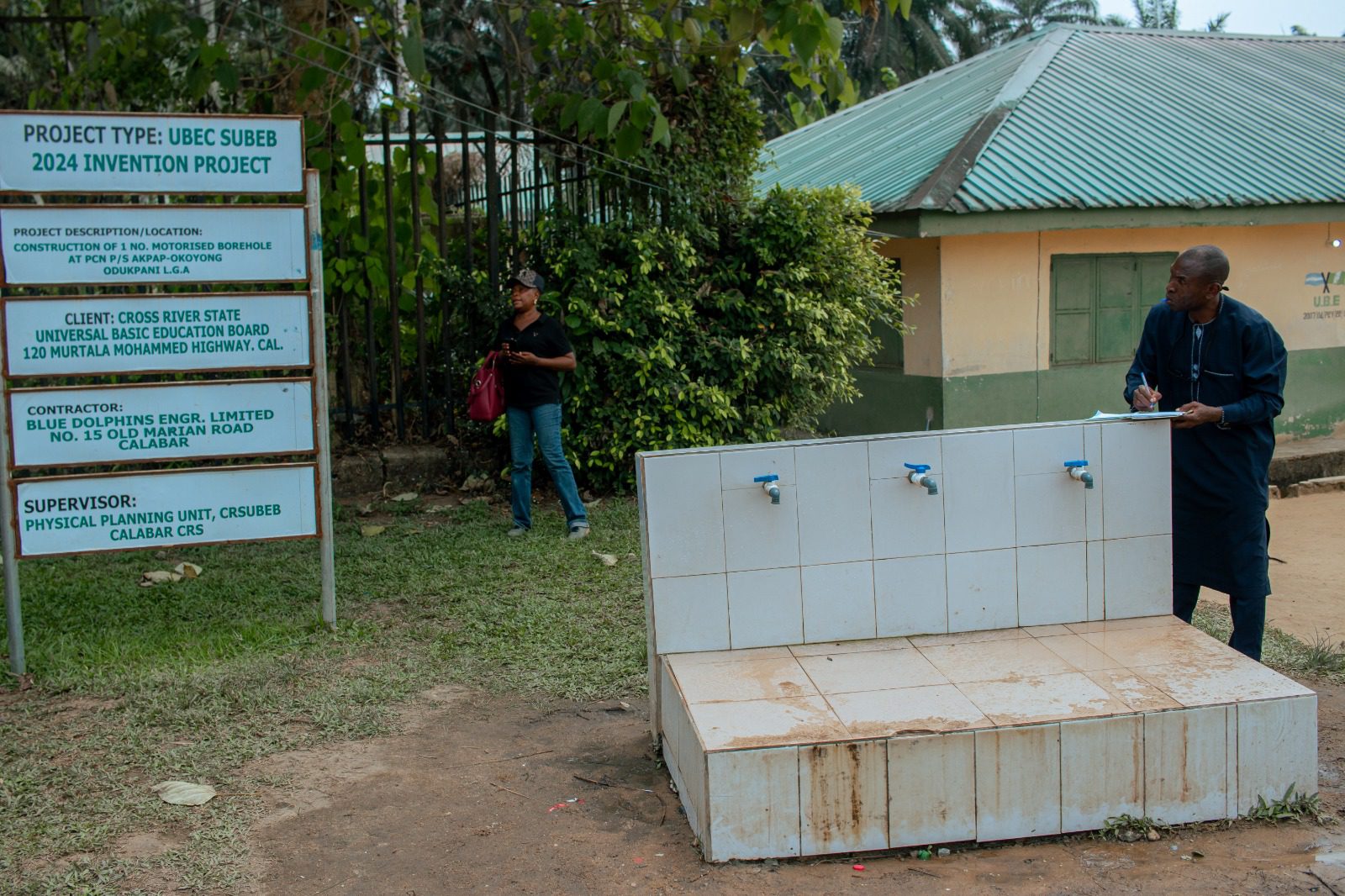
Helen Ibok Edet, a school teacher, shared that “water is rationed in buckets for students to drink in the classrooms, and when necessary, to wash their hands.”
She acknowledged the need to have a functional toilet for the students to use while in school.
The lack of a functional toilet was not limited to the school alone. At the Akpap Okoyong market, traders said they have to go home to use the toilets whenever they need to defecate.
A trader, Affiong Okon Etim, who confirmed that she has to go back home to defecate, noted that she might lose patronage during that period.
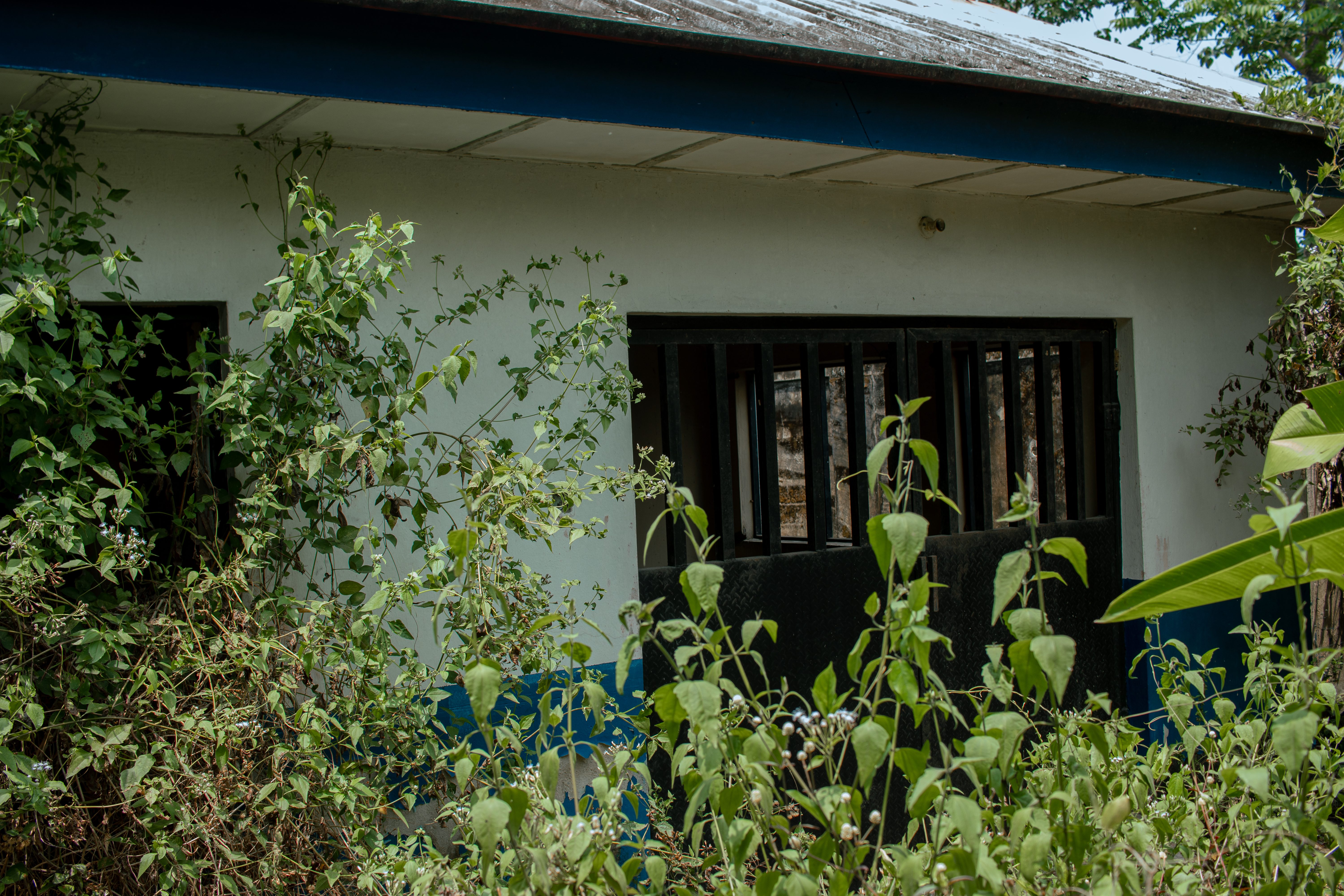
Though a toilet facility is present in the market, it has been abandoned and is non-functional.
Communities now know better
The Community head, Chief Obon Effiong, who shared the negative effect that the lack of water and toilet facilities within the community has had on their economy and health, noted that a committee is being set up to monitor facilities within the community.
He appealed to the government to help revive the water scheme and also provide toilet facilities within the community.
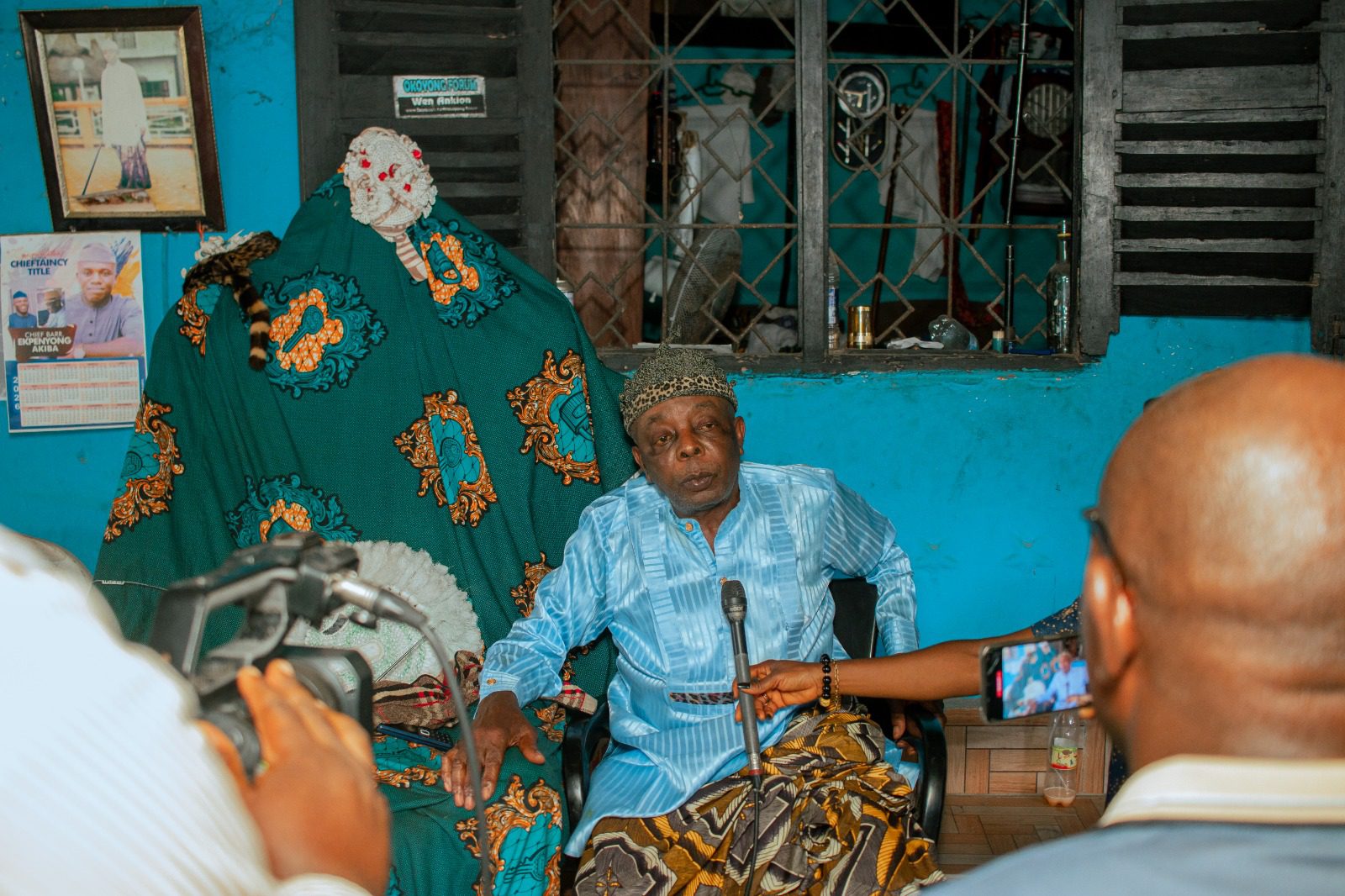
“We will monitor the facility and protect it better. We will also set up a committee to encourage toilet usage instead of open defecation,” said Chief Effiong.
Barrister Mensah Bassey, the Cross River State Commissioner for Water Resources, said it is discouraging that the water was not properly managed, noting that several similar schemes across the state face the same challenge.
“When I visited the facility, I was totally disappointed that a community could not protect what was given to them. When you look at the amount of money the EU and the Cross River State Government sunk into that project, there’s no excuse for that facility to be in this current state,” Bassey said.
He, however, noted that efforts would be taken to revive the water systems, “but we have to work on the communities to guard the structures. The duty of care should rest on the community to take care of the facilities.”
Challenges remain
The newly built toilets at the Government Junior Secondary School, Maitsidu, rely on dug wells and a hand pump water located across the school. Without proper monitoring and management, the toilets might be out of use because the unavailability of water would render the toilets unusable.
However, the presence of a car wash facility beside the school provides an opportunity for easy access to water in the school and a public toilet for community members to use.
Sukumun N. Ezekiel opined that “if the government can partner with the car wash owner who had already installed a borehole, it will become a thriving business if he sets up a public toilet beside the car wash.”
As the Makoda LGA is improving its WASH systems following its partnership with the Self Africa team, Odukpani LGA, and other communities can learn how community ownership can help to sustain infrastructure.