

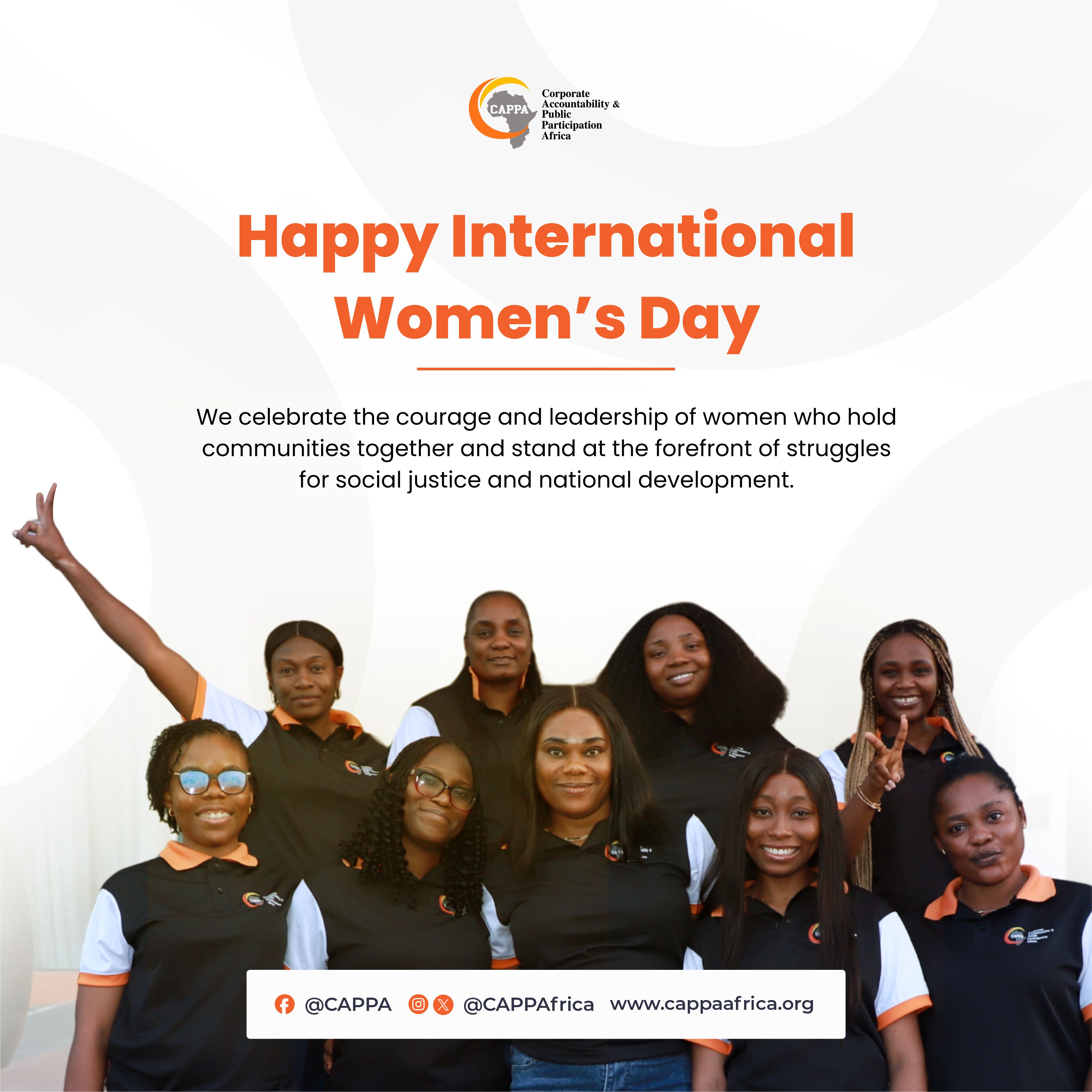
The Corporate Accountability and Public Participation Africa (CAPPA) has called on the Federal Government and state authorities to invest in public services such as water, healthcare, sanitation, and education, as well as stronger laws and enforcement mechanisms to prevent and respond to gender-based violence.
This is contained in a statement signed by Robert Egbe, CAPPA’s Media and Communications Officer, to commemorate the 2026 International Women’s Day.
According the statement, there is a need to protect civic space so that women leaders, organisers, and advocates can carry out their work without fear of intimidation or repression.
The group noted that across the country, women manage household resources, provide care for children and relatives, and often carry the responsibility of keeping families afloat in difficult economic conditions.
“Despite this central role, the organisation said many women and girls still lack access to the basic services and protections necessary for a dignified life,” said Egbe.
The group pointed out that millions of Nigerian women struggle to access safe water, sanitation, healthcare, education, and other essential services.
CAPPA also raised concern about the persistence of gender-based violence. Citing the Nigeria Demographic and Health Survey, the organisation said about 31 percent of Nigerian women aged 15 to 49 have experienced physical violence, while about 9 percent have faced sexual violence at some point in their lives. It added that more than 10,326 cases of gender-based violence were reported between January and September 2025.
CAPPA further urged policymakers to address the unequal burden of unpaid care work through measures such as affordable childcare, paid family leave, and infrastructure improvements that reduce time poverty for women. It also called for gender responsive budgeting, improved access to credit for women entrepreneurs, and policies aimed at closing the gender pay gap.
The group reaffirmed its commitment to working with women across Nigeria who are organising around critical issues. According to the organisation, women’s leadership across communities continues to demonstrate that when women organise, societies move closer to justice.
“As we reflect on the theme “Give to Gain”, true progress for Nigeria lies in recognising and reciprocating the contributions of its women,” the organisation said. “Investing in women’s rights remains fundamental to building a just and sustainable future for all Nigerians.”