

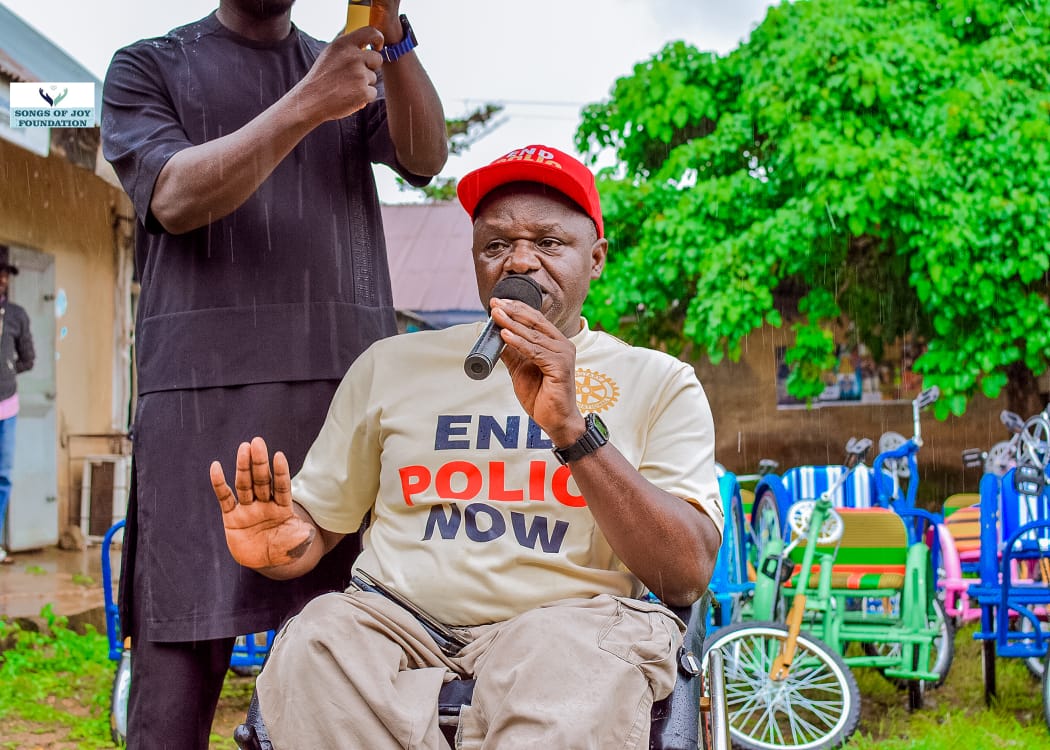
As Nigeria joins the global community to mark the 2025 International Day of Persons with Disabilities (IDPD), the National Commission for Persons with Disabilities (NCPWD) has called for a renewed national commitment to eliminate all forms of barriers – social, physical, and digital – that continue to restrict the full participation of Persons with Disabilities (PWDs) in society.
Under this year’s theme, “Fostering Disability-Inclusive Societies for Advancing Social Progress,” the commission stressed that inclusion is not an act of charity but a fundamental human right and an indispensable driver of equitable national development.
In a statement issued to mark the Day, Chief Ayuba Gufwan Burki, Executive Secretary, National Commission for Persons with Disabilities, stressed that empowering persons with disabilities strengthens democracy, enhances innovation, and contributes to shared prosperity. While acknowledging progress made since the signing of the Discrimination Against Persons with Disabilities (Prohibition) Act in 2018, Burki admitted that significant gaps remain and called for renewed commitment across all sectors.
The NCPWD urged “government institutions, the private sector, civil society, and development partners to intensify efforts toward inclusive governance, accessible education, disability-responsive healthcare, economic empowerment, and full compliance with accessibility standards.”
The executive secretary reiterated that public institutions are legally required to reserve a minimum of five percent of employment opportunities for persons with disabilities, calling on employers to dismantle systemic barriers and create supportive work environments.
It also stressed the importance of eliminating physical, social, and digital obstacles that continue to limit full participation for persons with disabilities, emphasizing the need for strict adherence to the Persons with Disabilities (Accessibility) Regulations, 2023.
“Achieving a barrier-free Nigeria is central to advancing national development and ensuring that every citizen can contribute meaningfully to society,” Burki added.
The NCPWD reaffirmed its commitment to safeguarding the rights and dignity of persons with disabilities, promising to strengthen partnerships, enforce compliance, and champion initiatives that expand access, equity, and opportunity. It called on “governments at all levels, as well as communities and individuals, to work collectively toward a Nigeria where disability does not limit potential and where inclusion becomes an everyday reality”.