
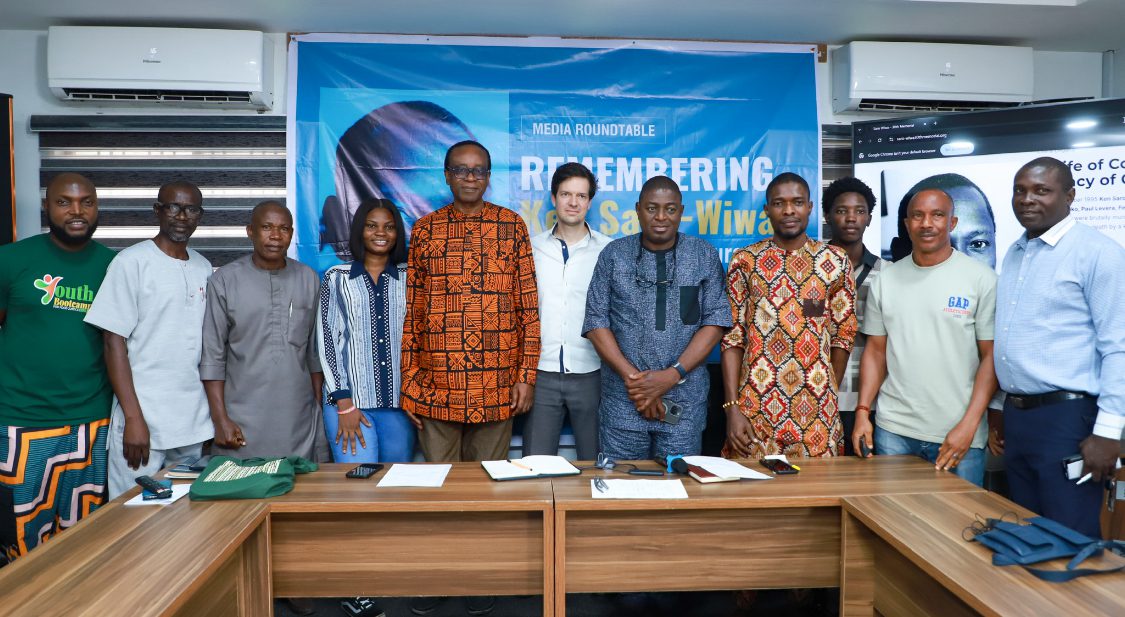
Thirty years after the execution of environmental activist and Right Livelihood Laureate, Ken Saro-Wiwa and eight other Ogoni activists, environmental advocates have condemned moves by the Nigerian government to resume oil extraction in Ogoni land.
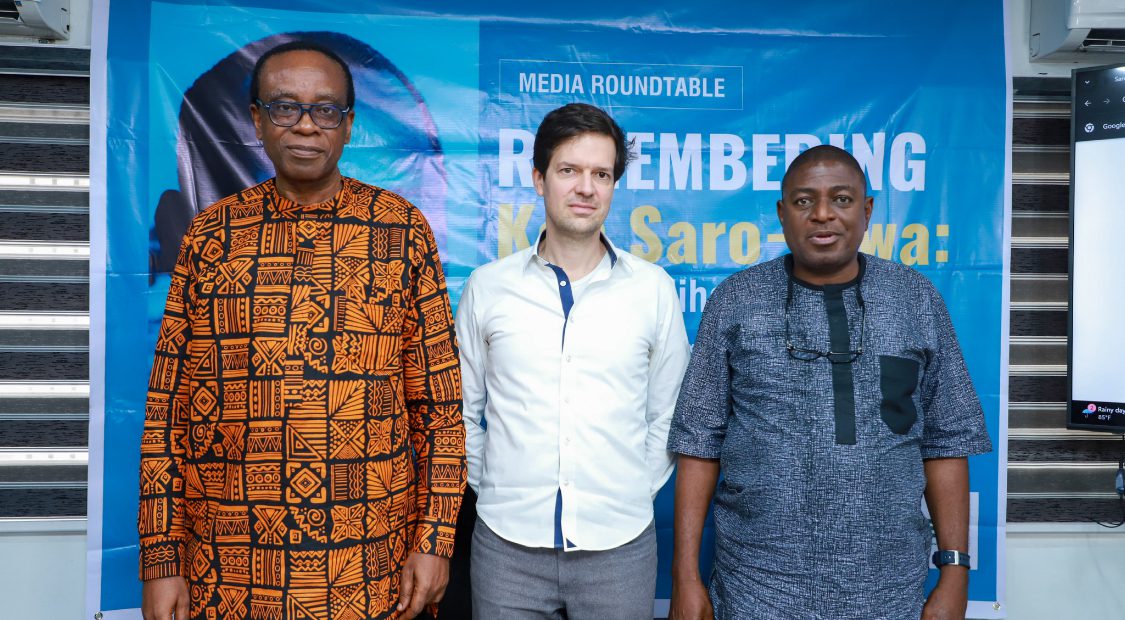
Speaking at a media roundtable to commemorate the 30th anniversary of the unjust killing of the Ogoni 9, Dr Nnimmo Bassey, the Executive Director of Health of Mother Heart Foundation (HOMEF), described the plans to resume oil extraction in Ogoni as a tragic step backwards, especially as countries across the world are moving to renewable energy.
Bassey, who said the killing of Saro-Wiwa was a deliberate effort to silence dissenting voices and anyone who would speak against oil extraction, stressed that the Nigerian government has not completed the Ogoni cleanup nor implemented the Ogoni bill of rights, a document adopted by the Ogoni people to demand control over their economic resources and protection of their environment from degradation and pollution.
He demanded that the government halt all plans to reopen oil wells in Ogoni and focus on completing the cleanup exercise as “people are living in a poisoned and toxic environment”.
“The Nigerian government should not open the oil wells, not even one more. Oil has not developed any part of this continent. We need to reset our thinking and do something productive rather than focusing on extractives,” Bassey added.
The HOMEF ED also noted that the 2011 United Nations Environmental Programme (UNEP) report on Ogoniland validated the claims of the Ogoni people, as it confirms hydrocarbon contamination in soils at depths over 5 metres and in groundwater at levels up to one million micrograms per litre, far exceeding national and international safety standards.
Ole von Uexkull, the Executive Director of the Right Livelihood Award, a Swedish organisation that honours individuals and organisations solving global problems, shared that the world is moving away from fossil fuels, and the Nigerian government should follow suit, instead of reopening the oil wells in Ogoni.
Uexhull expressed concern about the reliance and continued heavy investment in fossil fuels, despite the reliability of solar energy, noting that “it is rooted in political control of resources, a key reason governments and corporations remain reluctant to shift away from oil.”
He listed the top bankers of fossil fuel expansion in Africa, with many of them from the United Kingdom, USA, France and Japan.
Showing solidarity and honouring the legacies of Ken Saro-Wiwa, Uexhull noted that Ken and the Movement for the Survival of the Ogoni people in 1994 were awarded for their exemplary courage in striving non-violently for the civil, economic and environmental rights of their people.
Earlier in his opening remarks, Akinbode Oluwafemi, the Executive Director of Corporate Accountability and Public Participation Africa (CAPPA), described Ken Saro-Wiwa as a man who stood for the liberation of his people and fought for justice.
“Ideas don’t die. Ken lives. Nigerians should not keep quiet in the face of injustice,” Akinbode remarked.
The media roundtable, which was organised by HOMEF, also featured the screening of a documentary titled “After 30 years (Ken Saro-Wiwa): the struggle continues. The documentary captures the lives and times of Ken, his activism, the current status of Ogoni land and the plights of the families of the Ogoni 9.