

Across Nigeria, foods that are high in sodium, from seasoning cubes to ultra-processed snacks and heavily preserved foods, have replaced home-made traditional cuisines. Nigerians prefer to eat these foods as they are easily accessible and have been ‘wrongly’ positioned as the healthier options.
However, the consumption of these high-sodium foods has led to an increase in non-communicable diseases (NCDs) such as hypertension, stroke, and heart disease, resulting in the death of over 43 million people worldwide, as of 2021, according to the World Health Organisation.
Despite the alarming figures, the food industry continues to deploy aggressive marketing to entice Nigerians to these products. They also do not provide detailed nutritional content of the food product, thereby preventing Nigerians from making informed decisions about the products they purchase and consume.
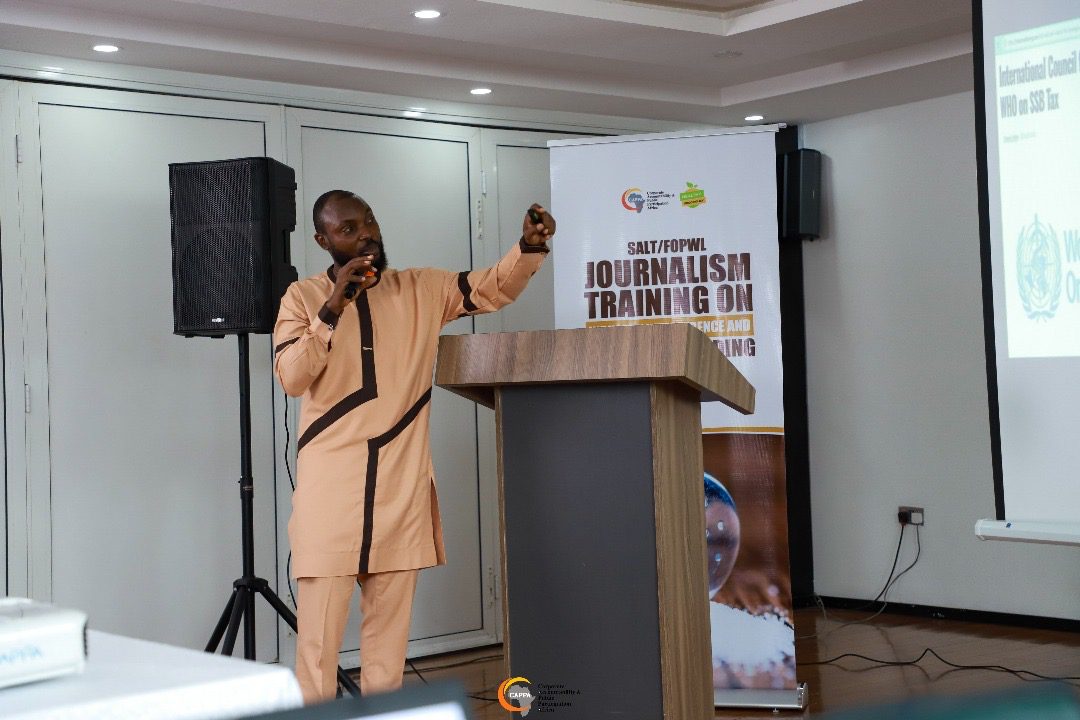
To address this trend and safeguard public health, the Corporate Accountability and Public Participation Africa (CAPPA) held a one-day journalism training on salt reduction and front of pack warning labels (FOPWL).
The FOPWL helps consumers to quickly and easily understand the nutritional content of food products, particularly those high in sodium, salt, sugars and unhealthy fats.
While speaking to journalists at the training, Akinbode Oluwafemi, the Executive Director of CAPPA, explained that adopting FOPWL in Nigeria will also reduce the burden of NCDs in the country.

Oluwafemi added that “Countries that have embraced front of pack warning labelling such as Chile, Mexico, and Brazil are already reaping the benefits. In Chile, for example, warning labels led to a drop in purchases of sugary drinks and prompted companies to reformulate their recipes to avoid using warning labels.
“This is regulation doing exactly what it should by influencing behaviour, fostering accountability in the food industry, and rebalancing power in favour of the public.”
He thereafter noted that Nigeria has the opportunity to be part of this global shift “by adopting a mandatory, interpretive front-of-pack warning labelling system that clearly alerts consumers when a product is high in salt, sugar, or saturated fat.”
Oluwafemi also warned about the industry interference which include lobbying behind closed doors, public relations campaigns masquerading as science, and the funding of research designed to obscure the link between processed foods and disease.
He called for close media monitoring and exposure of the unhealthy food industry because “they produce products that harm health, they want to evade liability, and they want to write the rules.”
He referenced the continued promotion of bouillon cubes as the perfect fortification vehicles for essential nutrients, a tactic that deflects attention from their harmful salt content.
“These strategies are not new. They mirror the playbook of Big Tobacco and have become standard practice in the food and beverage sector. The goal is always the same—delay regulation, confuse the public, and protect profit margins at any cost,” he noted.
He shuddered about how the gap in the food environment has created loopholes for the food industry in Nigeria to promote unhealthy diets, stressing that there are “no advertisement restriction, no salt target, no or low SIN Tax, and no influence peddling on PPAs.”
He condemned the deceptive practices of how companies engage in Corporate Social Responsibility (CSR), whereby their contributions are negligible compared to the harm and dangers they cause.
Corroborating him, Bukola Odele, Project Officer, Cardiovascular Health at CAPPA, lamented that ultra-processed foods that are high in salt/sodium have replaced traditional home-made meals thereby limiting healthy options for Nigerians.
She also reiterated how aggressive marketing by the industry is fueling the decisions of Nigerians to make unhealthy choices, and how bouillon (seasoning) cubes and food with high preservatives are positioned as healthier options.
Odele emphasised the need for a front of pack warning labelling policy in Nigeria, so that Nigerians can make informed decisions about the products they consume, and also safeguard their health.
Dr Joseph Ekiyor, a Public Health Consultant, who shared that 1.6 million lives could be saved annually by reducing sodium intake by 30% buttressed that “reducing salt intake and dietary change will help to reduce health complications such as heart attack, and reduce the overall burden of NCDs”

Ekiyor called for strict adherence to WHO guidelines on salt reduction, which include front-of-pack labelling of nutrients of concern –sugar, salt, and fat, as well as reformulation targets or maximum limits for sodium in food.
He noted that adhering to the guidelines is imperative to because by 2030, NCDs global cause of death and disability is projected as 52 million, and it must be curtailed.
He also charged the media to intensify efforts on behavioural communication because “repetition is necessary to inform change”, adding that “increase mass media campaigns to reduce sodium intake and strengthen Nigeria’s health system.”
On his part, Robert Egbe, CAPPA’s Communication Officer, encouraged media professionals to write stories “that will expose industry lobbying and policy manipulation, flip industry funded research into stories on scientific bias and use FOI requests to seek information that the industry wants to hide.”