

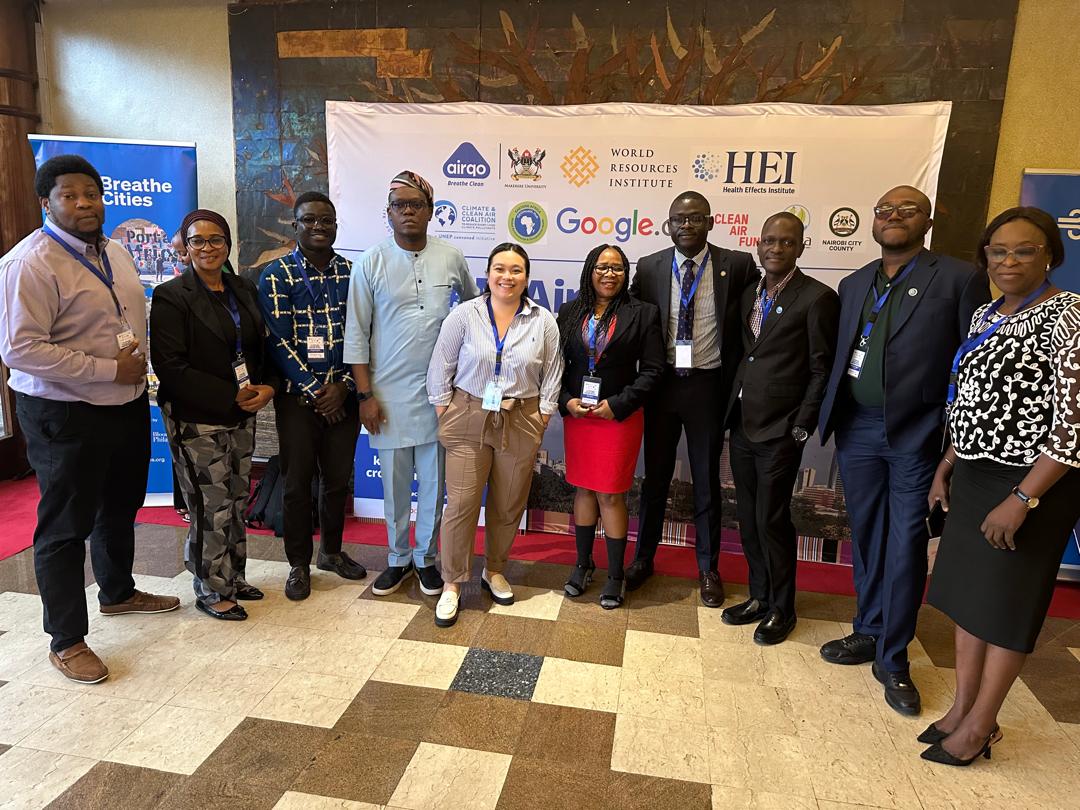
With the rising case of air pollution in Africa, over 300 delegates from 35 countries gathered in Nairobi for the 2025 Clean Air Forum, uniting to forge data-driven solutions and partnerships to combat this pressing health and climate crisis.
With the theme “Partnerships for Clean Air Solutions”, the forum brought together policymakers, scientists, academics, and civil society actors who agreed that air pollution must be addressed as a health crisis, climate threat, and social justice issue.
Throughout the forum, there was an unflinching examination of air pollution’s human cost. Health experts, epidemiologists, and civil society leaders presented sobering data on how toxic air is undermining public health, especially in Africa’s most vulnerable communities.
In his remarks, Mr Geoffrey Mosiria, Chief Officer for Environment, Nairobi City County, described the forum as a platform for “knowledge exchange, innovation and collaboration to drive meaningful change.”
Other Kenyan counties, including Kisumu and Taita Taveta, echoed the commitment to coordinated air quality governance.
Professor Bainomugisha, Lead at AirQo, stressed the importance of data in driving effective policy. “We cannot manage what we cannot measure,” he said, urging African cities to build stronger air quality monitoring systems.
Mr Mwandawiro Granto, CECM for Taita Taveta and Vice Chair of the CECMs Caucus, called for legislative and institutional backing, citing Kenya’s Public-Private Partnership Act as a model for multi-sectoral cooperation.
Dr Mathew Owili, Deputy Governor of Kisumu County, said cities must act quickly. “We have five major cities in Kenya. If we start now, we can ensure clean air systems are in place.”
The forum highlighted new technologies and research from institutions including Makerere University, University of Ghana, University of Chicago, and University of Nairobi. Participants discussed low-cost sensors, satellite data, and AI as tools for detecting pollution hotspots and guiding interventions.
Debates also focused on community access to environmental data. “Who benefits from air quality data, and who is left out?” was a key question raised by participants.
Experts presented alarming data on the health impacts of pollution, particularly in low-income communities. They advocated for the use of real-time exposure data to improve public health responses and resource allocation.
The forum also championed grassroots-led solutions. Local organisers shared how community monitoring and advocacy are helping residents take ownership of clean air efforts.
Sessions on waste and household air pollution revealed the need for better policies and infrastructure. Speakers linked unmanaged waste and dirty cooking fuels to health and environmental hazards.
“The path to clean cooking in African countries starts with equity,” said Mr Perez Mweine of WePlanet Africa, calling for inclusive energy policies that reflect local economic realities.
Delegates also discussed clean transport strategies, including public mobility investments, cycling infrastructure, and emissions control for urban centres.
Cross-sector conversations stressed the need for harmonised air quality frameworks and regional collaboration, especially as air pollution often crosses national boundaries.
In a keynote, Mr Ibrahim Nyangoya Auma, CECM for Mobility and Works, Nairobi County, said: “No government – national or county – can manage what it cannot measure. Air pollution is a serious public health challenge, and we need robust, transparent data to act.”
The Forum for International Cooperation on Air Pollution facilitated a stocktaking session where stakeholders reviewed progress, partnerships, and future priorities.
Women leaders across the air quality ecosystem also convened in a special session, underscoring the role of gender inclusion in shaping Africa’s clean air future.
The forum concluded with a strong call for action: Africa’s clean air future must be built on data, partnerships, and citizen-driven governance.
“Clean air is not a privilege. It is a right,” the forum’s final declaration read. “And Africa is ready to claim it.”